A positive way forward for the Waitemata Safe Routes projects

This is quite a long read but it responds to a lot of issues currently under review concerning two cycling projects in the Waitematā Local Board area that form part of a package of projects known as Waitemata Safe Routes.  I will keep this post updated as the projects progress.

Since my update below – tabled as part of my monthly Chair’s report – the local board has met with Greg Edmonds, Chief Infrastructure Officer at Auckland Transport, members of his project team, Kathryn King the head of Walking & Cycling and communications and engagement advisers.

At the meeting on 13 December discussed what is currently on hold pending safety and design reviews  and what work is continuing to make the routes safe.  This information has been advised to residents along the routes, the Occupy Garnet Road protest group and is now on the AT website.    We also discussed safety improvements that AT would look to get in place ahead of the school term starting next year such as the crossing points on Surrey Crescent.  As advised by AT there will be further consultation on aspects of the design (including a re-design of the West Lynn shops that will go through a community reference group first).  The exact consultation process is to be discussed further with the board.

Greg outlined a proposed AT process going forward for all cycling projects. The board supported a new process framework being put in place. The AT Executive team will want to know that there is agreement from key stakeholders including the Local Board and the Auckland Design Office overseen by a Project Control Group. If there isn’t agreement the PCG will escalate the project to Greg Edmonds.

At the meeting we didn’t discuss with AT other specific projects but Greg has since confirmed that there are no plans to put a stop or halt to any other cycleway projects and that these are progressing within previously advised timeframes subject to all stakeholders being across these projects (part of this involves AT reviewing feedback the board has previously given to AT)

The following update was attached to my Chair’s monthly report tabled at the Waitemata Local Board business meeting on 12 December 2017.  (anything in [         ] has been added online since I gave the update at the board meeting)

Waitemata Safe Routes project update:  The “fiasco” of West Lynn

The attached updates (letters to residents that are now on the AT website)  have been sent to Grey Lynn residents by Auckland Transport outlining what work is being completed and what work that has been halted pending a review of two Waitemata Safe Route projects.

The Waitematā Local Board has met with Auckland Transport [the project team] and is actively working on the solutions and an agreed process for further consultation of any proposals that come out of the review.

At the same time I’ve been reflecting on what led to what Simon Wilson from the Spinoff called a “fiasco” and what should have been done differently.    This is both personal and political. I live, hang out and shop in Grey Lynn.  West Lynn is “my” village.  I want the best for the whole of Waitematā, so our different communities feel proud of changes that make it safer and more pleasant to get around.  I also appreciate the importance of bringing people along with the process and listening to a range of views.  As I’ve heard the former Mayor of Copenhagen say “A good city means dialogue and controversy – getting people engaged in their environment and its transformations can only be a good sign of things to come”.

There are two routes currently the subject of intense debate.  Although there are common issues, the projects are distinct, with different issues and responses.  Both routes were consulted on at the same time as part of a package of four routes known as the Waitemata Safe Routes including Great North Road and the Grey Lynn Greenway (now delivered but not without its own controversary on the Grosvenor Street section)

The timing of the consultation on the four routes coinciding with the Local Government election in September 2016 was incredibly ill advised . It was against the wishes of the local board, Councillor Lee and Local board services staff.   Simon Wilson calls it “preposterous” that we didn’t campaign to make it an election issue.  But that’s the whole point – transport consultations shouldn’t become election issues because of the timing of the consultation. We want to hear the feedback from the public first, understand the issues and possible solutions and then provide local board input. This is what is happening right now with the Grey Lynn & Arch Hill Residential Parking Zone consultation.

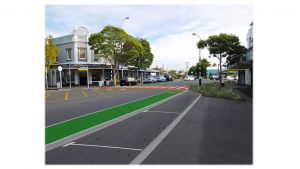
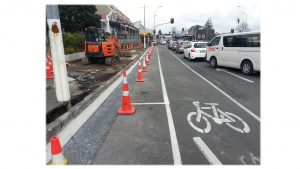
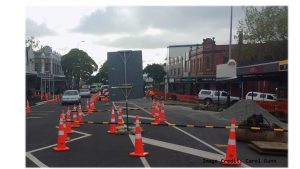
Richmond Road including the West Lynn shops  (Route 2)

My involvement in this project goes back to a meeting hosted by Grey Lynn 2030 in 2009 with David Engwicht, known as the inventor of the walking school bus.  (the outcome of that meeting detailed here ) 

A traffic calming group was established to push for the adoption of his “Mental speed bumps” theories of reclaiming the street to slow down vehicles.  In 2010 the group presented to the Western Bays Community Board a survey of local traffic concerns including speed and pedestrian safety detailed here

By the time I was elected in October 2010 and working on the transport portfolio (a position I still hold) it became clear there was range of issues along the entire length of Richmond Road.  For example, the Peel Street and Warnock Street intersections were the subject of regular complaints.  Richmond Road school was battling for a signalized pedestrian crossing.  The intersection of Surrey Crescent and Richmond was “upgraded” by AT in early 2011 but fell short of the board’s request for a design that provided a safe crossing for kids walking to school.

We brought together all the issues in a Richmond Road Safety Action Plan in 2012  (consulted on as part of our Local Board Agreement in 2012 and 2013). The plan requested AT to target the shopping areas and school zones concentrating on pedestrian and cycle safety and traffic calming together with good urban design to provide enhanced overall attractiveness and amenity. (I wrote about this project in an update in Ponsonby News about Richmond Road)

Designs for a cycleway on Richmond Road were first drawn up in 2012/2013 but went on hold until funding became available through the government’s Urban Cycleways Investment Fund.

Issues raised through the basic consultation process (now under review) undertaken by AT last year were relatively minor. The main concern that I took up was the location of the bus stop outside Nature Bay which didn’t seem to be logical.

From the Board’s perspective there was a lot to support about the design –  it could be done with minimal parking loss and included a range of safety improvements with extras like more planting and street furniture.  If anything, the design was criticized for not going far enough to slow the traffic and make cycling safe along the entire length.   Bike Auckland’s feedback asked AT to set up a community reference group to go through the details of the design but this was ignored by AT.

With the benefit of hindsight it perhaps seems obvious that the project should have been approached as a design-led street upgrade (as is happening for the K’rd streetscape upgrade) but there are a range of factors as to why this didn’t happen:

  • The improvements came about as a result of cycle project with additional budget for safety and bus stop changes. If the local board had pushed for a town centre upgrade 2 -3 years ago when the plans were first discussed the whole project would have come to a standstill as there were no funds.
  • The opportunity for the local board to discuss adding to the budget to improve the materiality (such as concrete paths rather than what turned out to be ugly asphalt) was missed because AT didn’t bring the final plans back to the board
  • The feedback we heard didn’t raise issues with the design overall – most agreed it was an improvement. A community reference group or more thorough engagement process would have drilled down on the design far more effectively
  • The silo approach at AT blocks teams working holistically and bringing in an urban designer (this has only happened on projects under immense pressure – for West Lynn there was nothing that signaled a different approach was required)

However the original uproar in West Lynn (from the businesses in particular) was not so much about the design but arose originally from a number of other issues:

  • An engagement process that didn’t bring the design back to the community to explain how the feedback had been taken into account and what was going to go ahead (frustratingly AT only seems to do this where there is strong opposition at the consultation phase)
  • Failure to respond to genuine issues (like the bus stop location)
  • Poor, and at times inconsistent, communication about what was happening and when
  • Approach to the construction and impact of the construction – the contractor advising businesses that the works were possible during the quiet time in January but then AT issued notices to start the work the next day
  • The work was carried as fast as possible, which aimed to minimize the impact, but led to bad quality finishing
  • Mistakes made with the plans and construction (the sloping foot path outside Dear Reader is clearly a big mistake)

A wider review of the whole Richmond Road route is now underway but for West Lynn shops many of the issues (first identified on a site visit I did with AT three weeks ago  [17 November]) are already in the process of being resolved.  The parking has changed but once marked out there is likely to be just as much parking serving the shops as prior to the construction (it has been incorrectly reported that all the parking has been removed outside Harvest).

The business association has been incredibly pro-active working with Auckland Transport and bringing all the businesses together to a launch a “West Lynn Shops” campaign- “Good bye roadworks.  Hello pathways, cycleways and parking!”

Surrey Crescent to Garnet Road (Route 1)

Like Richmond Road this route has been on the Auckland Cycle network for almost two decades. It also received funding from the Urban Cycleways Fund.

Auckland Transport consulted on two options. One option of a cycleway on the road requiring the removal of 40% of the parking and another option using the berm for the cycleway.    Feedback was very mixed.   The local board opposed both options and asked Auckland Transport to re-consult on a new design using the carriageway.   This was rejected on the basis of cost.

I give some credit to the protest group [Occupy Garnet Road] for stopping the construction of this cycleway and forcing Auckland Transport to review the design of the entire route  [the group were first informed on 23 November that they had achieved their original objective of halting the Surrey Cres/Garnet Road and Richmond Rd projects pending a review but as of 16 December continue their “occupation” with a range of demands including a halt to all Auckland cycleway projects]

The Board passed the following resolution at our November Board meeting [on 21 November] and the next day I joined a meeting with Auckland Transport and the group made up of local residents, Urban Tree Alliance representatives and protestors at the Old Mill Road/Motions Road intersection[Occupy Garnet Road Group].

Resolution

That the Board b) confirms its feedback in November 2016 to Auckland Transport on Route 1: Surrey Crescent to Garnet Road cycleway opposing both options consulted on by Auckland Transport and the board’s request to Auckland Transport to consider a new option using the road space with opportunities for new landscaping and sufficient parking and confirms its request to Auckland Transport to re-consult with the community on a new option

  1. c) Notes Auckland Transport has advised that of the 164 trees along Route 1 18 trees are being removed of which 15 are exotics and 3 native – 3 of the exotics are dead. 6 of the native trees are being transplanted and 36 trees are to be planted with a net gain of 18 trees
  2. d) Requests Auckland Transport halt the removal of trees, transplanting of trees or planting of new trees along Route 1 until the public is informed of the arborist report and provided information about how Auckland Transport is ensuring a best practice approach to tree planting and maintenance
  3. d) Requests Auckland Transport organise a public meeting to provide a project update and an opportunity to address all community concerns with the design of Route 1

 Next steps

As confirmed above Auckland Transport has advised residents as to what work will be completed to be made safe and what is on hold pending a wider review.   Community Reference Groups will be set up for West Lynn and the wider Safer Routes project.  In collaboration with the West Lynn group (led by the GLBA co-chair) work is already underway to address immediate issues in West Lynn.  Boffa Miskell have been appointed to lead the review of the design of the village area. A silver lining from the “fiasco” is that it has brought the community together and will result in far more investment in West Lynn than was originally planned.   AT has offered a procedure for making a loss of business claim for the businesses impacted by the construction.

It is positive that Auckland Transport has committed to a new transparent, cooperative approach involving the local board that we expect to extend to all our projects.  In the longer term we are seeing the start of a shake up at Auckland Transport that has already been signaled with the arrival of a new CEO.    Since the beginning of the super city AT has far too often ignored local board priorities (the legislation requires AT to take account of local board plans – but this often doesn’t happen) and “wins” have required unnecessarily hard-fought battles by the local board and community.

The Board has been incredibly effective at achieving better outcomes than what was originally on offer (such as the Ponsonby Pedestrian Improvements Project, Franklin Road upgrade and the Teed St upgrade) but too often this has been despite AT.   I’m looking forward to a new dynamic and AT acceptance that local boards are responsible for place making. In the meantime, the Waitemata Safe Routes projects shows the board (and me in particular as transport lead) needs to be constantly vigilant and challenge AT processes and projects at every step of the way.

I am also hopeful that following AT’s review of the current Grey Lynn projects we can look forward to greatly improved urban design, the function of placemaking firmly in the control local boards and the continued delivery of good quality, cycleways and safer streets that benefit the whole community.

Related reading

Taking Cycle Design seriously, Greater Auckland

The fiasco in West Lynn: how did Auckland Transport get a shopping village makeover so wrong,  Simon Wilson in The Spinoff

After the West Lynn debacle: a better way to plan Auckland’s suburbs, Simon Wilson in the Spinoff

The extraordinary incompetence of AT, Simon Wilson in the Spinoff

The hard road to a cycle-friendly city, Russell Brown, Public Address
Waitemata Safe Routes projects , AT website

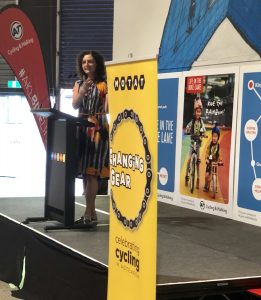
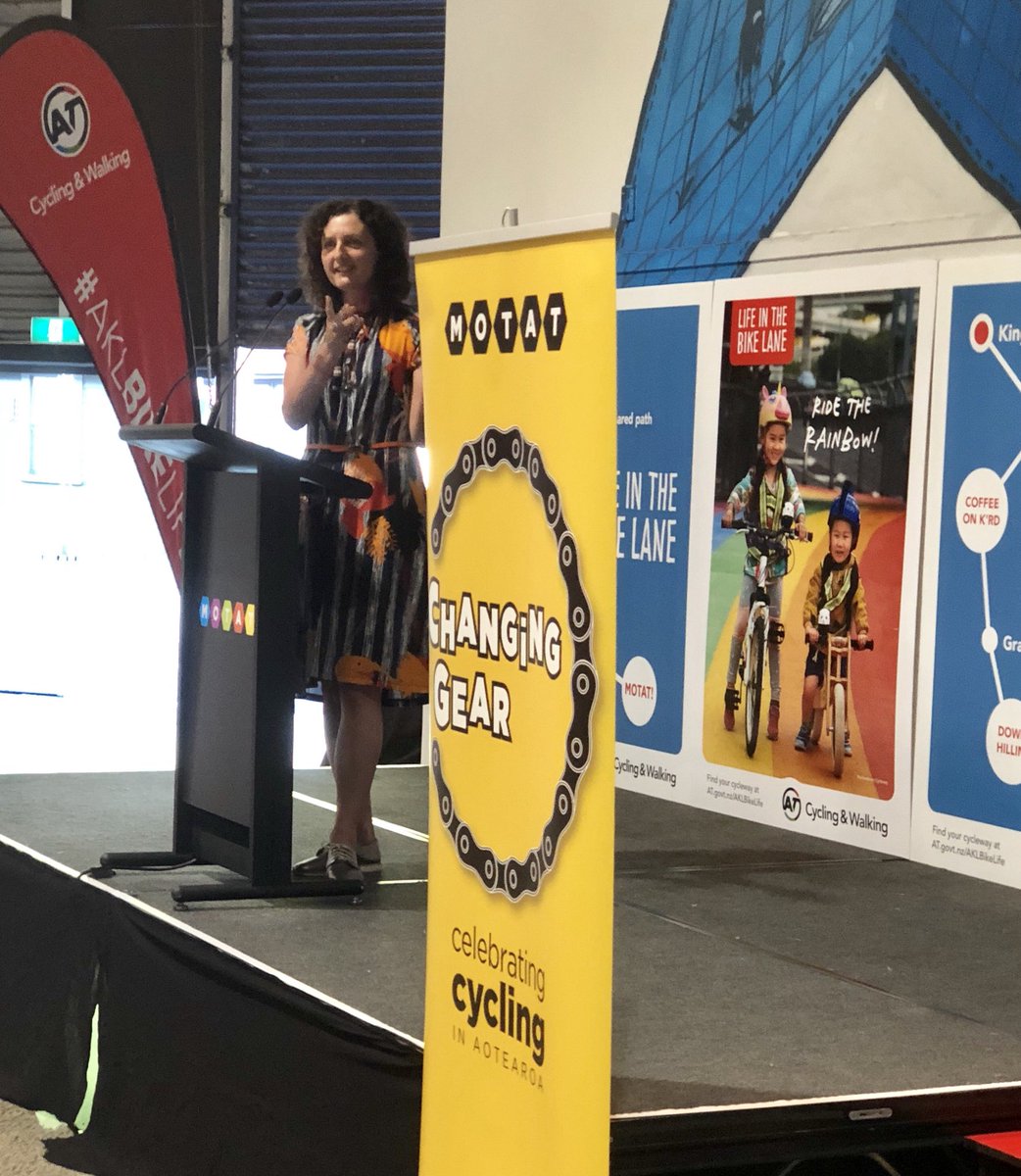
Opening Changing Gear exhibition celebrating cycling Aotearoa

E nga mana, e nga reo, e rau rangatira ma

E te kaumatua David, Tena koe

Ka mihi whānui ki a koutou katoa,

E nga hau e wha

Tēnā koutou, tēnā koutou, tēnā koutou katoa

Greetings to everyone gathered here today

It is a great honor to be opening an exhibition at MOTAT on behalf of Auckland Council. I know the Mayor Phil Goff very much wanted to be here and Councillor Chris Darby, Chair of the Planning Committee.  As you’ll discover in the exhibition we can thank the bicycle for the emancipation of women and opening the way for women to vote and enter politics. So I am very happy be representing my political colleagues this evening including Councillor Wayne Walker who just snuck in.

It is wonderful to see a collaboration between MOTAT and Auckland transport to celebrate 200 years of the humble pahikara.   Thank you for everyone who has worked hard to bring this exhibition together.

There are fantastic quotes about the bicycle.  My mum painted on to the front door of our family home the HG Wells quote :  “Every time I see an adult on a bicycle, I no longer despair for the future of the human race.”

Iris Murdoch sums it up for me as I rode here this evening “The bicycle is the most civilized conveyance known to man. Other forms of transport grow daily more nightmarish. Only the bicycle remains pure in heart.”

There is much to discover in the exhibition that highlights the importance of the bicycle for transport, recreation, health, sport, winning the America’s cup – it is inspired to have the cyclors as part of the exhibition – and just lots of fun. Thank you for the sneak peak in advance of the formalities.

Many of my cycling heroes feature in the exhibition including Mr T who is transforming lives in Mangere.  I’ve long been fans of the Kennett brothers.  How people mocked John Key when he talked of riding from one end of NZ to the other and creating jobs on the way – it is really happening thanks to NZ cycle trails Nga Haerenga and Jonathan Kennett’s Tour Aotearoa.  Great to see the Kennett  brothers recognised for their ground breaking work going back to the 80’s.

I love the kiwi ingenuity, creativity and innovation on display in the exhibition that seems a perfect fit with mucking around with bikes.   There is the telling of familiar stories  and new cycling stories emerging as young people embrace cycling again. After a very tense time of “bikelash” I  found it really refreshing to view on line the other day the short film Auckland Cycling by Western Springs College students Isaac Keating and Finley Parker-James.  They have informatively uncovered some of the issues that Auckland faces integrating cycling into the city landscape.

This beautiful early summer weather is bringing out people in unprecedented numbers on their bikes.  Kathryn King, AT’s walking and cycling manager just told me that the latest stats show a 19% increase on November last year.  MOTAT is perfectly positioned to attract visitors on the NW cycleway – an off road path to the front door perfect for cycling with children.  There is also a poignancy for me in opening this exhibition.   Those who chose to ride are going lightly on the planet, contributing to better health outcomes, less congestion, less pollution but at the same time are incredibly vulnerable on our vehicle prioritised roads.

Just up the road from here a protest about poor design – which we can all agree on – but has turned into an occupation demanding an end the entire cycleway programme!

Now more than ever we need to double down on our efforts  to build a network of safe cycleways.  I want to acknowledge those who are leading the way  – with Transport Minister Phil Twyford and Associate Transport Minister Julie Anne Genter who have made active transport and safety a priority – and those working at the coalface to make Auckland a great cycling city building on the last 200 years of cycling history to shape a low carbon, sustainable city for the future. A city that is built for people to ride bikes is a much safer city for everyone.

OK that is enough of me going off piste with my speech. Ko whea te haere a ko ake nei? (as I read at the entrance of the exhibition full of te reo signage)

Time to change gear to bring it back to what we are here to celebrate what is sure to be a a very popular exhibition this summer.

I would like to declare Changing Gear celebrating cycling Aotearoa  officially open!

Kia ora


From the fringe to mainstream: Presentation at the Asia-Pacific Cycle Congress

From the fringe to mainstream: the politics of gaining community support and delivering successful cycling infrastructure for the future

At the Asia-Pacific Cycle Congress held in Christchurch 17-20 October 2017 I presented in a session on the theme of Community Engagement in collaboration with Christchurch City Councillor Phil Clearwater. We thought it would be interesting to present our respective political takeouts and to provide a space to discuss what the politics of gaining community support and delivering successful cycling infrastructure  is looking like with other politicians, advocates and people delivering on the ground. It is also an opportunity to contrast the Christchurch way with what is happening in Auckland.

Slide 1

Slide 1:  My background is as a cycling advocate. I came to politics as a committee member of Cycle Action Auckland (now Bike Auckland) and co-organizer of Frocks on Bikes in Auckland ( shout out to Bella & Leah the co-founders of Frocks about to celebrate the 10 year anniversary next year) . When I first got involved in advocacy almost 10 years ago it was as part of a smallish but growing group of activists responding  to the question Why would anyone cycle ?  (especially in Auckland that is  of course too hilly, too wet and too humid etc). I was told there was no votes in cycling as it was too fringe!

Last week Michelle, who works for the WA state government got in touch for a coffee before the conference. She told me she was a fan of the global leadership of Auckland – I’ve never heard that before! But as we are going to hear from presenters over the course of the conference Auckland is experiencing unprecedented transformation into a cycling city.

I’m presenting my personal thoughts on how we are going in Auckland from a political perspective .

It looks like we have a number of complimentary presentations that consider bike lash and from the trenches perspectives – it is of course not all plain sailing.

Slide 2

Slide 2: I’m going to presume that non Aucklanders are at best only vaguely familiar with our unique governance arrangements.

Since 2010 we’ve had the super city of 21 Local Boards focusing on the local stuff – playgrounds, community centres, libraries etc and an advocacy role rather than a decision making role for transport. A mayor and 20 councilors of the governing body responsible for regional decision making and setting the vision and strategy for Auckland.  Chris Darby councillor for North Shore is here.

Auckland Transport – one of the arguably missed named council “controlled” organizations-  is responsible for all transport functions and operations including consulting on cycling projects.

I’m chair of this area [slide 2], the Waitemata Local Board covering the city centre and central suburbs of Auckland.  For 7 years I’ve also held the transport portfolio lead.

Slide 3

Slide 3: The foundations of the move from fringe to mainstream started long before 2010 but in Auckland the radical realignment of the cycling universe received a big bang boost with the formation of the Super City.

For the first time a pro-cycling Mayor was elected together with pro- cycling Local boards and councilors (admittedly only a few to start with).  But it opened the way for political support for an all of Auckland cycling strategy backed up with meaningful budget.

At the time we wanted to use a regular people on bikes photo in our first local board plan 2011 – all the Council’s photo archive could come up with was what looked like a man in high viz being chased by a car! This image (slide 3) was our more idealized vision of the future thanks to board member Jesse Chambers and her Green friends.

Slide 4

Slide 4: Giving the Mayor and politicians wind in their sails was the work of the advocates groups who had been creatively working away building a ground swell of support and were ready to seize the new possibilities of thinking big.   Who would have imaged that we would have a award winning magenta cycleway on disused motorway off-ramp delivered in 16 months – but it was Bike Auckland who were instrumental in planting the idea in the first place!

Shout out to our advocates:

And the many speakers from overseas introduced to us through events like Auckland Conversations and experts like Dutch Bicyle Embassy, Tyler Golly  who’ve come to Auckland to broaden our horizons.

Slide 5:

Slide 5: The awareness raising by activists has led to unprecedented public feedback supporting investment in cycling.

This graph is from the Annual budget consultation in 2015 that led to the introduction of an interim transport levy.   Cycling and walking is a close second to public transport in the transport area that submitters think Council should focus more on .

For our recent Local Board plan consultation we had 80% approval that we were on the right track.  In fact we received feedback that we should be bolder and deliver faster.

Cycling is mainstream politics!

Slide 6

Slide 6: As we know the winning combination of  strong public support and feel good projects brought the politicians with the big bucks along for the ride.

John Key came on board in 2013 with the $100m urban cycling investment fund – anecdotally I’ve heard he was strongly influenced by the positive feedback he received from all the baby boomers coming back from riding Great rides and wanting to keep cycling.   (I was honoured to be on the investment panel with Glen Koorey, Richard Leggat who are here, supported by an impressive NZTA team – Claire, Rebecca, Duncan, Gerry who did all the work )

In this photo at the opening of the Quay St cycleway there are at least 10 politicians all hustling to be seen on a bike!

Slide 7

Slide 7: I’ve heard it said you need a trifecta to make cycling happen: Mayor/leadership + advocates is completed by the  “plangineers.” I credit this to Timothy Papandreou,  then Director of Strategic Planning & Policy at the San Francisco municipal transportation agency who I heard speak at Velocity 2014 but he might have been quoting  Janette Sadik Khan . A special mention to those people with the skills to plan, design and build the cycleways.

So in the western area of Waitemata covering Grey Lynn and Westmere major routes are now complete, underway or about to start.

Slide 8: Here is what we can look forward to on that blue line – known as Route 1


Slide 9: And on the pink line along Richmond Road – route 2


Slide 10: And we are underway Route 2 under construction


Slide 11: More of Route 2 under construction – right through the shops


Slide 12: Route 1 under construction. Taking the cyclelane into the shops but not through it –yet!


Slide 13

Slide 13: That is a hell of a lot of cones appearing on our streets and a lot of construction. In saying that I acknowledge that we know nothing about cones and construction compared to Christchurch.


Slide 14:

Slide 14: For me it is great to see the progress that is underway.  I feel it shows momentum after a slow start.  We can see the network effect taking shape.

When I see scenes like this I tear up. It is why I got into politics.

We’re all happy then?  Living the dream ….


Slide 15:  We’ve hit just a bit of a bike lash speed bump!

Slide 15

Admittedly these are the comments of one person but she is reflecting the stirrings of community dissatisfaction now that construction is actually underway and having an impact on people’s lives.

There are some key themes:

  • Consultation process.  Not hearing that any changes have been made as a result of feedback  and not feeling listened to by AT [consultation happened during the election last year so definitely not a good idea]
  • Lack of communication. eg complaints about not knowing the construction is starting
  • Misunderstanding about the “obscene” amount of money  ($200m over three years for all of Auckland has been reported as  $200 m per year in Grey Lynn)
  • Perception that Auckland Council is prioritising cycling over more pressing issues such as homelessness, congestion and sewage in the harbour
  • Dislike for change being imposed on a well loved area. “Not broken so doesn’t need fixing”
  • Don’t believe the evidence or that international experience applies to Auckland

This is not necessarily all negative.   Had to add a bouquet just to restore the balance!

As I heard said at Velo City in 2014 from a Mayoral Rep “ A good city means dialogue and controversy – getting people engaged in their environment and its transformations can only be a good sign of things to come”

I agree with Phil’s comment that we need to win the battle without losing the war.    How are we going to do that in Auckland ?  How are we going to keep the political support. How can we respond to take communities with us. A few thoughts:

Slide 16

Slide 16: Putting the construction into context

Change is a constant

Preparing for tram service on Richmond Road in 1910


Slide 17


Slide 17: Just over a hundred years later we are preparing for bike lanes on the same spot

Along with that is going to be a change in how these shops function and work as a “Village”.


Slide 18

Slide 18: Everyone has to have their own “see the light” experience – whether it is from travelling overseas or a direct experience of the benefits of getting on a bike

Kathryn’s team is doing a great job bringing together the data but we need more NZ examples demonstrating the economic and societal benefits.  I soak up what I hear from overseas experiences – for example the lessons from Canada shared by Tyler Golly in the photo – but there is distrust of what has happened outside of NZ and a view that it doesn’t apply here.


Slide 19

Slide 19: In Auckland we do have a unique political situation. I am a fan of the Super city as it has improved local democracy and stopped political meddling in delivering  transport solutions for the benefit of everyone.

But at the same time it has removed the community from the transport decision making process.

I’m looking forward to Kathryn’s presentation about the lessons from the trenches on doing engagement differently so I won’t go into that in detail here but communication and bringing the community along is definitely key. [Wellington City Councillor Sarah Free in her presentation in the same sessions made very good points about the lessons from the Island Bay cycleway experience including delivering a project the whole community can feel proud in and working closely with businesses and residents]

Of course we need to keep working to elect pro-cycling representatives.   [In the photo] Jessica Rose, fellow Frocker was recently elected to Albert Eden with her colleague Margi Watson who was instrumental in delivering the waterview path and is a recent convert to e-cycling

Get people on the inside doing the great work

Keep the tri-fecta strong – support the advocates

Slide 20

Slide 20:  I think it has been interesting to put together this presentation and attend the conference at a time of huge change resulting in bike lash.

It has been great to meet up with and acknowledge the many people on this journey.

Together I think we are going to ride this through (hopefully with renewed funding from the next government).   At future international conferences I am sure Kathryn will be doing presentations on the Auckland story of cycling success!


Chair’s monthly report October 2017

Report covering the period 11 September until 9 October 2017.

Highlights

Chair's monthly report October 2017Opening of Ellen Melville Centre and Freyberg Place

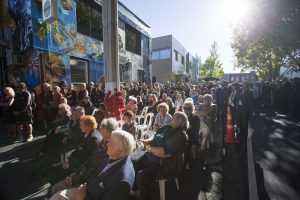
The biggest project that the Board has delivered was opened on 15 September.  In my speech I looked back on the journey to create an inner city community hub and acknowledged the many people involved with the restoration of Ellen Melville Centre (the Board’s project) and the upgrade of Freyberg Place (funded from the City Centre targeted rate). It was a very proud day for the Board.  Since the opening I have enjoyed a number of events at the centre.

Project updates:

Teed Street upgrade

As part of the Board Member Local Board Area Orientation Tour 2017 on 28 September we visited Teed Street to see how the work is coming along to widen footpaths and add new tree pits.

 The work is expected to be completed by the end of October.

Photo right: Mark Knoff- Thomas, GM Newmarket Business Association

Ponsonby Road pedestrian improvements project

Summary of the latest update from Auckland Transport on Ponsonby works:

Brown Street (photo right) and Angelsea Street are expected to be completed the week of 9 October. The contractor has been:

  • removing the existing kerbs/asphalt in Brown St,
  • concrete work for kerbs, ramps and channels
  • installing the paver blocks in Anglesea Street.

Pollen Street begins 9 October. Remediation work on MacKelvie Street starts on 24 October weather permitting and will take a total of seven nights.

Eastern Viaduct Carpark

 Following advocacy from the Local Board, Panuku has agreed to work towards closing the Eastern Viaduct car park to make it public space and to improve waterfront connectively.

In moving towards the closure in March 2018, Panuku is seeking ideas on how the space can be used. Media Release Attachment B.

West Lynn improvements

I have been following up on a number of issues associated with the project to improve pedestrian safety and install cycle lanes on Richmond Road (Route 2 of the Waitemata Safer routes scheme). Works are progressing fast but there are concerns about the location of the bus stops and the disruption to the shopping area during the construction.   I’ve also asked Auckland Transport to improve the parking signage and “businesses open” messaging (now in place – photo right).

As at 9 October AT has confirmed:

  • Signage larger A0 signage went up over the weekend.
  • The messaging on the electronic boards have been changes at AT’s request.
  • We have had approval to establish temporary parking on the Eastern side come through. We’re currently working through the final details and have signage in development. The parking will be one-way only and directed by additional monitoring staff to minimise collision risk when exiting.

Grafton Residential Parking Zone consultation

Waitematā Local Board’s feedback on the proposed Grafton parking changes is attached to the Auckland Transport monthly report on the agenda.

Hobson Bay Walkway

The Board has been looking to complete the Hobson Bay walkway for some time to take the route up to Pt Resolution. It is a project in the Pt Resolution Taurarua Development Plan however it is looking like it will be expensive and challenging to construct a suitable staircase at Pt Resolution.

In the meantime, the mudcrete walkway at the base of the cliffs has been poorly maintained and has suffered storm damage.

At our September meeting we considered a report from officers advising that the no exit section north of Awatea Road poses a health and safety risk due to slips.  We passed the following resolution.

Closure of the Hobson Bay walkway between Awatea Road and St Stephens Avenue
Resolution number WTM/2017/182

MOVED by Deputy Chairperson S Chambers, seconded by Member R Thomas:  

That the Waitematā Local Board:

a)       note the officer recommendation that the no exit section of the Hobson Bay walkway between the Awatea Road access point and the headland below St Stephens Avenue should be closed due to ongoing embankment slips resulting in a health and safety risk to the public

b)       approve the closure of the Hobson Bay existing mudcrete walkway between the Awatea Road access point and the headland below St Stephens Avenue due to the health and safety risk.

c)      notes the closure will be by way of advisory signage.

d)      request officers update signage along the entire route as soon as possible including at the Elam Road access point and the section of the Hobson Bay walkway from Awatea Road to Parnell Baths/Pt Resolution in accordance the Pt Resolution Taurarua Development Plan

e)      request officers to investigate the feasibility of other options for maintenance, renewal and completion of the entire Hobson’s Bay walkway from Thomas Bloodworth Park to St Stephen’s Avenue.

f)        delegate to the portfolio leads Member Shale Chambers and Member Adriana         Avendano Christie for approval of the permanent walkway signage wording

 CARRIED

We anticipate a temporary closure while options for completing the walkway are investigated. Any proposal will go out for public consultation.

Events

 Festival Italiano goes Zero Waste

Festival Italiano organizer Alessandra  Zecchini has again done a tremendous job delivering a successful event in Newmarket (despite the challenge of spring weather).

I was delighted to speak at the opening on behalf of the Board (Attachment C) and to acknowledge the implementation of Zero Waste for the first time. I received a lot of positive feedback about this initiative.

Photo right:  Board member Adriana Christie with Zero Waste Alliance community volunteers

I also spoke at the opening of Art Week (Attachment D)

Meetings and workshops: 11 September until 9 October

  • Weekly Chair’s meeting every Monday morning
  • Chair’s forum on 11 September
  • Waitematā Local Board workshops on 12, 26 September (half day), and 2 October
  • Planning Committee
  • Ports Community Reference Group on 13 September
  • Tour of Ellen Melville Centre on 14 September for Local Board services team and board members (photo right with Project Manager Lisa Spasic)
  • Judges Panel decision making meeting for the Good Citizens Awards 2017
  • Local Boards sub-regional workshop on 18 September
  • Waitematā Local Board business meeting on 19 September
  • Newmarket Business Association AGM on 20 September
  • Meeting with GM Ponsonby Business Association on 21 September
  • Meeting to discuss Achievement Report photos on 26 September
  • Wynyard Quarter Transport Management Association montly board meeting on 27 September (I am now a non-voting member of the Association)
  • Sat in on the Auckland City Centre Advisory Board meeting on 27 September
  • Annual General Meeting of SASOC on 28 September
  • Board Member Local Board Area Orientation Tour 2017 on 28 September (photo right at Basque Park)
  • LGNZ Governance and Strategy Advisory Group meeting in Wellington on 29 September
  • Local board long-term plan briefing on infrastructure funding and investment on 2 October
  • Meeting to finalise Local Board Plan
  • Meeting with Shaughan Woodcock, Pride Parade producer
  • Meeting with Taha Macpherson & Nirupa George from the Mayor’s office to discuss issues going into 10 year budget
  • Catch up with Phil Wilson, Governance Director
  • Catch up with Councillor Lee on 4 October
  • Chair’s Forum on 9 October

Events and functions:  11 September until 8 October

  • Farewell Function – Karen Lyons, GM Local Board Services on 11 September
  • Low Carbon Network – Meet The Candidates event at Freemans Bay Community Centre on 12 September (Photo right making a few introductory remarks)
  • Launch of City Hop electric car charging station in the Downtown car park on 15 September
  • Opening of Ellen Melville Centre and Freyberg Place on 15 September (Opening speech on behalf of the Board)
  • Ponsonby Market Day on 16 September (Attachment E)
  • He Ra Maumahara – Project launch of Te Toka O Apihai by Ports of Auckland and Ngati Whatua Orakei on 18 September
  • Suffrage Day celebrations at Te Hā o Hine Place on 19 September (photo right with the Mayor and Councillors)
  • Attended Tashlikh (Jewish atonement ceremony) at the end of Queens Wharf on 21 September
  • Auckland Conversation In partnership with #Liveable RMLA Conference on 22 September: Toronto’s Chief Planner, Jennifer Keesmaat outlined the ways in which her city has been addressing the shared challenges of rapid population growth, urban redevelopment and renewal, transport choice, housing affordability and community change.
  • Opening of Festival Italiano at Non Solo Pizza on 27 September
  • Knot Touch exhibition opening celebration at the Maritime Museum on 28 September
  • Festival Italiano and festival lunch at the invite of Dante Alighieri on 1 October
  • Civic Trust Heritage Festival debate on 3 October
  • Tyler Golly presentation: Can you build a bike network overnight? at a Bike Auckland and Auckland Council event on 3 October
  • Opening of the new DOC/i-site on Princes Wharf on 4 October (photo right: Lou Sampson, DG of DOC)
  • Māpura Studios debate at Studio One on 4 October including Richard Northey as a panel member
  • Bike Breakfast on 5 October
  • Opening of the Generator at GRID AKL by the Mayor on 5 October
  • Waterview cycleway opening on 6 October
  • Presentation by Greg Vann at MR Cagney on 6 October
  • Spoke at the opening of Art Week at the Ellen Melville Centre on 6 October (Attachment D)
  • Pedal Power in Aotea Square for Biketober
  • Pollinator Park first birthday celebrations on 7 October
  • Auckland Heritage Festival walk of the Waitemata Local Board’s Foreshore Heritage walk on 8 October (photo right of the happy walkers)

New Government urged to take more action on road safety as support for Vision Zero increases

NZ’s road toll is tragically rising.  A new road safety approach is needed that will work.

The Waitemata Local Board is with Brake, Cycle Action Network and NZ School Speeds in backing Vision Zero.

Media Release: Brake Road Safety Charity

New Government urged to take more action on road safety as support for Vision Zero increases

Date: 6 October 2017

Advocates are calling on the new Government to take a fresh approach to road safety, as road deaths increase for the fourth year in a row.

Already this year 283 people have been killed.

A group of organisations has come together to call on Government and local authorities to adopt a Vision Zero approach to road safety – aiming for zero road deaths and serious injuries.

The calls come from Brake, the road safety charity, Cycling Action Network, NZ School Speeds, and Waitematā Local Board Chairperson Pippa Coom, and follow recent moves by some local authorities to embrace Vision Zero.

The organisations are welcoming the moves by Hamilton City Council and Waitematā Local Board to include a target of zero road deaths in their plans, and are urging the new Government and other local authorities to also adopt Vision Zero.

There has also been an increase in public support for Vision Zero measures. A petition set up by NZ School Speeds, ‘Go Dutch and Stop Child Murder’, which calls for 30km/h speed limits around schools and minimum passing gaps between vehicles and cyclists to help children get to and from school safely has gained over 4,000 signatures in a week. According to global best practice, places where high numbers of people on foot and bike mix with other traffic should have 30km/h speed limits.

Caroline Perry, Brake’s NZ director, said: “New Zealand needs to go beyond the current Safe System approach by aiming for Vision Zero. We must create a safe, sustainable, healthy and fair transport system for everyone.”

She says Vision Zero is a proven strategy to bring down the road toll and ultimately bring an end to road deaths and serious injuries.

“At its core is the principle that life and health can never be exchanged for other benefits within society.

“Vision Zero aims to change how governments, organisations, and people approach road safety. A core message is that there are no ‘accidents’. Crashes have causes that are preventable. Working with bereaved families, we see the devastating consequences of crashes. We need action now to reduce our road toll. This approach is reducing road deaths abroad and it’s vital we have it in New Zealand and show that the only acceptable number of deaths on the road is zero.”

Patrick Morgan, Cycling Action Network said: “Safety is no accident. It’s time we moved beyond the Safe System approach, which has failed. With road deaths increasing again this year, we need to adopt Vision Zero, to protect people.”

Lucinda Rees, NZ School Speeds, said: “Make roads safer with consistent and safe lower speed limits so that all can travel safely, and children have the opportunity to journey to school on foot or bike. Action is needed now.”

Pippa Coom, Chairperson of the Waitematā Local Board said: “For too long politicians and transport planners have accepted road fatalities are inevitable. We urgently need a new approach that is proven to work.”

Organisations and individuals with an interest in Vision Zero are urged to find out more and get involved by contacting the organisations above, or going to https://www.facebook.com/groups/VisionZeroforNZ/.

Notes
Total road deaths in NZ by year:
2016 – 328
2015 – 319
2014 – 293
2013 – 253
Source http://www.transport.govt.nz/research/roadtoll/

Brake: www.brake.org.nz
Cycling Action Network: Patrick Morgan tel 027 563 4733, www.can.org.nz
NZ School Speeds: www.facebook.com/NZSchoolSpeeds
Go Dutch and Stop Child Murder Petition: https://www.change.org/p/nz-minister-of-transport-go-dutch-and-stop-child-murder

Related reading

Hamilton City Council has introduced a vision zero target.


Opening of Ellen Melville Centre and Freyberg Place

Opening of the restored Ellen Melville Centre with Mayor Phil Goff, Kaumatua Bob Hawke, amd members of the Melville family

On 15 September 2017 we celebrated the opening of the newly renovated Ellen Melville Centre and upgraded Freyberg Place.  I gave a speech on behalf of the Waitematā Local Board. It’s long! This is the Board’s biggest project started in the first days of the Super City so there was a lot to cover and many people to acknowledge.   There are many elements to the project including restoration of the tukutuku panels, a new artwork by Lisa Reihana and the naming of the 5 rooms in the centre. I didn’t want to miss anything out.

I spoke after the Mayor Phil Goff and Andrew Melville (great nephew of Ellen Melville)

In recognition of Te Wiki o Te Reo Māori I started with a mihi and tried to incorporate reo into my speech.

Tēnā koutou e ngā rau Rangatira mā e huihui mai nei

E nga matua a Matt raua ko Bob, nāu nei tā tātou karakia, mihi mai rā ki a koutou

E te Whare e tū nei,

E ngā pātū tukutuku,

E te wāhi taonga nei nā Ngāti Whātua,

E ngā Mana Whenua me ngā Matāwaka,

E ngā tohunga toi a Lisa rāua ko Graham,

E te Koromatua,

E ngā hau e whā

Ka mihi whānui ki a koutou katoa, Tēnā koutou, tēnā koutou, tēnā koutou katoa

Greetings to everyone gathered here today.  I acknowledge this place where we stand and the Ellen Melville centre in the heart of te rohe a Poari o Waitematā.

Thank you matua and Ngāti Whātua Orakei for leading the welcome and honouring us with your presence. I acknowledge mana whenua, the Melville whanau and all the dignitaries.

Thanks to this amazing gathering of people for joining with us and my fellow board members Deputy Chair Shale Chambers, Adriana Avendano Christie, Richard Northey, and Rob Thomas together with former Board members Greg Moyle and Deborah Yates

This is a very proud day. We are about to cut the ribbon on the Board’s biggest project that we’ve been working on since day one of the Super City.

There are many people to thank and many significant elements of the project that I would like to acknowledge.  Following on from the Mayor’s words about Freyberg Place (acknowledging the design by John Reynolds) I’d like to add an acknowledgement for the innovative children’s consultation undertaken by Karen Witten and Penelope Carroll from Massey University. Thanks to feedback from Aira, Angeline, David, Dustin, Elizabeth, Fergus, Jaden, Jennifer, Jessica, Julian and Scarlett –changes were made to the design to add play features like stepping stones and a climbing tree (located right behind us).

I am of course also delighted to see in the design heaps of bike parking where previously there was none.  And all the drinking fountains so there is no need to buy plastic water when visiting the city centre.

As we’ve heard the hall was originally proposed by Ellen Melville prior to WWII as a centenary project – marking the 100 years of the signing of Tiriti o Waitangi –  but work didn’t get underway until the late 1950’s. Inside you’ll be able to see a number of interpretation panels with the history of the hall (thanks to Heritage NZ and Beth Connor for this work) . Yesterday on a pre-view tour I read that the total cost of the hall completed in 1962 and opened as the Pioneer Womens and Ellen Melville Memorial Hall was 56,200 pounds. Raised with a 30,000 pound donation from the Queen Street Business Association (forerunners no doubt to Heart of the City represented today by Viv Beck) 19,000 pounds from the Council and 8,000 pounds raised by 64 women’s organisations.   I acknowledge our funders today.  The City centre targeted rate payers – businesses and residents who have funded the square upgrade and Auckland’s ratepayers for funding the hall upgrade.

We can thank the Auckland City Chief Architect Tibor Donner for the splendid modernist design.    Many of you here will be old enough to remember the hall with a crèche, meetings rooms and excellent public toilets – vital to women visiting the city centre.

However, despite a well-intentioned and creative redevelopment in 1996 the hall was unloved by the end of the old Auckland City Council’s stewardship.  It was hard to access and not open to the public. There wasn’t even a sign in the window advising how to book the hall.  The downstairs two rooms on High Street and the main room on Freyberg Place were leased out.

From day one the newly formed Waitematā Local Board, led by Shale Chambers set about transforming the hall into a welcoming community hub for city centre residents and the wider community.

At the time the population was at about 20,000. Today almost 50,000 residents call the city centre home (ten years ahead of projections) so a community centre is essential.  It is great to see so many of the residents here today, representatives of the Auckland City Centre Residents Group and the RSA Metropolis – our nearest neighbours. This is an Auckland project that has actually anticipated growth rather than reacted to it!

I’d like to acknowledge the Council staff from the Arts Community and Events Department, Local Board services team and consultants who supported the board’s plans from the earliest days.

Strachan Group Architects wrote a creative design solution report in 2012 that captured the opportunities to upgrade the hall to a first class inner city community facility. It included a heritage assessment written by Salmon Reed Architects. In May 2013 the budget was approved by the governing body.  I acknowledge the Councillors here (Cathy Casey – looking at you!) today who were part of that decision making and we must of course thank former Mayor Len Brown for backing our project – one of the few significant local Board projects to make it through the budget cuts that year.

Once the funding was secure we embarked on the restoration that has revealed a rich history.   Thanks to Andrew for sharing with us the story of his Great Aunt, [ the first female Auckland City Councillor].   It wasn’t until I heard Sandra Coney speak at the heritage festival last year that I came to appreciate the impressive qualities of Miss Melville and her progressive legacy to Auckland.

The Hall has been renamed in her honour as the Ellen Melville Centre.   We’ve also had the privilege of naming all the rooms in the centre in recognition of significant women recommended by the NCW Auckland Branch.

The urban lounge downstairs is officially the Helen Clark Room.  We also have the Eleitino (Paddy) Walker Room,  Elizabeth Yates Room, Betty Wark Room and Marilyn Waring Room.  We endorsed the ‘hall space’ in the Ellen Melville Centre as Pioneer Women’s Hall. Thank you to Christine Caughey and Carol Beaumont who led that work.  Apologies that the opening has coincided with the NCW conference in Christchurch but I acknowledge the NCW representatives and PACIFICA group women here today.   We look forward to celebrating together at the community day later in the year.

Within the Pioneer Women’s Hall are Tukutuku panels presented to the New Zealand Pioneers’ and Descendants’ Club by Mr and Mrs Eruera Stirling for the opening of the Pioneer Women’s Hall in 1962.  The Ōrākei marae weavers have restored the patu Tukutuku for the opening Centre.    Thank you to the Stirling whanau, Ngati Whatua and Peter Tilley the Council’s collection services manager (Arts Community and Events Team)   .

The renovation has not only breathed life back into the original features of the hall – including the James Bowie sculpture commissioned for the opening in 1962 that was being used as a door stop – but provided an opportunity to give life to new works.  Thanks to a commission by the Public Art team we have a new artwork Justice by Lisa Reihana located on the O’Connell Street wall. Lisa’s first bronze sculpture.

I’m going to use Lisa’s words to give justice to Justice . Justice is bronze sculpture floating above an exuberant abstract wall drawing, Justice commemorates Ellen Melville – politician, women’s advocate and pioneer. The scales of justice make reference to her illustrious legal career of 37 years. The bronze forms the centrepiece of the façade; it’s a strong, singular form with gentle curves. The whimsical abstract wall composition has a ‘50s feel, taking its cue from the Parnell Baths mural by James Turkington. The Parnell Baths were also designed by council city architect Tibor Donner.

Thank you Lisa for honouring the centre with your stunning work and thanks Mark Osborne for the support of the public art team.

While the centre restoration has preserved and enhanced the modernist heritage features like the door handles on the reinstated entranceway the centre has a modern refurbishment including a new commercial grade kitchen, improved amenities, new audio visual system and café-style seating. In line with our commitment to accessibility all areas of the centre are now fully accessible with the installation of a new lift.  Thanks to Be.accessible and Vivien Naylor for your guidance.

Of course it is not just the physical facilities but the kaupapa of the building that the Board wants to get right from day one.  We have a vision that the Ellen Melville Centre is a thriving community hub that serves the local City Centre residential and wider community by providing a place for gathering and building connections, information exchange and community participation in a range of activities. It is a place where all members of the community feel comfortable and welcome. .  The Board has resolved to support a fully staffed council governed and managed zero waste facility with transition to community managed after three years.

Thanks to our partners –   Splice, the Inner City Network, Waitematā Youth Collective, Auckland City Centre Residents Group and Heart of the City who worked with us on the kaupapa.

This is story of wahine Toa .  The pioneer women both Māori and Pakeha who made a considerable contribution to the foundation of Auckland.  The women who fought for equality and the right to vote.  Courageous Ellen Melville who’s portrait is on display for the first time. The significant NZ women acknowledged with rooms in the Centre.  Throughout  the project and into the future the Waitemata Local Board doesn’t want to lose sight of the central role of women and the significance of the centre as a place for women.   It was only fitting that the project was driven by a team of female project leads.

Our huge thanks to them and all the project team from key consultants  Isthmus Group, Stevens Lawson Architects, MPM Projects and JFC Limited contractors working with Corbel Construction and the artists were John Reynolds, Lisa Reihana and Graham Tipene.  With a support team from Beca, Matthews & Matthews Architects Ltd, Holmes consulting group, Ecubed and Plan. Heritage.

I’m going to read all the names out so please come forward.   Homai te pakipaki for:

Lisa Spasic,  Karina Mascarenhas , Gary McShane, Mark Bramely, Les Lewer, Sarah Bishop, Travis Wooller, Yvette Overdyck, Elspeth Gray,  Nicholas Stevens, Nathan Farrant, Tony Munro, Cherie Armer , Vanya Toso , Aaron Hansen, John Reynolds, Lisa Reihana, Graham Tipene, Rodrigo Salas, David Saechao, Mark Kessner, Antony Matthews,  John Brown

Before I make my concluding remarks  I have a very special acknowledgement.  Lisa Spasic, who has worked her guts as the Council’s Senior Project Leader.  She has hardly slept this week getting everything perfect. (Adriana presented Lisa with flowers on behalf of the Board)

I appreciate I have been speaking for some time .  I hope you agree the whole herstory needed to be told and the many people thanked who have been part of the journey.  We know it has not always been easy through the design process, securing the funding, the consultation and construction. Thanks to Shale and those who set the course and all those who have seen the project through. We now have a shining jewel in the city centre that we wish to be inclusive and welcoming for everyone.

Now all that is called for is for us to cut the ribbon and Lisa to hand over “her baby” to Leesa Tilley, centre manager so we can open the doors on a new chapter for the Ellen Melville Centre in the heart of Tamaki Makaurau.

No reira

Tēnā koutou, tēnā koutou, tēnā koutou katoa

Additional thanks

Ateesh Patel & civic events team for organising the opening, Frith Walker, MC for the civic opening, Barbara Holloway & Activation team from the  Auckland Design Office

Related reading

Ancient lava flow inspires Freyberg Place design

Women take the lead on city centre development

A jewel for the city centre Auckland Council media release and video of the refurbishment 

Auckland civic space opens after mayor upgrade, NZ Herald

Photos of the event


Major package of walking and cycling improvements underway

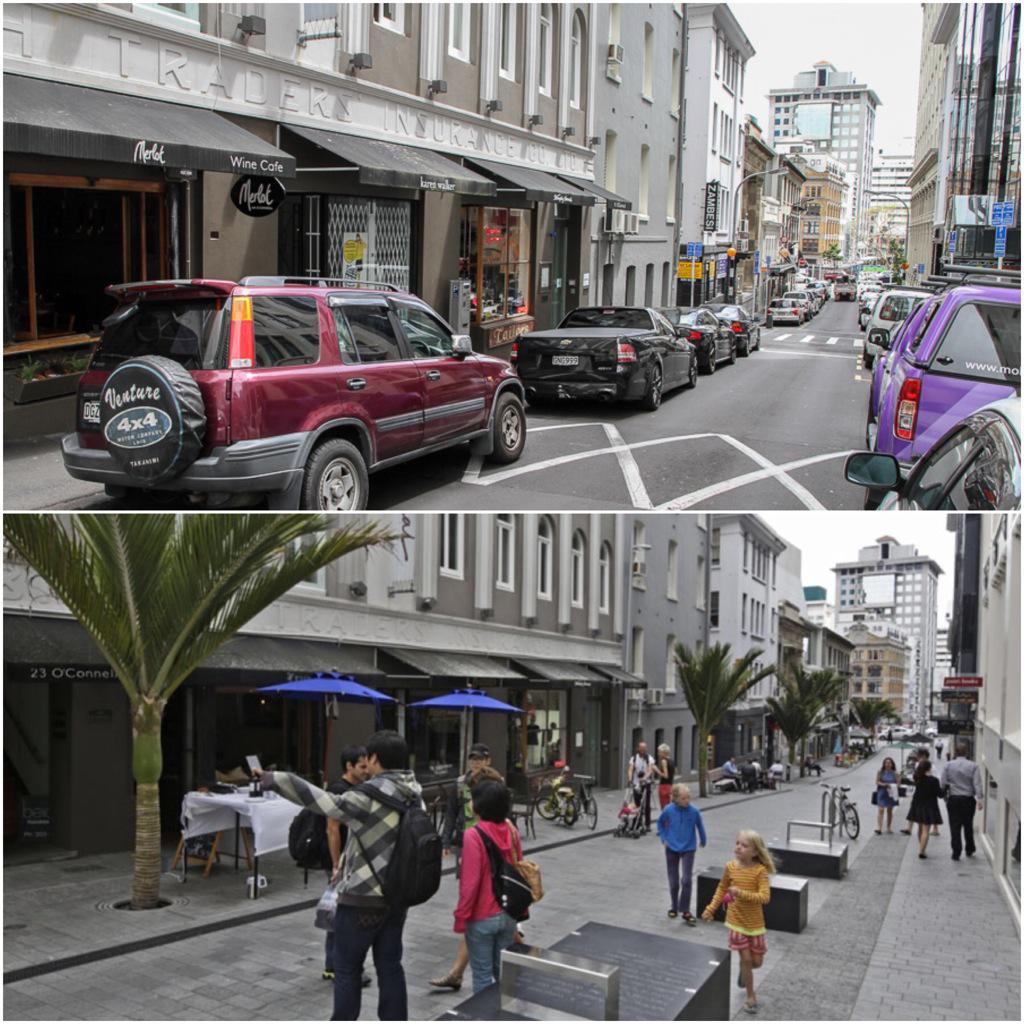
West Lynn shops Richmond Road planned walking and cycling improvements

Waitematā is set to be the big winner from a significant package of walking and cycling projects that are underway or about to start. Once complete we can look forward to a range benefits flowing to the whole community.  A large part of the focus is on connecting the places people wish to go; shops, schools, places of work and community facilities. Contractors have already started work on a separated cycleway and footpath upgrade that will connect Surrey Crescent to Pt Chevalier via Garnet Road, and to the Grey Lynn Greenway via Richmond Road.

Stage 2 of the Franklin Road upgrade is also underway including new footpaths and cycle lanes on both sides of the road that will connect Ponsonby Road to the planned Midtown cycleway at Victoria Park.   A project on Great North Road between Crummer and Ponsonby Roads, will bring in improvements for pedestrians, those on bikes and bus users.  The Karangahape Road enhancements project includes a separated “Copenagen” cycleway and significant streetscape improvements.

This all means that by 2018 new travel opportunities will have opened up via a connected and safe network.  The “network effect” is already achieving results.  Additional connections in the cycle network have created a 44% increase in people on bikes using the Northwestern Cycleway and a total of 45,600 new cyclists in 2016.  There is growing demand from a majority of Aucklanders to cycle (and walk) if the conditions are right.

The funds for these projects comes from a combination of investment by NZTA, Auckland Transport and the government’s Urban Cycleway Fund and is expected to be about $200m over three years.  It is great value for money for ratepayers who contribute $1 for every $2 from the government. In addition, the City Centre targeted rate is part funding the K’rd project.

However, the changes do bring a period of inconvenience and concerns from businesses and residents along the routes.  In West Lynn I’ve been attending meetings organized by a group of retailers who have come together to work with Auckland Transport to minimize impact from the construction and improve access to parking for the shopping precinct as a whole. I’m on the Community Liaison Group, established by Auckland Transport to continue engaging with key stakeholders through the delivery of the Franklin Road project and to address issues like safety.

There is now compelling data to show that Waitematā will reap big rewards from investment in walking and cycling.  Everyone benefits from slower speeds, safer streets, less pollution, fewer health costs and less congestion, when leaving a car at home becomes more of a viable option for more people.    A recent study from the UK of a quarter of a million people, found that cycling to work is linked to a lower risk of developing cancer by 45% and cardiovascular disease by 46%.  There is also a direct link between safe, active transport and economic prosperity.    Recent research indicates that in Auckland a 1% increase in city centre walkability leads to a $43m increase in localised GDP.   We want to ensure these impressive results also extend to our town centres and local shops.

For more details of the walking and cycling programme, visit Auckland Transport’s website: at.govt.nz/cycling-walking.

Ponsonby News column September 2017

Ponsonby News update from the Waitemata Local Board

I’m fortunate to have a monthly column in Ponsonby News.  It’s an opportunity to give an update on Local Board activities and news.  Here is my August 2017 column celebrating the re-opening of Fukuoka Gardens:

Beautifully crafted Japanese garden blooms again

Fukuoka Friendship Garden was originally opened in the Auckland Zoo in 1989 as a gift to the former Auckland City Council from Fukuoka City, Japan, in recognition of the sister city relationship. It was a well-loved, authentic Japanese garden but hidden behind walls only accessible to those who paid the zoo entry fee.

Following a master planning process by the zoo that identified the site for re-development the Garden was dismantled in 2013.   Many were devastated by the loss of the garden and felt that it was removed in haste without proper consultation.    A Friends of

Fukukoa Friendship Garden Steering Committee

the Fukuoka Friendship Garden group was quickly established led by Masa Seikawa, Stephanie Hay and Lee Elliot who mobilised support for the speedy reinstatement. Fortunately, former Mayor Len Brown committed Council to funding a new garden at a new location, incorporating items saved from the zoo site, including bonsai trees, paving stones and lanterns.

One of the first people to rally in behind the Friends was Deborah Yates, who was an elected member of the Waitematā Local Board at the time.   Deborah then became a member of the Steering Committee, set up by Council to find a new location, together with member Vernon Tava, Councillors, members of the Friends group, Maori Statutory Board representatives plus council officers. An extensive search across Auckland led to the assessment of nine locations with Western Springs Lakeside Park, on the boundary with the zoo, as the chosen site in Waitematā.

Fukuoka Garden opening with my sister in law Mayumi Takagi

It has now been over three and half years since the loss of the original garden and so it was a great pleasure to attend the opening on 17 July and to celebrate the hard work of the many people involved with re-establishing the Fukuoka Friendship Garden including the original garden designer Professor Kubota.   A large delegation led by Mayor Takashima attended from Fukuoka to strengthen the sister city ties.

The beautifully crafted new garden, which is 2.6 times larger than the original, has a tea pavilion, waterfall and pond and is free to enter during opening hours:  10am-5.30pm (until 6.30pm during daylight saving).

The Waitematā Local Board is responsible for the majority of the ongoing maintenance.  Zoo staff who are experienced in caring for the bonsai will continue to do this.

Replaced baby swing at St Marys Reserve

The small things that count

Through until the end of June, board members were out and about in the community consulting on our draft three-year Local Board plan.  At the information session at Leys Institute Library, a mother attending Story Time with her toddler, informed us that the baby swing in St Marys Reserve was missing.  I’m pleased to report it was replaced almost immediately.

Jobs like this can be logged by calling Council on 09 301 0101 or you can contact me directly.

Chair’s monthly report June 2017

Report covering the period 4 May – 9 June 2017.

Summary

Opening of the Grey Lynn Greenway
  • Presented to the Finance and Performance Committee on our Local Board priorities for 17/18 as part of the Annual Budget (presentation Attachment A). Approved the Local Board Agreement and work programmes 2017/18 at an extraordinary meeting on 6 June.
  • At our May business meeting we acknowledged the passing on 29 April 2017 of Ken Havill, inspirational and highly respected principal of Ngā Puna o Waiorea Western Springs College for 19 years until 2016, and extended our sincere condolences to Mr Havill’s family and the school community.
  • Opened the Grey Lynn Greenway with Mayor Phil Goff on 2 June (My speech on behalf of the Board and Auckland Transport media release Attachment B). The Grey Lynn pump track informally opened on 24 May.
  • Met with the 254 Ponsonby Road facilitation group and relevant Council officers to progress the community-led design for Ponsonby Park
  • Consultation on the draft Waitematā Local Board Plan got underway on 22 May.  Have your say events held in Parnell, Grey Lynn and at the board office.  Information sessions held at libraries and farmers’ markets.   Consultation closes on 30 June.
  • Followed up a number of transport issues including:
    • Resurfacing on Ponsonby Road between Williamson Ave and Hopetoun Street without any safety improvements
    • Pedestrian safety and footpath clutter at the intersection of Carlton Gore Road and Davies Crescent
    • Leaf collection and maintenance of street trees by Auckland Transport contractors
    • Parking in Arch Hill and rollout of the Ponsonby Residential parking zone
    • Final Grosvenor Street cycleway design removing a large number of car parks and failure by AT to install crossing points along greenway route at the intersection of Grosvenor and Crummer Rd
    • Safety issues with car transporters using bus stops and the flush medium for unloading on Great North Road
    • Parking on the grass in the Domain (enforcement issues are being addressed through the Domain Committee)
  • Provided feedback to Auckland Transport on behalf of the Board on the Pt Chev to Westmere cycle improvements (Refer Auckland Transport monthly report)
  • Traffic calming polka dots installed on Shortland Street (following pedestrian safety concerns raised by the Local Board. Attachment C).
  • Construction got underway on Teed Street,  Nelson Street cycleway stage 2 and continued on the Ponsonby Road Pedestrian Improvement Project (photo right)
  • Community Reference Group established by Auckland Transport to progress the design of the Gladstone Road cycleway.
  • Media coverage included Local Board reports in Ponsonby News (Attachment D) and the Hobson (Attachments E)
  • Attended an event to mark Word Fair Trade Day at Albert Park organised by a student Christine Zhang (Photo right with Christine and Julie Anne Genter MP).  Auckland became a Fairtrade Region in 2012.

Meetings and workshops attended:

  • Weekly Chair’s meeting every Monday morning
  • Ponsonby Business Association monthly board meetings on 4 May and 8 June
  • Uptown Business Association presentation to the Local Board to discuss BID obligations on 4 May
  • Site visits to Wood Street and Hakanoa Street to discuss constituent issues on 5 May
  • Panuku discussion with local board members regarding urban development tools on 8 May
  • Local Board Chairs’ Forum on 8 May
  • Waitematā Local Board workshops on 9, 23, 30 May and 6 June
  • 2017/2018 Annual Budget Waitemata Local Board advocacy. Presentation to the Finance and Performance Committee on 9 May (Photo right. Presentation Attachment A)
  • Franklin Road community reference group meeting on 10 May
  • Meeting to discuss support for the Santa Parade with representatives of the Council family on 11 May
  • Meeting to discuss the Franklin Road lights on 11 May
  • Meeting with Business Lab to discuss the City Fringe Economic Development Action plan refresh on 11 May and 1 June
  • Meeting on 15 May to discuss partnership opportunities with Western Springs College arising from the school rebuild
  • Local Boards sub-regional workshop on 15 May
  • Pre- agenda briefing for the Domain Committee
  • Meeting with AT’s parking manager on 16 May
  • Meeting to discuss Western Springs Precinct with Regional Facilities
  • Waitematā Local Board business meeting on 16 May and extraordinary meeting on 6 June
  • Transport portfolio catch up on 17 May
  • NZTA strategic direction presentation to invited stakeholders on 17 May
  • Meeting to discuss the development of Council’s homelessness policy
  • Monthly Local Finance Advisor catch up on 23 May
  • Auckland Domain committee workshop and business meeting on 24 May
  • Attended the Auckland City Centre Advisory Board meeting on 24 May (as alternate)
  • Community Reference Group for the Parnell cycle route workshop organised by Auckland Transport on 31 May
  • Chair’s recommendations run through meeting on 11 and 31 May
  • Meola Reef Reserve development plan site visit with mana whenua on 31 May (photo right)
  • Tour on 1 June of the Central Library planned refurbishment
  • Meeting on 2 June with Christina Sayers-Wickstead to discuss the NZ Suffrage Museum project
  • Phone interview as part of research looking at road user pricing
  • Workshop with the 254 Ponsonby Road facilitation group on 7 June
  • Agenda run-through meeting on 7 June
  • Spoke at the Economic Development workshop with city fringe business representatives to assist with the refresh of the ED plan held at ATEED on 8 June
  • One-day workshop on 9 June for Chairs developed by the Institute of Directors

Events and functions attended:

  • Opening night of Amadeus at ASB Waterfront Theatre at the invitation of Auckland Theatre Company
  • Community planting day at Hakanoa pollinator Park (Photo right with Bike Grey Lynn volunteers) and the Grey Lynn Pump Track on 6 May
  • Farewell to Carla van Zon, Auckland Festival director
  • Spoke on the IAP2 Australasia 2017 Engagement Symposium K’rd Walking Tour about Myers Park consultation on 12 May  (photo right)
  • Fairtrade Festival in Albert Park on 13 May
  • NZ Book Awards on 16 May
  • Writers Festival Gala Opening night on 18 May
  • NZ Trio at Q Theatre 21 May
  • Auckland Conversations on 23 May: Manhattan to Manukau – Lessons from New York
  • Innovators in discussion at MOTAT on 25 May
  • Autumn Biking bee adventure on 27 May
  • John Macdonald’s Induction as Methodist Mission Northern Head of Mission on 30 May
  • Grey Lynn Greenway opening on 2 June (Attachment B)
  • Presided at the Central Citizenship Ceremony on 6 June (photo right)


Draft Local Board Plan consultation events:

  • Have your say events in Parnell, Grey Lynn and at the Local Board Office
  • Information sessions held at Parnell Farmers Market, Grey Lynn Farmers Market and at Libraries (photo below with members Richard Northey and Adriana Christie at Parnell Library)

Grey Lynn Greenway opening

On 2 June we opened the Grey Lynn Greenway with the Mayor Phil Goff and Auckland Transport.  Wayne Donnelly,  Deputy Chair of the AT Board was MC for the speeches.  Here is my speech on behalf of the Waitematā Local Board

Tēnā koutou huihui mai nei

Talofa lava

Warm greetings to everyone gathered here

As the heart of Tāmaki Makaurau we’re really fortunate to attend and host many openings of new and upgraded community assets.  The Grey Lynn Greenway is one that I have been especially looking forward to and feel very fortunate to be opening as Chair of the Local Board.  Thank you to everyone who has come along this afternoon.  I’m joined by my local board colleagues Adriana Christie, Rob Thomas and Shale Chambers . We’re fortunate Mayor Phil has had a lot of practice lately for opening new pathways and is able to join us.     I’d especially like to acknowledge former board member Christopher Dempsey who is here to celebrate with us (Tricia Reade sends her apologies).

When I am out and about one of the positive comments I hear the most from locals is how much they enjoying the walking and cycling improvements in our area.  There is a tremendous desire to be able to jump on bikes at any age for local trips or recreational rides.

When I moved into this area over 10 years ago with my partner Paul (here with Bike Grey Lynn) we bought bikes to get around.  Like most people cycling back then we were shocked at the hostile road environment and the lack of cycling facilities.  At the same time there seemed to be some really obvious “quick wins” to make walking and cycling far more pleasant.  Paul first suggested to me the idea of a “Greenlink” connecting Grey Lynn Park with Coxs Bay. This was on a wave of hearing about Bicycle boulevards and greenways transforming neighbourhoods overseas.   I am sure many people had similar ideas at the time as an extension to the existing walking connection established by the Western Bays Community Board  (Graeme Easte just called from Whangerei to give his apologies – probably just as well he is not here as I’m sure he’d tell me I have the history of this route wrong!)

The super city finally provided the opportunity to tackle some of those so called quick wins in Waitematā.  The Greenlink idea was embraced by the first Waitematā Local Board supporting a network connections linking our green spaces and reserves that then became a real project with a Waitematā Greenways Plan approved in 2013  – the second local board to complete a plan after Puketāpapa.

The Grey Lynn Greenway has been built in stages as funds have allowed.  The boardwalk in Coxs Bay was rebuilt and paths widenedin 2014 .  Widened paths in Hakanoa Reserve and Grey Lynn Park were completed last year.  The on road sections finally got the green light with a funding contribution from the Urban Cycling Investment fund.   We now have a complete, attractive off road route from West End Road to Williamson Ave through our beautiful parks.   It opens up connections to sports facilities, schools, local shops and will link into the network of safe routes about to get underway on Great North Road, Richmond Road and Surrey Cres.   And of course a connection to the new Grey Lynn pump track  (great to see Scott here who has been instrumental in that project). We fortunate that the community has got behind the Grey Lynn pump track and the pollinator path planting that will further enhance to the greenway.  We’re already hearing about the wider mobility and accessibility benefits of the Greenway.  A bike school bus has started from Grey Lynn School and wheelchair users are able to easily cross Richmond Road for the first time on the new crossing.

There are still things to get right and we’ve heard AT acknowledge the design and consultation issues on one section.  Auckland Council also has a path section in Coxs Bay to finish off that got held up by the  resource consent.  I’m confident that we’ll work through these issues with AT and the community so that everyone can enjoy and benefit from a new community asset.

We’re also looking forward to working with AT on our next Greenway project to open up the old Parnell train tunnel – but more of that another day!

I’d like to end with the many thanks in order.

Members of the project team with Mayor Phil Goff
  • To the community for all the support for the Greenway and for your patience with the construction.
  • To the volunteers and guardians of the park we look forward to continuing to work with you into the future to further enhance the greenway.
  • To the advocates for who have been unwavering in the task of making Auckland a great place to get around.
  • Thanks to the designers, planners, engineers, technical and support people who all do the hard work behind the scenes.  The thanks on this goes back over many years to David Little and Lynda Lucas who worked on the Greenways plan.
  • The many parks people who worked on the off road sections – too many to name today.
  • The AT team who have worked on the project including Priscilla and Ben (the former and current local board liaison manager)  – the quiet operators who know how to bang heads together to achieve results for local boards
  • And thanks to all those involved in the AT part of the project from Auckland Transport, MR Cagney, MWH and TSL including
    • AT – Ken Lee Jones (Project sponsor) Paul Buckle (W&C client), Ameer Bahho (Project Manager)
    • MWH – Sagar Kariya (Designer)
    • MRCagney – Abby Granbery (Peer Review lead)
    • TSL – Ikram Patel (Contractors Rep)  Mohammed Buksh (Site Engineer)

I hope you will all join me for a ride over once we’ve finished the formalities.

After the ribbon cutting the Mayor jumped on a bike for a ride to the Grey Lynn Pump Track 

Further reading

Grey Lynn walking and bike path opens.  Auckland Transport media release

Mayor Phil Goff at the Grey Lynn Pump Track


Anzac day speech: Grey Lynn RSC parade and service

E ngā mana, e ngā reo, e nga tamatoa, rau rangatira mā
Tēnā koutou, tēnā koutou, tēnā tatou katoa

Greetings to everyone gathered here this morning.

It is a great honour to be invited to speak today on behalf of the Waitematā Local Board. I’m joined by board member Adriana Christie who is experiencing her first ANZAC day commemoration in Grey Lynn.

I’d like to acknowledge everyone who contributes to this occasion which is a uniquely Grey Lynn commemoration – president Rocky, the club committee, veterans, Rev Mua, service people, merchant seamen, the military re-enactment society and distinguished guests.  We gather here as a community of family, friends and neighbours to mark the 102nd anniversary of the landings by ANZAC troops at Gallipoli in 1915.

As a migrant to NZ I don’t personally have a family connection to Gallipoli or any NZ’s military heritage.  But I give thanks to the Grey Lynn RSC for uniting us all on ANZAC day regardless of nationality, ethnicity, background, religion or political beliefs.

We have all come together, not to glorify war, but to commemorate New Zealanders, Australians and Pacific peoples who served and died in all wars, conflicts and peacekeeping operations and share the sorrow at the loss and suffering of so many lives in war including those opposing war.

The campaign at Gallipoli was brutal, bloody and entirely futile.  We make a commitment each year that we will not forget, that we will not repeat the mistakes of the past but sadly on-going conflicts around the world show that history continues to repeat itself. We look to our leaders to find peaceful solutions in the face of escalating conflict and sabre rattling.

Gallipoli marked the dawn of nationhood for NZ and Australia.  I give thanks for the ANZAC spirit of sacrifice, courage, commitment and giving which has seen NZ cope through natural disasters and rise to the challenges of our time.

Young people are central to ANZAC commemorations across the country no where more so than in Grey Lynn.  A special kia ora to all the tamariki here today commemorating in your own way but also enjoying the freedom of being out in the street surrounded and protected by your community.

We remember and reflect on ANZAC day together and work to ensure future generations do not face the horror of war. As we remember those who sacrificed their lives and honour those who served we recommit to the importance of peace, independence, fairness and freedom.

Kei wareware tatou

Lest We Forget

No reira

Tēnā koutou, tēnā koutou, tēnā tatou katoa

City Building: Auckland Transport’s “expectations” should not dictate our planning

An attachment to my March 2017 Board report

On 10 March I attended a joint Planning Committee and Waitematā Local Board workshop hosted by Panuku to discuss the extensive Waterfront and City Centre Work Programme.  Over the next year we are going to see the refresh of the Auckland Plan, the City Centre Masterplan and the Central Wharves Strategy and further work on the Wynyard Quarter Framework Plan.  The invite described the workshop as follows

Significant progress has been made towards achieving Auckland’s vision of our CBD waterfront as a world-class destination and economic driver for the region. The Council family is currently working together to build on this progress and refresh our thinking with respect to the changing context of the waterfront, so as to ensure that we continue to deliver on the potential for this crucial part of the city – from Harbour Bridge to Teal Park.

 You are invited to a workshop to inform the next stage of waterfront planning. The workshop will help you to fully understand the current state, interrogate the impending decisions, and provide guidance for the strategic refresh.

 This complex and ambitious development programme is being planned and delivered by an integrated taskforce from across Council, Panuku Development Auckland, ATEED and Auckland Transport.

After the workshop I wrote the following in a facebook post in reaction to one of the slides from the presentation:

Interesting to attend the Planning Committee workshop this morning on the waterfront and city centre work programme. What it really highlighted to me is how much of our planning is still being dictated by Auckland Transport engineers and their “expectations” and modelling of traffic volumes. The design of the city is a political decision. As we know from smart people like Ethan Kent (one of many international speakers we’ve been fortunate to host in Auckland) if we design for “cars and traffic we will get more traffic. If we design for people and places, we will get people” This is so clearly demonstrated on O’Connell Street. If we’d listened to the engineers the upgrade would have included car parking. Instead the politicians led by Shale Chambers set the vision for a shared space. It is working so well, especially while it is now temporarily closed for the developments nearby, the retailers would like it permanently closed to cars. As we move ahead into the next version of the Waterfront plan and City Centre master plan, Auckland Transport needs to ask what the vision is (e.g. a carfree city centre, a pedestrian first city centre, a child friendly city, low carbon city etc), the politicians should then confirm, after public consultation, the outcomes we want and we must then demand the city is built to achieve that vision.

O’Connell Street before and after (Photo Credit: Transport Blog)

Related reading

Council saves Linear Park from Auckland Transport’s clutches, Transport Blog

Auckland’s transport crisis: How it was made and why it will only get worse The Spinoff