AT hasn’t followed a transparent process in reaching a decision to go ahead with a trial and doesn’t appear to have considered the negative impacts. As an advocate for Auckland here is what I wrote to the Mayor on 20 February (cc Local Board members, Councillors, City Centre Residents Group and AT Executives) asking him to stop the trial.
Dear Mayor Wayne,
Thank you for standing up for Auckland and for supporting the revitalisation of the City Centre.
Have you noticed that it is now possible to be on Queen Street and hear birds chirping, the laughter of people and enjoy fresh air? There are so many well-designed spaces and the street environment is greatly improved, making it an enjoyable experience to spend time (and money) in the City Centre.
This has happened as a result of the many projects and initiatives that are making the City Centre a more attractive place for people combined with the growing range of options to access the City Centre without a car. Overwhelmingly, residents don’t own a car and the majority of visitors don’t arrive by private car.
If you dive into the stats you will find that there is less air pollution, less noise, public transport is more reliable, there are fewer crashes and more people are returning every day to discover that the City Centre is very different from the scare-mongering headlines.
Queen Street is a much nicer place for people to visit than it was before – with added greenery, more public art and much improved seating. I have to admit that I was skeptical about the design of Waihorotiu shared path when it was first proposed but it is working really effectively for getting people around on wheels (especially young people who increasingly rely on e-scooters) and it means the footpath is safer for pedestrians. This revitalisation and progress benefits all Aucklanders.
For the 40,000 residents who live in the City Centre the many improvements have literally been life changing. There are now apartment buildings with approximately 1500 – 2000 residents on Queen Street and this continues to grow. We can even start to imagine a City Centre where families increasingly want to live and bring up children.
We can aspire to meet the Council’s target of growing the residential population to over 100,000 residents. But this will only happen if you continue to back planning for the future (not the status quo) and hold firm to the core strategies like the City Centre Masterplan and Access4Everyone that are now reaping the rewards after many years of disruption.
Of course there is still more to do to improve accessibility, improve the perception of safety and provide care for the most vulnerable people who are on the streets as a last resort. There is no doubt that the ongoing works around the CRL and Midtown have been really hard for businesses. Fixes are needed around loading zones, and places for drop offs and pickups for Ubers and taxis. Improvements for mobility access to Midtown venues like the Civic are also needed.
However it makes absolutely no sense for AT executives to unilaterally address these issues with solutions that belong in the 20th century.
This is not the time to backtrack on PT improvements (the planned 24/7 bus lanes on Wellesley Street) or to flood Queen Street with cars once again, especially just before the CRL’s new stations deliver a “people fountain” to Midtown. AT’s proposed 2 year “trial” will result in more air pollution, more car noise, more traffic congestion and will make Queen Street (and access to Queen Street) less safe. It will make the City Centre less attractive for people to visit other than in a car and will negatively impact residents. It will also encourage drivers who just want to cruise Queen St – the car engine noise that dominated Queen Street for many decades will return too.
Please demand that AT stop any plans to increase access for general vehicles at the expense of public transport and people. Please also insist on transparency and a process that involves all stakeholders including the Local Board and the City Centre Residents Group before there is any back-down by AT on planned improvements.
Let’s keep going with the revitalisation of the City Centre including working towards further pedestrianising Queen Street in time for the CRL opening.
Before the Authorised Vehicles Only Zone and pedestrian improvements – space for vehicles but not people Photo Jolisa Gracewood
Te Komititanga
Tūrama the Matariki lights on Queen Street Photo Jolisa Gracewood
It is super easy to vote in the local government election on now.
If you are enrolled you will have received an orange envelope with your voting papers inside. All it takes to have your say.
GET TICKING: choose the candidates to represent you and your community (I am backing City Vision as the only team with policies for a liveable, thriving and inclusive Auckland)
STUFF IT: seal your vote inside the orange envelope
DROP OFF: take your vote to the library or a Woolworths supermarket right up until midday Saturday 11 October.
If your voting paper hasn’t arrived, or you need more info, visit voteauckland.co.nz
I am part of the campaign team for City Vision backing a great team of candidates who are really clear about what they stand for and their principles. City Vision has progressive policies for a liveable, thriving and inclusive region . City Vision brings together Labour, Greens & community independents committed to a progressive vision for Tāmaki Makaurau Auckland
Make your own assessment: Candidate surveys are a good way of comparing policies and positions
Auckland’s central suburbs, city centre and Gulf Islands deserve and need an elected representative who really understands how Tāmaki Makarau functions, has 21st solutions to offer to the challenging issues facing Auckland Council and the wider region and who really loves the city. We have this in Patrick Reynolds, candidate for Waitematā and Gulf ward who is standing with City Vision. Patrick is upfront, smart, collaborative and a critical thinker. He is well prepared and ready to serve on council.
Mike Lee staged a comeback last election after an unexpected defeat in 2019 but it is now time for Patrick’s positive progressive leadership. Why is Mike no longer up to the job? The answer lies in Mike’s motivations for seeking a comeback and those who backed him, the failures that have characterised his time on council this triennium, and the misinformation he continues to peddle to justify his re-election. It’s beyond time Mike stepped aside.
The comeback
In 2022 Mike announced that he was coming out of retirement to re-stand for Auckland Council following persistent lobbying from “so many people”. He went on to win Waitematā and Gulf ward election* thanks to a strong turnout on Waiheke (egged on by a misinformation campaign over co-governance) and with the backing of the same people behind the vile Treaty Principles Bill. Individuals aligned to groups like Hobson Pledge, Democracy Now, Gulf Users Group, and The Taxpayers Union. Mike Was also supported by National party- aligned C&R who didn’t stand a candidate.
Mike promised to “turn things around so that the Auckland Council starts to function as an organisation that serves the public – not the other way round”. However, Mike’s track record this term shows he is only interested in stopping progress regardless of the public interest.
He has lashed out against the publicly consulted on City Centre Master Plan that in addition to strong community support has the backing of the City Centre Advisory Panel and City Centre Residents Group . He voted against Te Hā Noa the upgrade of Victoria St and against extra funding for the City Rail Link which would have resulted in an unfinished hole in the ground.
A world-class city centre or more cars, noise and pollution?
An example of the people-friendly street upgrades not supported by Mike Lee
Mike opposes making Queen St more people friendly with space for walking and cycling (he did after all once say he loves the smell of diesel as he walks down Queen St! ). One of the reasons he is standing again is to “lift the destructive blockade of Queen Street and restore free access to Queen street” (from Mike’s website). He wants to welcome more cars, fumes and noise into the heart of Auckland against the wishes of the residents who live there. This will undermine public transport and is contrary to everything that makes a world class city centre.
He opposed the designs for Project K giving AT the excuse to water down the consulted on and publicly supported improvements around the new Karangahape CRL station (thankfully restored after a tenacious community campaign).
Mike’s priorities, in particular his preference for cars over people, negatively impacts the very quality of life he said was under threat in 2022. Mike opposes any progress that makes the city more liveable, accessible, and inclusive.
Failure to collaborate and build consensus
Mike Lee at the council table May 2025 (livestream screenshot)
He has made a great failure of his “hope to work with the new Mayor and fellow-minded Councillors”. He quickly fell out with Wayne Brown and within 7 months had been dumped off the Auckland Transport Board. Around the table he shows no capacity for listening to the views of others, collaboration or consensus building. Where once he was able to win support for major investment like the electrification of rail (a legacy of which he can be very proud) now when he speaks the majority of his colleagues switch off. Where Mike could have “fought for democracy” and used his power, such as stopping Auckland Transport making streets more dangerousagainst the wishes of the communities, he has been completely ineffective and very often absent.
Mike Lee at a meeting hosted by David Seymour, in his capacity as Epsom electorate MP.
He has taken an anti-housing position in railing against the replacement Plan Change 78 and misrepresented the options imposed on Council by the government. Some of the solutions Mike offers to address housing affordability make sense but rather than building consensus to make a difference he accuses City Vision of being the “Woke Left”. What does it say about his position on zoning that some of his biggest supporters are neo-liberals like David Seymour and National aligned Christine Fletcher? (who are both incorrectly claiming that council can ignore the governments directive to stick with Plan Change 78 or agree a replacement by 10 October)
Politics over solutions
Granted Mike took a “progressive” position in his opposition to the sale of airport shares but lacked the ability to lead a majority of councillors to take a stand against the Mayor’s asset sell-off. The progressive councillors who voted for the sale did so pragmatically and in the best interests of Aucklanders as it avoided service cuts to things like climate, environment, local boards, regional grants and public transport. They knew the votes were there for big cuts so made the tough decision to sell to protect council budgets and increase revenue.
Mike campaigns on lower rates but has never explained how this would be achieved without significant cuts, increased debt and/or the sale of assets. Even with this year’s Annual Budget he joined two other councillors to vote for the budget but against the rates rise- which would have led to a $170m hole in the budget if the majority voted that way. Like his allies on council – John Watson, Wayne Walker, Christine Fletcher, Ken Turner – he is often against something for political reasons but does not show the leadership to make a hard decision or put forward alternative solutions.
Mike still has a gift for the theatre of politics. This was on show in the recent debate about helicopters. The headlines give the impression he was “ambushed” in his attempts to side with the community that quite rightly wants to ban helicopters in residential areas. But dig into why his colleagues voted against him, 15:7, as Simon Wilson has done, and it becomes clear that “Councillors voted for the option they thought had the best chance of succeeding, and against the option they thought was, in effect, full of sound and fury, but signified nothing”. (From the Quiet Sky Waitemata facebook page). Even the cheers from Waiheke for his “success” there may be short-lived as the plan change he has kicked off gave “false hope” and risked wasting millions of dollars on a rule central government is unlikely to approve.
Conservationism that undermines Te Tiriti commitments
There is no doubt Mike is a “passionate Hauraki Gulf conservationist” but his efforts to establish a marine reserve off Waiheke “which attracted 93% support of public submissions” ignores the fact it is opposed by tangata whenua who, alongside the Hauraki Gulf Forum, want marine protection that doesn’t extinguish indigenous rights. Mike’s paternalistic conservationism perhaps explains his unwillingness to take a stand for Te Tiriti and why he continues to draw support from Hobson Pledge aligned people.
Policy and Planning Committee vote on the Treaty Principles Bill
He joined a group of reactionary and conservative councillors in opposing Auckland Council’s submission against the Treaty Principles Bill. Just last month Mike voted against establishing the Waitākere Ranges Heritage Area Forum with tangata whenua representation, a key part of the long fought for Deed of Acknowledgement for the Waitākere Ranges Heritage Area to be entered into with Te Kawerau ā Maki and the Crown.
The worst attendance of any Councillor and questionable behaviour
Over a long career he has a reputation as a bully and shouter at both colleagues and staff. He recently brushed off raising his voice as “normal” in a political setting. Behaviour that has no place on Council even under a Mayor of his own generation. No one can take away his achievements from earlier this century but he appears to have fallen out of love with the city and the diversity of its residents. He is mainly absent from civic life, cultural occasions and the many events that take place in his ward. He has the worst attendance record this term of any Councillor.
You can tell a lot about a candidate by looking at who supports them
This election Mike is standing as “Auckland Independents” with endorsements from a motley crew of National Party aligned C&R, Rock the Vote NZconspiracy theorists andlocal cycleway saboteurs. He is no longer the progressive leader.
Patrick with Richard Hills, Councillor for North Shore
Patrick is standing with City Vision, the progressive coalition of Labour, Green and community independents. As Patrick says ” to achieve positive things in public office, it’s all about building constructive relationships”. Patrick has a proud record of working with a wide range of Auckland’s key decision-makers to create a more prosperous, liveable, and inclusive city for the 21st century. He is the future for Waitematā and Gulf ward.
* I campaigned for Mike over three elections when he was endorsed by City Vision until 2016. I lost to Mike in 2022 after one term as a Councillor and three terms on the Waitematā Local Board
Make your own assessment: Candidate surveys are a good way of comparing policies and positions
Te Rimutahi Ponsonby’s new civic space opened last month. It is a wonderful thing to witness the successful completion of a project that has been over 25 years in the making especially as there were many moments when it didn’t look like it would get there.
The project goes back to a Boffa Miskell Ponsonby Open Space Study in 2000 that led to the purchase of 254 Ponsonby Road in 2006 with funding from the Western Bays Community Board. There are many parents who nurtured Te Rimutahi along the way.
My part was initiating the community-led development process a decade ago. This came about after the Waitematā Local Board consulted on the Ponsonby Road Plan including three options for the site. When the feedback was reported to the local board council staff refused to provide an recommendation on the way forward because it wasn’t a funded project. This left us a bit stuck especially as a petition was presented to the local board with over 1200 signatures calling for a ‘whole of site option’ rather than the sale of the rear portion to fund the project as envisaged when the site was purposed.
I pitched to Chair Shale Chambers the idea to using a community- led development process to achieve community support for the best outcome for the site. Fortunately Shale took a leap of faith and in May 2015 the City Vision-led Local Board committed funding to a community partnership approach.
At Auckland Council we have been talking a lot about community-led development and empowered communities over the last 4 years . We’ve been introduced to the concepts through excellent visiting speakers such as Milenko Matanovic and Jim Diers. We have a community-led development champions group convened by Roger Blakely, Chief Planner of which I am a member. We have many community groups participating in shaping local services and placemaking but we don’t have many positive examples of Council putting community-led development into practice.
I am therefore really thrilled about the approach the Board has decided to take in response to the feedback on the development of 254 Ponsonby Road.
With community-led design group members Boopsie Moran and Jennifer Ward
What followed once a community-led design group was established is covered here in the history of Te Rimutahi. I was really relieved when the group’s design brief led to the LandLAB Park+ concept for the civic open space being chosen by the community and endorsed by the Local Board in 2017. It then took sustained advocacy to secure the funding and see the project through to completion 8 years later. The opening of Te Rimutahi, a name gifted by Ngāti Whātua Ōrākei, on 18 May 2025 was a fantastic community celebration of probably Aotearoa’s biggest project delivered through a community-led design process.
At the ribbon cutting with former Chair of the Waitematā Local Board Shale Chambers and current chair Gen Sage, Mayor Wayne Brown and members of the community-led design group Chris Bailey, Jennifer Ward and Boopsie Moran; Bill Jackson, the project manager for Council, Ngāti Whātua Ōrākei rep Jake and Councillor Mike Lee
St Mary’s college jazz band at the opening celebration
Te Rimutahi grassed area at the rear of the site that was originally intended to be sold to fund the project
The first community activation at Te Rimutahi -social dancing organised by Suzanne Kendrick
I’m making a submission on the Draft Government Policy Statement on land transport 2024-34 (GPS) by the cut off midday on Tuesday 2 April. The GPS sets the funding priorities for land transport for the next 1o years so is hugely important for delivering an efficient, safe, accessible, healthy and affordable transport system for all.
Unfortunately the draft GPS is not informed by evidence, ignores the fundamental reasons why people travel and will not deliver on the government’s strategic priorities. The GPS starkly deviates from sensible transport policy, value-for-money investment decisions, and best-practice transport planning seen in other countries around the world.
For Aucklanders the GPS will result in more congestion, higher travels costs, poorer heath outcomes from increased pollution and reduced access to active travel options.
It completely ignores the needs of the 30% of New Zealanders who cannot or do not drive. More people, especially the most vulnerable road users like children and elderly, will die or be seriously injured on our streets and roads if the GPS is allowed to progress as drafted.
The GPS will not enhance economic growth and activity in urban centres like Auckland. Our transport challenges can not be met by building more roads as proposed by the GPS – the Roads of National Significance (RONS) make up only 1% of Auckland’s road network and according to Waka Kotahi’s own studies have Benefit-to-cost ratios of 1 or less. The RONS are not a good use of public money and are inefficient.
Leveraging every opportunity to get more out of the existing network, providing more efficient ways to move goods and people and encouraging mode shift will have the greatest positive impact for the city. The rapid transit network (and cycling network) can be completed by making use of existing road space. It makes no sense for the GPS to ban the current approach of funding improvements to local roads from a single funding source. Requiring walking and cycling investment from only one activity class will be inefficient and expensive for councils and create additional administrative costs. It also makes no sense for the GPS to direct that investment is only to be made “where demonstrated volumes of pedestrians and cyclists already exist.” The Auckland Harbour Bridge would never have been built if the same criteria had been applied.
As a former Auckland Councillor and Local Board member I know from experience that people want safer streets, want more transport options especially for local trips, and support investment in walking and cycling infrastructure. This is not based on “ideology” but on the feedback from countless public consultation processes and Waka Kotahi’s own surveying.
It also concerns me that there is no mention of engagement with Māori and improving outcomes for Māori. Again, from my experience on council I know that when engagement happens properly and respectfully with Māori the outcome is improved and of a higher quality for everyone.
There are a lot more points to cover about what needs to be ditched and improved in the GPS. Fortunately, smart and informed people have put together a submission guide Transport 4 all to assist with feedback on the main issues. Auckland Council also gave astute feedback on the GPS
A reflection on the Mayor of Auckland to end 2023 posted on facebook and LinkedIn (please head there for any comments)
At the Helen Clark Foundation Christmas drinks last week I joked with Mayor Wayne Brown that a year ago, at the same event, hardly anyone wanted to talk to the presumed “worst ever” Mayor of Auckland so he didn’t stick around- one year on he is heartily welcomed as the Mayor to defend the city from the new government (or more specifically Simeon Brown)!
Wayne definitely rates himself as a much better Mayor than people give him credit for. It turns out his politics are quite good. It helped a lot that he quickly discovered that the councillors who he thought were his natural allies and backed him because he was ABC (Anybody But Collins) were not the ones who could be relied upon to constructively work to fix anything (the “furious few” who just say no to everything as Simon Wilson calls them). The progressive grouping of councillors have had an extremely tough year but as they’ve gotten used to a very different style of leadership they’ve achieved the wins and taken control of key positions (yay for them!). Hayden Donnell has captured the shift in power in his piece for Metro Has Wayne Brown gone Woke?
I have to credit the Mayor for his ability to change his mind once properly briefed (a trait unfortunately lacking in many politicians). He changed his view on the Te Hā Noa upgrade of Victoria St and didn’t chop Eke Panuku as he originally threatened. He hasn’t caved into Herald headlines over decisions like the Downtown Carpark redevelopment or reducing greenfields sprawl.
He has moved away from taking soundings from the “saboteurs” and discovered a much wider community of “urbanist” support (he didn’t back the Great North Road or the Pt Chev to Westmere upgrades but he didn’t block them either as the saboteurs and Mike Lee unsuccessfully attempted against the wishes of the community).
Of course I don’t support all his decisions (he was on the wrong side of history with Māori wards when leadership was needed and withdrawing membership from LGNZ was petty point scoring) and especially his plan to privatise the Ports of Auckland but there’s some surprisingly positive things coming in the draft Long Term Plan out for consultation next year like the proposal for a $50/week cap on PT fares. I’ll be cheering on if he really can deliver on “fixing” transport cheaply and quickly especially “low cost opportunities” to deliver the Auckland cycle network as AT has been directed.
None of which is to excuse the Mayor’s problematic behaviour. He has a terrible habit of blurting out inappropriate comments and offensive remarks. Sometimes it can be funny and I don’t think he intends to cause harm (mostly) but unfortunately his un-PC style has resulted in a culture from the top that has unleashed the worst from some councillors and seen excellent council staff leave. There are really decent and smart people in the Mayor’s office who must be hoping for a fresh approach in 2024.
The final breakdown of elections results confirmed I won in Waitematā (city centre and central suburbs) but unfortunately it was a very different picture on Waiheke. I wrote the following for the Waiheke Gulf News (published on 1 December 2022) to set the record straight on a number of the election issues. It is also an opportunity to give thanks for the privilege of serving the Gulf Islands for the 2019-2022 term
It was a privilege to represent Waitematā and Gulf for a term as Councillor. I’ve appreciated the relationships I was able to develop in the community even though covid restrictions limited the amount of time I’d like to have spent on Waiheke over the last three years. There are so many people doing great things to support the well-being and resilience of the island (and make it a fun place too!).
It was also a pleasure to work with your local board to progress a range of issues including ferry fare equity, restoration of the Hauraki Gulf and stopping the proliferation of heli-pads. Another term just wasn’t to be unfortunately. But that is the reality of politics and the result of a very low turnout in local government elections.
However, I would like to take this opportunity to set the record on a number of claims that were made during the election campaign that were not correct and may have misled locals (the quotes are from Mike Lee’s election material) .
There have never been “plans to hand over control of the Hauraki Gulf to a non- elected ‘co-governed’ authority or similar non-democratic entity” this is a complete misrepresentation of the Hauraki Gulf Forum’s advocacy position adopted in March 2022. The Forum’s goal is to be the lead advocate for the Gulf to help turnaround its decline.
There were also no “related plans to break up our regional park network”. There have never been plans to break up regional parks or transfer control away from Auckland Council. The final Regional Parks Management Plan signed off in September 2022 was welcomed for strengthening collaboration between regional parks and the Hauraki Gulf Marine Park
Another often repeated claim was that “council spending and debt is out of control”. Since the election council’s budget hole has widened from what was projected as a result of the ongoing impact from rising inflation and interest rates, which is leading to costs rising faster than revenues. Last term Deputy Mayor Desley Simpson, led the finance committee ensuring the budget was managed prudently and responsibly to retain an AA credit rating.
There will no doubt need to be difficult choices council has to make on the options available to respond to the budget situation. Wayne Brown has put public transport sceptic and former Minister Maurice Williamson in charge of the “razor gang” – the new Expenditure Control and Procurement Committee. Under the old Auckland City Council a razor gang sold off pensioner housing and airport shares and cut services in response to a claimed “fiscal emergency” so close scrutiny will be needed of the Mayor’s proposed budget for 23/24 when it is announced in December.
Another concern is what happens to the Hauraki Gulf Forum when it meets for the first time in February. Under co-governance leadership the Forum has been able to achieve a great deal over the last 2 years including expanding marine protected areas and working with community groups on planting waterways. Anti co-governance aligned groups who attacked me over a sustained period will be seeking to reverse the progress made with the help of the reactionary councillors re-appointed to the Forum.
Regardless, I remain hopeful as I think the local government election 2022 will end up being a turning point that actually ends up strengthening the Hauraki Gulf Forum (especially the debate for co-governance) and the Super City in the best interests of Waiheke and Tāmaki Makaurau.
I plan to remain close to the Gulf Islands as my role may have changed but the work for the community and the environment continues.
A few photos from my time serving Waiheke Island 2019- 2022
Crew at the Love Our Wetland community planting day at Rangihoua on August 22
On Waiheke with the a view out to Rakino
Hui at Piritahi Marae
Waiheke Community Art Gallery
Meeting with Cycle Action Waiheke
Waiheke Marine Project Hui
Placing of a two-year rāhui on the island in a bid to stop four species of kaimoana from collapsing
Annual Plan consultation March 2020 with Cr Angela Dalton
Waiheke Local Board 2019 – 2022
Thanks to Sue for sending me this letter which unfortunately the editor of the Gulf News wouldn’t publish in full. Posted here with permission.
Editor Gulf News
3rd December 2022
Kia ora Editor,
I would like to thank Pippa Coom, the previous Gulf Councillor, for her work and her responsiveness to island concerns and her unprecedented attendance at island events (biking from her home to the ferry and back again) including evening events. I, also, applaud her letter in last week’s Gulf News. I was bitterly disappointed by the campaign of Trumpian style misinformation about the Gulf Forum promulgated by certain island public figures. I have followed the Gulf Forum for many years and when the independent review (contracted to the Environmental Defence Society) re the governance of the Forum, written by Raewyn Peart and Brooke Cox, was publicly released in February 2019 I read it carefully. Part of the review looked into why the Forum seemed to have no teeth to stop the health decline of the Gulf (Tikapa moana). Their clear recommendations helped the succeeding Board and co-chairs of the Forum to create a more efficient and effective body. Pippa has set the record straight. I did send a copy of the Peart and Cox review to the Gulf News following the publishing of misinformation but this email and its attachment was never acknowledged. This disappoints me.
Now that the official results are confirmed it is time to call a wrap on the election campaign and my council career. It certainly wasn’t the result I was hoping for as I really thought Auckland was ready for a visionary progressive Pasifika Mayor Collins who is an empathetic and constructive leader. I wish the Wayne Brown Mayoralty the best and hope that he will quickly figure out what really needs to be fixed but early indications are not promising. I find it particularly worrying that he is calling for the heads of the Council Controlled Organisations before he has even met the directors or been briefed on what they actually do. Former Deputy Mayor Bill Cashmore, as CCO Oversight Committee Chair, spent a huge amount of time working on the CCO relationship and implementing the CCO review. That work is now being trashed by Mr “Fix it”. I would suggest Wayne listen to IMBS Chair Taipiri and show some respect.
However, there are a lot of successes to acknowledge and celebrate. I am super proud and happy that City Vision’s Julie Fairey has been elected and will be joined by Labour’s Lotu Fuli and Kerrin Leoni (there is now one more Labour councillor than previously). They are going to be a formidable team of newbies. The re-election of Councillors Richard Hills, Shane Henderson, Josephine Bartley, Chris Darby and Angela Dalton is especially sweet as they were up against some hideous personal attacks. They have strongly represented their communities and campaigned with integrity so really deserve their wins.
Congratulations and many thanks to my City Vision whānau. I was fortunate to campaign with an impressive and diverse group of candidates with fantastic support from a team of volunteers. It was a mixed overall result for City Vision but I am really happy for all those elected, especially Richard Northey, Alex Bonham and Anahera Rawiri elected on to the Waitematā Local Board. I know they will continue to do great work.
Congratulations as well to the Aotea Great Barrier and Waiheke Local Boards. It is good news the boards are very likely to remain under strong leadership of Izzy Fordham and Cath Handley with a committed group of local board members (the chairs are decided at the inaugural board meeting). I reported every month to the three local boards in my ward and worked closely with them on issues of concern such as the proliferation of helipads and ferry fares . I share my commiserations with outgoing Linda Cooper and Paul Young, both excellent councillors who will be greatly missed for their hard work and regional focus.
I am of course really gutted about my own failure to win re-election to Auckland Council. It has been a huge privilege to serve as Councillor for Waitematā and Gulf ward following 9 years on the Waitemata Local Board. I’m grateful to have been on a Phil Goff led Council. He’s shown incredible leadership through a really difficult time and always kept his good humour. Over the last term there had been lots of progress and achievements that I am really proud about. From work on local issues like safety outside schools and the covid recovery to being part of a leadership team that saw the adoption of Te Tāruki ā Tāwhiri: Auckland’s Climate Pan, the Climate Action Targeted Rate with almost $1 billion of climate action investment over the next 10 years and the bold Transport Emissions Reduction Pathway. (I wrote up my reflections on the 2019-2022 term covering many achievements here) In particular, I’m proud of the progress we made on the Hauraki Gulf Forum following the adoption of co-governance leadership in February 2020. There is no going back from the path the Forum is now on. I went out with a progressive, positive campaign to continue this work but unfortunately it wasn’t enough. I don’t have a Plan B at this stage but I remain committed to progressing restoration of the Hauraki Gulf, climate justice, and expansion of safe transport choices for Aucklanders. I will never be far from causes towards a fairer, more just and equitable society. I will keep fighting against misinformation and disinformation and holding the spreaders to account (here’s one example from the election campaign on Council’s “out of control budget” ). I will be pushing for electoral reform as the privatised local government elections with antiquated postal voting is clearly not fit for purpose, disenfranchising a large percentage of the population.
I’m really grateful for all the support I’ve received and the many working relationships I’ve built up that I hope to maintain. I need further time to reflect on what I should have done differently and why I didn’t secure support from those who share City Vision’s progressive values. What I certainly hadn’t anticipated was the need to fight an election on two fronts: against an opponent willing to stretch the truth (to put it kindly)* and an often nasty and misogynistic personal attack against me led by the Taxpayers Union. Their extensive database built up from many “anti” campaigns combined with the disinformation campaign against co-governance engineered by Democracy Action against the Hauraki Gulf Forum were all intended to influence the result in favour of C&R endorsed Mike Lee without directly campaigning for him. It was also the first election with very little media coverage at a ward level to counter all the fact-free and alarmist messaging (RNZ Mediawatch: The media and low local election turnout). It is difficult to know whether that had an impact on turnout and the result.
Having said that I absolutely recognise that I must take responsibility for not winning enough votes and support when it counted. There is clearly a lot of anger built up over covid that motivated voters who don’t want further change but also disappointment in what hasn’t been achieved over 12 years of a progressive council that I have been part of. Ironically it is failure to deliver on cycleways that worked against me! I think Hayden Donnell quoted in the Guardian is bang on the money in summing up what has happened.
“I don’t think that this is a complete rejection of progressive politics,” says Donnell, noting that Wellington’s rejection of the Labour-backed candidate took a swing left. “I think that the progressive vote … is disillusioned with how incremental the changes have been, and how their lives are not really meaningfully better than they were three, six or nine or 12 years ago. So you have these two things: you have an energised conservative movement, and you have disillusioned progressive counter-movement. And so you’ve got real gains for the conservative reactionaries across the country.”
I have written to Mike Lee to congratulate him and will continue to stay close to all the communities across Waitematā and Gulf. I know that the kaupapa is strong and there is no going back to the Auckland he, and the other anti- “woke” councillors, want to represent. I’m sad, but probably shouldn’t be surprised, that after campaigning for Mike over three elections he wasn’t able to gracefully pass the baton but ended up aligning himself with C&R and the National party to win re-election. It will be interesting to see how he works with Mayor Brown on issues like Ports of Auckland and adapts to the expectations of a far more respectful way of working with staff than he has previously experienced.
Despite the final result this time around I remain positive and, regardless of the opportunities that come along for me next, I think this election will end up being seen as a turning point that actually strengthens the Hauraki Gulf Forum (especially the debate for co-governance) and the Super City for the best of Auckland rather than rips it apart. The 9 progressive Councillors on the governing body are now the biggest and most capable grouping who I am sure will put up a strong fight to continue the excellent work under way in the interests of all Aucklanders.
I wish the new Mayor and council well and will stay close to the action as much as I can.
Photo taken from the shores of Lake Wanaka where I am clearing my head post election
*Some examples from Mike Lee’s election manifesto
opposing “plans to hand over control of the Hauraki Gulf to a non- elected ‘co-governed’ authority or similar non-democratic entity” – this is a complete misrepresentation of the Hauraki Gulf Forum’s advocacy position adopted in March 2022
Claims that “council spending and debt is out of control”. The budget has been managed prudently and responsibility to retain a AA credit rating
UPDATED
The final breakdown of elections results confirmed I won in Waitematā (city centre and central suburbs) but unfortunately it was a very different picture on Waiheke. I wrote the following for the Waiheke Gulf News (published on 1 December 2022) to set the record straight on a number of the election issues. It is also an opportunity to give thanks for the privilege of serving the Gulf Islands for the 2019-2022 term
Anyone claiming “council’s debt and spending is out of control” or that council is “virtually broke” (and there are plenty of candidates who really should know better) needs to talk to Cr Desley Simpson, stalwart of the National party who has led the Finance & Performance Committee this term with her Deputy Shane Henderson. She has worked closely with the Mayor to oversee the prudent and responsible management of the budget. Savings targets have been exceeded, debt is well below agreed levels and most importantly throughout the financial challenges of the pandemic which knocked a $900m hole in Council’s budget, the credit ratings with S&P Global Ratings and Moody’s Investor Services of AA and Aa2 respectively have been retained.
The big numbers involved in serving 1.7 million Aucklanders are not something to be scared of as council invests in climate action and the much-needed infrastructure to meet Auckland’s growing population. Just this term the capital investment programmes of more than $6 billion has delivered the likes of the Quay Street upgrade, the Te Wānanga new coastal space on the waterfront, Te Komititanga public square on Queen Street, and Te Ngau o Horotiu, the new downtown ferry terminal.
The old Auckland City Council kept rates artificially low and failed to make long term investments in infrastructure by pushing out projects like water separation. This is why we have poo in the harbour. The water quality programme is now funded and making significant progress.
Debt is currently 16% of council’s assets and well below pre-covid levels of 270% debt to revenue ratio. It is not equitable or logical to pay down debt further by cutting services and assets on a balance sheet as stable as Auckland Council’s. As David Shand, a member of the Royal Commission that recommended setting up the Supercity, says “candidates who complain about Auckland’s debt and promise to reduce it are in my view, financially illiterate. Debt is a sound way of financing long-term assets and Auckland’s debt is within prudential limits.”*
A lot of false claims are made about Auckland Council’s rates too. We have never had the highest average general percentage increase of any council in NZ. Currently Auckland is 4th of the metropolitan cities (after Tauranga, Wellington and Dunedin). Rates have been kept below inflation in Annual Budget 22/23 at the same time significant savings have been achieved and costs have risen as a result of covid. Since amalgamation council has made savings and efficiencies of $2.4 billion. This term alone, operational savings and efficiency achievements total in excess of $260 million with group procurement savings of just under $150 million.
Auckland Council’s annual report 21/22 released on 30 September confirms we’ve been able to deliver $2.28 billion worth of capital investment, and exceed an ambitious target of $90 million in operational savings by $2.7million. This totals the annual savings and efficiencies at $92.7 million, which when added to the savings figures from the past two years, adds up to delivering a final total of savings and efficiencies well in excess of a quarter of a billion dollars this term.
We are now on the countdown to Election Day on 8 October. Check your letter box if you haven’t seen your purple envelope yet or call the Election Office on 0800 922 822 if it didn’t arrive. Voting papers can be dropped in Vote Boxes at transport hubs, Countdown supermarkets and libraries. (check the map here)
There is still time to make an informed decision on the candidates who are upfront about what they stand for and straight with the facts.
Kia ora, this is my final Councillor report for the 2019 – 2022 triennium of Auckland Council. I have reported monthly throughout my time as Councillor for Waitematā and Gulf. This month I take the opportunity to reflect on the last three years.
It has been an unusual and challenging term. It got off to an ominous start with the Auckland Convention Centre fire forcing an evacuation of the Council’s HQ at Albert Street and the cancellation of the hui for all elected members that traditionally kicks off the new term. Little did we know that we would not have another opportunity to meet all together again in person as elected representatives from across the Auckland Region.
The pandemic has of course dominated much of the last three years and created new challenges. It has been a really difficult time for communities, businesses and for Council the impact of COVID-19 has knocked a $900 million hole in the budget. I think Auckland Council has an important role in the recovery and in responding to the safety and well-being needs of the community.
COVID-19 response and recovery
Governing Body Meeting held via Teams
Following the first lockdown in March 2020 Council quickly pivoted to online working and supporting the community with essential services. Health & safety and maintaining supply lines to all our communities were priorities. I worked with the Aotea Great Barrier Local Board to ensure Council’s emergency freight subsidy for Covid-19 Alert Level 4 was secured for Barrier Air to continue operations.
As we moved to recovery from lockdowns I supported council assistance to business, for example, through extensions to street trading licenses and the waiving of street trading rents. The recovery plan for the city centre is currently underway with a focus on marketing, activation, events and placemaking as well as work to clean streets and improve safety. Funding secured from government provided $60m business support package through Activate Tāmaki Makaurau and $25.5m for visitor vouchers (almost 106,000 distributed) through Reactivate Tāmaki Makaurau both administered through Tātaki Auckland Unlimited.
From 13 September face masks will no longer be required at Auckland Council facilities or offices, following the decision by the Government to remove the COVID-19 Protection Framework.
Local Issues and funding
I’m fortunate to work with three effective and constructive local boards who are responsive to their communities. I have been available to lend support as required and to champion local issues, for example, securing funding for the restoration of the Leys Institute Building and advocating for ferry fare equity for Waiheke. I am an advocate for Waitematā and Gulf around the Governing Body table.
I’ve been working with all three local boards on the proliferation of heli-pads and the increase in helicopter movements which is having a detrimental impact particularly on Waiheke.
On Aotea Great Barrier the detection of the invasive seaweed Caulerpa and its ongoing spread continues to be a serious concern and a threat to the wider Gulf. I have raised awareness of the issue through the Hauraki Gulf Forum and back the local board in supporting efforts to control and research exotic Caulerpa (photo right from Biosecurity New Zealand’s presentation to the Forum on 23 August 2022).
I have also responded directly to hundreds of issues raised by constituents. Over the last three years I have dealt with everything from complaints about resident parking permits (successfully resolved for the residents) to fencing disputes between neighbours (ensured an independent report was undertaken) to following up on maintenance and graffiti issues.
Recently I have been able to support the ward’s smallest island community by assisting the Rakino Residents Association on their long-time initiative to rebuild the Rakino wharf building as a community facility. With support from the Waiheke Local Board this is now a funded project. I attended the Association’s meeting on 3 August to see a presentation of a design concept by acclaimed architect Pip Cheshire.
Crew at the Love Our Wetland community planting day at Rangihoua on 14 August
I’ve appreciated opportunities to join local board members and community volunteers at planting days in local parks and I’m really pleased to see the regeneration of the Western Springs Native Bush since the pine trees were removed.
A local issue I continue to work on is increasing the maintenance for plane tree lined streets and working with residents on a best practice approach to the leaf fall collection.
I am committed to the Governance Framework Review delivering more local decision-making to local boards, and an equitable share of resources for local boards. This will be a council focus for next term.
Council’s finances and performance
Chair Desley Simpson and Deputy Chair Shane Henderson, Finance and Performance Committee
The impact of COVID-19 put an estimated $900 m revenue hole in council’s budget. Through the Emergency Budget in 2020 and the 10-year Recovery Budget in 2021 and more recently the Annual Budget 2022/23 I have supported the Mayor and Cr Desley Simpson Chair of the Finance and Performance Committee together with her Deputy Cr Shane Henderson taking a financially prudent and responsible approach. Council has kept well below the 290% debt to revenue level agreed with credit rating agencies and even the long-term target of 270%. In the coming financial year, it is projected to sit at 255%.
Some of the key points to note about Council’s finances as the term ends:
Council has taken significant steps to find savings through focusing on value for money analysis and efficiencies since 2011/12. Council has achieved total cumulative savings of $2.4 billion, without which rates would have been 14% higher.
We took extraordinary measures to reduce expenditure in the Emergency Budget and last year found record savings of $126 million. This year and for future years we have locked in a target of $90 million in annual savings.
We’re taking a smarter approach to procurement, delivering more for less.
This term alone, operational savings and efficiency achievements total in excess of $239 million with group procurement savings of just under $150 million.
Council debt was at $10.7 billion at the end of the last financial year which is 17.6% of the total assets of Council valued at $60.8 billion. It is now at 16%.
At the same time, we are working towards achieving 100% funding of depreciation at an additional annual cost of $25-40 million and are targeting full funding by 2028.
Importantly throughout the challenges of the pandemic Auckland Council has retained the credit ratings with S&P Global Ratings and Moody’s Investor Services of AA and Aa2 respectively.
While making significant and necessary investments, we have kept our debt at prudent levels and our general rate increases have been below those of other metropolitan cities. Auckland has never had the highest average general percentage increase of any council in NZ as some candidates are claiming. Currently Auckland is 4th of the metropolitan cities (after Tauranga, Wellington and Dunedin).
The failure of many of our legacy councils in the past to fully fund depreciation is a cause of past inadequate levels of renewals of Council’s asset base. Former councils, in particular Auckland City Council, also failed to properly invest in the infrastructure needed to meet Auckland’s growth.
Natural Environment and Water Quality Targeted rates
The natural environment and water quality targeted rates were established in 2018 to enable Auckland Council to invest in protecting and restoring our natural environment and improving water quality.
I supported the 10-year Budget 2021-2031 extension of both targeted rates to 2031 and an increase to the water quality targeted rate, enabling the eastern isthmus water quality
improvement and southern catchments alignment programme to be brought forward six years.
Completed the first long-term kauri health monitoring survey in the Waitākere Ranges
24,000 of ground based possum control delivered across the region.
3700 pest animals trapped on the Gulf Islands
Kōkako surveys counted 258 pairs in the Hunua Ranges – more than double the count from 2018 thanks to intensive pest control
Over $600,000 awarded to community groups to support capacity to support their activities
1257 vessel hulls were inspected in-water for level of fouling and marine pests at marinas, moorings and anchorages on the mainland and Aotea Great Barrier. Also inspected by our dog handlers and their detection dogs: 365 scheduled vehicle sailings, 21 scheduled passenger sailings, 66 unscheduled charter sailings, 198 sailings to Waiheke, 151 sailings to Aotea Great Barrier and 11 sailings to Rakino.
Water Quality targeted rate 2021/22 reported highlights:
Five major water quality projects have been completed since the beginning of the western isthmus programme
7km of major pipes constructed with 3.1km completed in the last year
7km of public stormwater and waste water networks inspected as part of Safe Networks
45,000+ onsite wastewater assets actively monitored through a new SAP database
Kaipara Moana Remediation programme installed 198,000km of fencing and planted 391,000 plants this year.
Climate Action
Considerable progress has been made on Climate Action this term building on the Climate Emergency unanimously declared in 2019. Work that came to the Environment and Climate Change Committee under Cr Hills as Chair and me as Deputy included:
Auckland’s Water Strategy; Auckland Council’s strategy to protect and enhance te mauri o te wai o Tāmaki Makaurau the life-sustaining capacity of Auckland’s water 2022 – 2050
Regional Streets for People Programme (now named Ngā Tiriti Ngangahau – The Vibrant Streets Programme)
Climate Action Fund Delivery of $152m as part of the 10-year budget climate package
Regional Natural Heritage Grant
Kauri Dieback work programme including the long-term kauri health monitoring survey
Coastal Management and Shoreline Adaption Plans
Natural Hazards Risk Management
In addition, on 29 June, Auckland Council formally adopted the Annual Budget 2022/23, locking in a bold billion-dollar package to combat the climate crisis and laying the foundations needed for Auckland to reach its climate objectives. Funded from a Climate Action Targeted Rate the new climate package will enable $600m in new investment in bus services, funding for the procurement of new electric and low-emissions ferries and 79 new electric or hydrogen buses, completing links in the city’s cycling network and 35km of improved footpath. The rate also provides funding for native trees on streets, in parks and in road reserves, providing more green space in areas that need it most, particularly in the south of our city
On 4 August it was a proud moment when the Committee adopted the Transport Emissions Reduction Pathway, to give effect to Te Tāruke-ā-Tāwhiri’s required 64 per cent reduction in transport emissions. The Pathway recognises that tackling climate change requires transformational rather than incremental change, and that all sectors have a role to play, including central and local government, business and industry, agriculture, NGOs, local communities, and individuals.
It is exciting to have such a comprehensive strategic document in place that will be used to guide planners and decision- makers across the council group during the development of future transport plans, helping to ensure they meet the objectives outlined in Te Tāruke-ā-Tāwhiri.
Trees
As mentioned above there has been a significant increase in funding for tree planting through the Climate Action targeted Rate. This is in addition to the Recovery Budget’s $14m investment in growing our urban and rural forests, including:
planting an extra 11,000 mature street trees;
partnering with community to provide an additional 200,000 native seedlings per year to support council projects, plus community and marae planting programmes; and
an additional 200 hectares of native forest in regional parks
Cr Richard Hills, Chair Environment and Climate Change Committee and Deputy Chair Pippa Coom at Black Bridge nursery
Unfortunately advocacy to government to re-introduce the tree protection rules has not yet been successful but we continue to press on this issue led by the Mayor and Cr Hills.
The Tree Council took legal action against Auckland Council to get tree scheduling going again. Working in with a budget amendment I put up in 2020 to support scheduling when resources allow, the Tree Council’s action has resulted in council planning staff agreeing to progress the work needed to re-open the scheduling process. Those efforts are now underway and recently the Planning Committee notified the first group of trees to be considered for scheduling in years. Plan Change 83 (PC83) currently out for consultation will add 24 individual trees and four groups of trees to the schedule.
Zero Waste 2040
I have supported the council’s move to standardise waste services and charges across Auckland and move to a region-wide rates-funded rubbish collection service with a choice of three bin sizes to accommodate different household needs. Standardised services and charges across the region will mean everyone with the same sized bin pays the same rate no matter where they live.
As part of the standardisation, I support the Aotea and Waiheke local boards’ advocacy for on island solutions for the food scrap service and ensuring city centre residents have access to the same services as suburban residents.
I have been a long-time champion for establishing Auckland’s Resource Recovery Network so was especially pleased to see the Waiheke Community Resource Recovery Park open in July 2020, Te Waiorea Resource Recovery Centre at Western Springs make progress this term and the Claris Landfill transitioning to become the Aotea Transfer Station on 1 July with the continuation of iconic Anamata/Tip Shop.
The heart of Tāmaki Makarau – the City Centre
In a recent presentation to Downtown Rotary I had the opportunity to speak on the topic of City Centre Future with the brief: As the borders open, cruise ships return and pedestrian numbers trend upwards there are positive signs for the city centre after a very difficult couple of years. A multi-agency approach has responded to safety and homelessness. A number of projects have recently been completed or are back on track transforming the heart of Tāmaki Makaurau.
Issues top of mind for the audience were safety followed by parking and the proliferation of orange traffic cones. I talked about the step-up in police patrols and the security provided by Heart of the City. The importance of making the city centre people-friendly to increase foot traffic rather than cram in more cars which is not good for business. Driving to the city is always going to be possible it is just that how we do it and where we park is going to change. Very few in the audience knew that it is now possible to get to the airport from Britomart in 55 mins for $2.70 (train to the new Puhinui Station transfer to an e-bus). This isn’t going to suit everyone but visitors who arrive into Auckland expect to have a congestion free option.
Auckland City Centre Advisory Board final meeting of 2019-2022 term
The City Centre targeted rate paid by city centre businesses and residents generates over $20m each year for upgrades such as the newly completed upper Federal Street shared space and Te Waihorortiu the Queen Street Project. I’m the Councillor representative on the Auckland City Centre Advisory Board which assists and advises on city centre issues and achieving the vision and strategic outcomes of the City Centre Masterplan and Auckland Plan. The board also advises the council on how to spend the city centre targeted rate.
The final breakthrough of the Dame Whina Cooper tunnel boring machine to Te Wai Horotiu (Aotea) Station on 15 September
I have been a long-time champion of CRL currently due to be completed in 2025. The CRL project has been significantly impacted by lockdowns, with approximately 153 days lost. Further impacts have resulted from staff needing to isolate. All infrastructure projects are seeing major inflation in material costs. Concrete, steel, and labour costs are all rising, some by as much as 16% per cent. The costs pressures are very real, but CRL is an alliance contract formed from a consortium of seven companies delivering the project. They are taking a collaborative approach to handling these pressures as effectively as possible. At the time of writing the the Tunnel Boring Machine is a few days away from its final breakthrough midtown around Mayoral Drive where Te Waihorotiu Station (Aotea) is being built.
Throughout the term I have been a member of the Central City Community Safety Taskforce first initiated in 2012 to address alcohol and safety issues within Auckland’s central city. The Taskforce has been given greater resourcing and focus this term to operate as a collaborative network of key organisations that influence positive safety outcomes for people living in, working in, studying in or visiting the central city.
In May I joined the Mayor and Cr Darby on a late night tour of hotspots with NZ Police including Wynyard Quarter where anti-social behaviour and noise from cars has been a particular issue. Since then, patrols have increased and the return of foot traffic has improved the perception of safety. There is still more to do but I think we have turned the corner especially as Te Wai Horotiu the Queen Street project moves toward completion in the next couple of months.
Timely, not just for city centre safety, but the whole of Auckland, the Safety Hub recently launched on the Auckland Council website is a new resource that gives Tāmaki Makaurau residents and visitors information on how to keep safe in their communities and what to do if they need support.
Homelessness
In the last few years there have been a massive turnaround in the measures in place to tackle homelessness and the support available for our most vulnerable. This really got underway with the adoption of Housing First in 2017 and then took off with the government funding for emergency accommodation as a result of the first lockdown.
Sunset from the HomeGround roof garden
Auckland City Mission – Te Tāpui Atawhai award winning HomeGround opened earlier in the year bringing together permanent housing, health and social services, and lots of community spaces in a warm and welcoming environment. HomeGrown was 11 years in the making and cost $110m to build including a $5m contribution from Auckland Council. After many years advocating for Council to provide shower and locker services HomeGround now fills that gap.
I have also supported the Mission’s investment in two residential transitional housing services – the James Liston Hostel and Te Whare Hīnātore as well as the Mission’s plans for taking a lease of 60 apartments on Day Street for permanent housing.
Housing reforms
One of the final big decisions of this term of council was the 4 August Planning Committee approval of the public notification of a proposed plan change to the Auckland Unitary Plan to meet government’s requirements for greater height and density across the city. Consultation on Plan Change 78 is currently underway until 29 September.
I have taken the position that it is possible to confront the housing and climate change challenges the city faces and aim for the best possible urban environment at the same time as accommodating a range of qualifying matters including one that covers high quality special character. There are lots of issues with the government’s housing reforms but I have been one of a group of councillors led by Planning Committee Chair Darby who have attempted to make the legislative requirements work as effectively as possible and to look at ways council can achieve better intensification through the plan changes.
Once the submissions process has closed, an Independent Hearings Panel (IHP) will consider all submissions and hear directly from the people who submitted. They will then make recommendations to council in early 2024 on the necessary changes to the Auckland Unitary Plan. Council must then decide to accept or reject the IHP recommendations. If a recommendation is rejected, the Minister for the Environment makes the final decision.
Transport
I would have liked to have seen far more progress on the rollout of safe walking cycling infrastructure this term. The completion of the Karangahape Road Enhancement Project was a highlight but projects like Great North Road improvements, originally funded from the Urban Cycling Investment Fund, are now 6 years behind schedule. AT has been slow to deliver the quick wins needed to encourage more Aucklanders to walk and cycle for short trips.
In March 2021 I joined Cllrs Bartley, Hills and Darby in writing to Auckland Transport’s Board Chair about concerns with Auckland Transport’s delivery of “Healthy Streets” and the cycling programme. There were positive suggestions in AT’s response that have now been realised including the proposal to appoint a new single point of leadership within AT to oversee cycling outcomes, and there has been stronger direction from council on the integration of cycling improvements with renewals work. Going forward this will now be addressed as part of the implementation of Auckland’s Transport Emissions Reduction Pathway.
With regards to renewals, after years of advocacy there are now signs AT has moved on from delivering just ‘like for like’ renewals and is looking for opportunities to build assets to a higher standard. As part of footpath and kerb and channel renewals AT is contributing to delivering climate emission reductions by improving pedestrian facilities (such as footpath widening) realignment and installing missing pram crossings), installing tree pits and road side berms and generally increasing the road corridor vegetation coverage. (photos below show a small win after I went direct to the AT Maintenance manager about the opportunity to tighten the kerb line as part of the renewal).
Corner of Dryden St and Baildon Rd before
Corner of Dryden St and Baildon Rd after kerb and channel work
An issue for next term will be the implementation of Auckland’s new parking strategy following considerable negative feedback on the draft that went out for consultation earlier in the year. I would like to see the strategy reframed as an “Accessibility” Plan that recognises the management of parking is just the means to improve safety, access and mobility around the city.
There has been some progress for Waiheke locals facing the brunt of high ferry fares and poor reliability. I will continue working with the Waiheke Local Board for fare equity and free children fares on weekends. I also support the Aotea Great Barrier Local Board’s advocacy for a public transport trial. On my most recent visit it was great to see the new Locky Doc secure parking and charging station located at the local board office.
Hauraki Gulf Tīkapa Moana Te Moananui-ā-Toi
When I was first elected Councillor I had no idea I would become inaugural co-chair of the Hauraki Gulf Forum alongside Nicola MacDonald. (Or that it was even a thing!)
The Forum’s adoption of Co-governance leadership in February 2020 has increased the ambition for the Gulf and made the Forum relevant. At our final meeting of this term at AgriSea in Paeroa on 28 August we tabled our annual report and shared our progress. There is much to be hopeful for about the future of the Hauraki Gulf Marine Park. The images with the school of haku/kingfish represent progress we have witnessed over the past two and a half years which will, in time, lead to a healthier Gulf thanks to the amazing mahi of so many.
One of the challenges has been the misinformation campaign against the Forum and members sadly amplified by a few who have resisted the new partnership approach. However, we have been able to keep focused on our four big goals for the Gulf and share the rewards.
Support for the creative sector
The pandemic has highlighted the importance of our creative sector that was particularly hit hard because of the pandemic.
Opening of the members show at Waiheke Community Art Gallery with Chair Handley, Richard and artist Anne
It has been great to see events and shows come back into Auckland’s calendar. As Councillor I try to accept as many invites as I can to attend events and openings at our cultural institutions and venues that are supported by ratepayer funding.
Auckland Libraries continues to be a big success of the Super city providing a seamless service across the region. I was happy to support the removal of library fines through the Recovery Budget in 2021.
The council is joining the global trend of removing library overdue fines with almost 600 libraries worldwide now fine free.
Local Government NZ
This term I have been the Auckland Councillor rep on LGNZ’s National Council and co-chair of the Auckland Zone with Waitematā Local Board Chair, Richard Northey. At the Governing Body meeting on 28 August 2022 I reported back on the term and conference and acknowledged LGNZ President Stuart Crosby and CEO Susan Freeman-Greene who have had a tremendous workload dealing with the multiple government reforms. The LGNZ conference report back, written on behalf of the Governing Body attendees is attached.
I’ve appreciated the opportunity to attend the annual LGNZ conference nearly every year over the last decade. I find it a great networking and professional development opportunity. It has also been fantastic to see how much the face of local government has changed with far more young elected members encouraged through LGNZ’s Young Elected Member group and greater Māori representation.
Acknowledgements and thank yous
As Councillors we are fortunate to be supported by an amazing team of CSAs. Many thanks to them all and the whole governance support team, especially Rachel and Jamie who are amazing at dealing with every issue that heads their way. Thanks to Alex Rogers, for his steadfast support, diplomacy, and guidance as Executive Officer of the Hauraki Gulf Forum. It has been an honour to work alongside Nicola McDonald as co-chair.
Many thanks to the wider Council whānau who are all dedicated to making Auckland a better place.
I’m grateful to have had the opportunity to work alongside Cr Richard Hills as his Deputy on the Environment and Climate Change Committee. It has been the best kind of productive, fun and positive working relationship.
Retiring Councillor Cath Casey, Mayor Phil Goff and Deputy Mayor Bill Cashmore
Acknowledgements to Mayor Phil Goff, Deputy Mayor Bill Cashmore and Councillor Cathy Casey (photo right taken in October 2019) who are all retiring after years of dedicated public service and hard work for the people they serve. They have been great role models and awesome to work with as a new Councillor this term.
I also acknowledge retiring local board members Sue Daly, Luke Coles (Aotea Great Barrier), Graeme Gunthorp, Julie Sandilands (Waitematā) and Bob Upchurch (Waiheke). They have all made a significant contribution across the three local boards that make up my ward.
It has a been a great privilege to serve all the communities of Waitematā and Gulf ward.
My Councillor report covers the period from 11 June to 8 August and included a two week recess period. During the second recess week, I represented Auckland Council at the Local Government New Zealand annual conference (my conference report back will be on the Governing Body meeting agenda on 25 August).
The report has been prepared for the August business meetings of the Waitematā, Waiheke and Aotea Great Barrier Local Boards.
A new quality partnership agreement (QPA) was signed between Fullers360 and Auckland Transport on 15 July. Although there are some immediate benefits for Waiheke with regards to greater accountability and a reduction in the cost of the monthly pass I share the local board’s disappointment and concern about services and fares.
In parallel to the QPA the Minister continues the process to fully integrate the Waiheke ferry service into the Auckland-wide public transport network as a contracted service inside PTOM.
In the meantime, I have supported the local board’s advocacy and asked AT to continue to negotiate integrating all trip tickets into the HOP card so Waiheke locals can enjoy integrated fares and free connections (this will also encourage greater bus use to the ferry). I’ve also asked that we look at options for funding free fares for children at weekends as we work towards fare parity for Waiheke (while Waiheke services are outside of PTOM legally Waka Kotahi is not able to provide any funding to reduce fare costs).
NPS-UD new government housing rules
On 4 August the Planning Committee approved the public notification of a proposed plan change to the Auckland Unitary Plan to meet government’s requirements for greater height and density across the city. It will go out for consultation from 18 August for 6 weeks. ( Attachment A: Why I supported public notification )
A majority of the proposed changes were decided by the Planning Committee on 30 June in response to feedback on a preliminary response to the new rules.
Matariki
Matariki was celebrated for the first time with a public holiday. To mark the day Ngāti Manuhiri Settlement Trust working in collaboration with Revive Our Gulf deployed 150 tonnes of kūtai into te moana to regenerate the mussel beds. (I was invited as co-chair of the Hauraki Gulf Forum but unfortunately was unable to attend due to post covid illness
Engagements and events attended
Judy Gilbert, Windy Hill Sanctuary at Motairehe Marae, Aotea Great Barrier
11 June – attended a community hui at Motairehe Marae, Aotea Great Barrier on the proposed temporary rāhui to stop people taking the threatened species of scallops, pāua and koura.
CCO site visits:
17 June – With Auckland Transport visited the new station at Albany, the ATOC centre and Northcote town centre
4 July – On a visit to Port of Auckland we met the CEO Roger Gray and did a comprehensive tour of the site
13 June – CCRG meeting on noise
15 June – 2022 Auckland Writers Festival Programme launch
Motutapu Planting Day with Hauraki Gulf Forum Executive Director Alex Rogers
18 June – Motutapu Planting Day and a special evening with Dr Rangi Matamua to launch Matariki: A Light Show Celebration at Stardome Observatory
19 June – launch of Green Global Solutions and attended the Pathway Festival (music encounters along the hidden Opou stream, Grey Lynn to Cox’s Bay)
June – Matariki: Te Umu Kohukohu Whetū a dawn event to start the Matariki Festivalat Takaparawhau hosted by Ngāti Whatua Ōrākei and also on 21 June the grand opening of Alan Wang Art Gallery at the invite of Cr Young
5 July – Girl from the North Country, at The Civic at the invite of Tataki Auckland Unlimited
7 July – As Deputy Chair of the Environment and Climate Change Committee attended the Repair Cafe Aotearoa NZ’ s presentation of a petition to Minister Parker at the Central Library to introduce legislation to make to easier for the community to get goods repaired.
7 July – Long Day’s Journey into Night, Q Theatre at the invite of Silo Theatre
9 July – Frieda’s community market in West Lynn and obtained a free rat trap from Urban Arc Manawa Taiao at Coxs Bay
10 July – NZ Eid day Festival at Eden Park
With Waiheke Art Gallery Director Fiona Blanchard and Waiheke Local Board member Kylie Matthews
13 July – Councillor Clinic on Waiheke and met with the new Waiheke Art Gallery Director Fiona Blanchard
18 July – joined the Mayor’s media briefing for the new Federal
Federal Street upgrade with Mayor Phil Goff
Street upgrade
19 – 22 July attended the LGNZ conference in Palmy
23 July – As part of the Federal Street upgrade community celebration attended the Auckland City Mission‘s tour of the award winning Homeground. The beautiful building brings together
Tour group of the Mission’s Homeground with guide Mahara
permanent housing, health and social services, and lots of community spaces in a warm and welcoming environment. Homegrown was 11 years in the making and cost $110m to build including a $5m contribution from Auckland Council
25 July – Commemorative service for He Taonga Te wai World Drowning Prevention Day 2022 at the invite of Drowning Prevention Auckland
26 July – Reception to celebrate the 50th anniversary of the Auckland/Los Angeles Sister City Partnership 26th July
28 July – Wynyard Quarter Neighbours’ Forum hosted by Eke Panuku
At the World premiere of Muru with star of the film Tame Iti and Waiheke’s Jeanne Clarkin
28 July – opening gala of Whānau Mārama New Zealand International Film Festival with the World Premiere of Tearepa Kahi’s powerful film Muru at The Civic for the first time since 2019 at the invite of the NZIFF Trust
29 July – MC for the Fill your Keep Cup event especially curated by Suzanne Kendrick for Plastic Free July 2022 on behalf of Waitematā Waste Away to hear from a range of presenters including MP Eugenie Sage and Min David Parker on waste legislation and waste solutions (I gave a tribute to Warren Snow at the event – see below)
Speakers, hosts and many of the attendees at Piritahi Marae, Waiheke to hear the results of the second annual koura/crayfish survey
30 July – Presentation at Piritahi Marae to hear the results of the second annual koura/crayfish survey run by the Waiheke Marine Project. Really impressive presentations bringing together citizen scientists, divers and matauranga Māori. The results however are really troubling. Only 22 koura found across 28,000 sq m. This was a survey across 10,000 more square metres than the 2021 survey but found one less koura
2 August – Rough Lives Speak book launch and poetry reading at the Central City Library and University of Auckland’s Raising the Bar talk Auckland City, What a Pity by Julie Stout
4 August – Skytower 25th birthday celebration at the invitation of SkyCity Auckland
6 August – Haumi Wynyard Quarter’s 11th birthday celebrations
7 August – Friends of Regional Parks AGM
Governing Body meetings – Key decisions
The minutes for all meetings are available on the Auckland Council website. The following is intended as a summary only of key decisions.
On 10 June the Council Controlled Organisation Oversight Committee
Received the 2021/2022 third quarter reports of the substantive Council-controlled Organisations and Ports of Auckland Limited
Approved proposed content for Auckland Council’s letter of expectation to Ports of Auckland Limited.
On 23 June the Governing Body
Endorsed the development of Auckland Council’s submission on the Water Services Entities Bill (the submission opposes many aspects of the Bill)
adopted the Te Kaunihera o Tāmaki Makaurau Te Ture ā-Rohe Noho Puni Wātea ā-Waka 2022 / Auckland Council Freedom Camping in Vehicles Bylaw 2022
Approved reallocation of $25,000 of Regional Events Anzac Day budget underspend from the current FY21/22 financial year to provide a one-off grant to the Auckland Returned and Service Association
On 27 June the Auckland City Centre Advisory Board
Noted the change of lead agency for the city centre to Eke Panuku.
Noted update from Auckland Transport regarding progress on the transport workstreams associated with implementation of the City Centre Masterplan.
On 29 June the Extraordinary Governing Body
Adopted the Auckland Council Annual Budget 2022/2023, as the council’s annual plan for 2022/2023, including 21 local board agreements
On item 14 of the agenda, I worked with Chair Darby to secure this amendment to the recommendations put forward by planning staff to ensure a review of the walkable catchment.
Walkable catchments of the City Centre zone, Metropolitan Centre zones and stops on Auckland’s Rapid Transit Network
b) confirm the walkable catchments referred to in Policy 3(c) of the National Policy Statement on Urban Development as defined in resolution PLA/2021/80 (see Attachment A to the agenda report), subject to:
i) clarifying that the walkable catchment is from the edge of the City Centre zone and the edge of the Metropolitan Centre zone
ii) the ongoing review of feedback on specific walkable catchments (e.g. modifying factors that might affect the distance in a particular location) as well as carrying out a consistency check on the mapped catchments across the different walkable catchments in Auckland
iii) more work being undertaken to determine the suitability of a walkable catchment of 1,200m from the edge of the city centre following the ongoing review of the feedback.
On 7 July Environment and Climate Change Committee
Supported a notice of motion from Councillor Bartley- Fishing control Kawau/Shag species in the Panmure Basin. The committee requested that staff support Councillor Bartley in advocating to the appropriate crown agency or agencies to introduce a fishing ban or other such control in the Panmure basin to protect the Shag species.
Discussed natural hazards risk management action plan and received the one-year update.
Received an update on the exposure draft of the national policy statement for indigenous biodiversity.
On 26 July Finance and Performance Committee
Considered a notice of motion from Councillor Stewart to revoke or alter previous resolution on 9R Fortyfoot Lane, Sunnyhills.
Received public input from residents of the area and local board input on Councillor Stewart’s notice of motion. The motion was declared lost by 8 votes to 13.
Discussed council’s group’s insurance renewal placement and the self-insurance fund.
On 28 July Governing Body
Discussed Climate action targeted rate and proposed governance framework.
Established a governance and oversight group for the duration of the climate action targeted rate. Some responsibilities of the group will include providing direction to and endorse annual CATR programmes and projects. Reviewing any variations from the programmes and projects. They are to meet bi-annually and often if required. Report progress on implementations and delegate authority to the mayor to endorse on behalf of the governance group.
On 4 August the Planning Committee
approved public notification of the proposed plan change to the Auckland Unitary Plan – the city’s planning rulebook – to meet central government requirements for greater building height and density across the city, with people being able to make submissions from 18 August 2022 and endorsed additional policy directions:
Low Density Residential zone
A new Low Density Residential zone was endorsed to provide a lower level of development than the three storeys required by the government. It will be used in areas where some qualifying matters, or exemptions, to limit required building heights apply.
Water supply, wastewater and stormwater QM
New qualifying matters were endorsed for areas where long-term water supply, wastewater and stormwater network constraints exist and need to be managed.
Rural and coastal settlements
A number of rural and coastal settlements were endorsed as not having the Medium Density Residential Standards apply because they have a population less than 5,000 people and are not part of Auckland’s urban environment.
These include: Helensville, Clarks Beach, Glenbrook Beach, Karaka, Maraetai, Riverhead, Snells Beach – Algies Bay, Wellsford, Kingseat, Te Hana, Parakai, Matakana, Whitford, Waimauku, Patumahoe, Stillwater, Kawakawa Bay, Omaha, Point Wells, Waiwera, Clevedon, Okura and Kumeu-Huapai.
I moved the motion to approve proposed plan change to make additions and amendments to Schedule 10 Notable Trees Schedule (this was made possible on the back of a motion I moved in November 2020 to agree to schedule trees when resources allow)
approved the strategic direction to guide development of a draft Future Development Strategy.
Media
bFM interviews:
June 17 discussed the council’s announced savings as well as cycleway spending.
July 15 discussed the High Court ruling on the RLTP and gave an update on the local election process
An artist’s rendition of the new apartment complex neighbouring the St James Theatre.
St James Apartment and Theatre Media release: quoted on good news about the development (The Spinoff update on the plans)
In memoriam
John Elliott
John Elliott receiving his Outstanding Contribution certificate at the Waitematā Local Board’s Good Citizen Awards
The wonderful John Elliott sadly passed away on 12 July. He leaves a tremendous legacy including the huge contribution he made reporting locally on the big issues through Ponsonby News (was also the founder and long time editor).
I’m really grateful to John for his consent presence throughout my political life – a mentor, adviser, supporter and always quick to call me up about the decisions he wasn’t happy about. Smart, witty, compassionate, thoughtful and a gentleman. Deservedly acknowledged with a QSM and a Good Citizen Award from the Waitematā Local Board (photo right presenting the award). John will be greatly missed.
Warren Snow
At the Zero Waste event on 29 July I gave the following tribute to Warren Snow who has since passed away (unfortunately he wasn’t able to attend as planned).
Many of you will have been inspired by Warren over many years for this work on many zero waste projects including the Kiwi bottle drive and the container bottle scheme. I’d like to share why I am immensely grateful to Warren.
In 2009 I went along to one of the early Grey Lynn 2030 transition town meetings. Warren was the guest speaker sharing his ideas for a network of resource recovery centres. For me Warren put it altogether in a way that made complete sense. This was something that had to happen. The idea for a community-led centre became a Grey Lynn 2030 project and then was picked up by the Waitematā Local Board in the first local board plan – a central site supported by Puketāpapa and Albert-Eden Local Boards too. Scoping got underway about a decade ago and then a real project with real council money a few years later.
What is so awesome is the Te Waiōrea Western Springs resource recovery centre is going to open very soon. Warren can be super proud of his vision and encouragement. In acknowledging Warren I also think of his words at that meeting in 2009 that have stuck with me and I always come back to – we should always remember and acknowledge the “founders” . As Warren would say many people contribute to a successful project and idea.
However for me, and I am sure for all Grey Lynn 2030, Warren will always be the originator of Te Waiōrea and because of that Suzanne Kendrick has proposed a tribute to Warren at the centre. Thanks to Parul, General Manager Waste Solution who has picked up the idea and is making it a reality in the form of a tree and a plaque.
Before I close my tribute to Warren, I acknowledge there is so much more to say and thank Warren for. At the end of May Elisabeth Easter profiled Warren for her Herald column My Story. I suggested Warren when Elisabeth asked me to recommend a zero waste hero. Warren wrote on his facebook that he was really pleased with the full page story and especially being able to call out the Warehouse’s sustainable and affordable marketing campaign. Thank you Elisabeth for giving Warren the recognition he deserves.
Ema Barton, from Song Writers for Climate Action dedicated a song to Warren to close the event
At a marathon 11 hour Planning Committee meeting on 30 June policy directions were decided that inform the development of the council’s Intensification Planning Instrument (IPI).
The IPI is required to give effect to the National Policy Statement on Urban Development (NPS-UD) 2020 and incorporate medium density residential standards (MDRS) into relevant residential zones within the Auckland Unitary Plan (AUP).
The IPI must be publicly notified by 20 August 2022. Following consultation on it, an Independent Hearings Panel (IHP) will make recommendations back to council on necessary changes to the AUP by early 2024.
Council is working to a very tight government-directed timetable. The policy directions come after council’s engagement on a preliminary response to the new housing rules intended to increase intensification and housing supply.
I spoke in support of the policy direction tabled by the Chair Chris Darby (with amendments outlined below). The NPS-UD allows for exceptions to its blanket rules, called Qualifying Matters (QMs). There are specific QMs identified in s77I RMA. The NPS-UD also allows the council to include “any other matter that makes higher density, as provided for by the MDRS or Policy 3, inappropriate in an area”. I focused on the most controversial issue of the proposed QM called Special Character Areas (SCAs) especially within “walkable catchments”. The proposed QMs for Auckland include matters such as significant ecological areas, volcanic viewshafts, significant natural hazards, open space, gas and oil pipelines, and local viewshafts.
The NPS-UD (under s 77L of the RMA) requires a site-specific analysis of any council proposed QM including special character. (This information sheet explains more about SCAs identified in the AUP as an ‘overlay’.)
The following is based on my notes in speaking to the meeting.
Reconciling the competing needs of urban development and special character is very tricky to navigate but I think it is possible to take an approach that is a win-win. As I wrote a year ago at the start of the process, I don’t think it has to be a zero sum game.
What the government has dealt us with is a very blunt, one size fits all instrument but I don’t subscribe to the view that it is an EITHER/OR situation; that we only have a choice of either affordable housing or SCAs; climate action or SCAs; equity or SCAs. It is possible, I think, to confront the challenges the city faces and aim for the best possible urban environment at the same time as accommodating a range of qualifying matters including one that covers high quality special character.
In working through what is required by the NPS-UD I don’t think we can ignore the intensive AUP development process and the resulting buy-in to the current rules that put Auckland in a different situation to other metro authorities. We also can’t ignore that the AUP didn’t get everything right. However the NPS-UD is just one urban development and housing supply tool – it is not the be all end all.
Through being forced into this process there is an opportunity to leverage all the tools available to council to enable more affordable housing in well-designed and well-functioning neighbourhoods providing everyone across all our communities the opportunity to live healthy, low carbon lifestyles, safely connected to places of work, study, recreation and community amenities. At the same time we can identify links to past development that are important to many Aucklanders and that future generations will also value and be glad were retained. If we were starting from a blank canvas we could take a totally different approach – perhaps no zoning rules or rules to ensure no low/medium density within a decent walk of the city centre and rapid transport hubs – but that is not the reality of where we are at in Auckland’s development.
In supporting the policy directions, I have four key considerations:
First, what is the legal framework, specifically what are the requirements of the NPS-UD and the Resource Management (Enabling Housing Supply and Other Matters) Amendment Act 2021. This has been an interesting debate when it comes to SCAs.
Recently the Character Coalition took out a full page ad claiming a group of councillors, me included, had voted against more SCAs. Actually the opposite is the case. We voted for the special character assessment to be undertaken (Walker, Watson and Sayers voted against at the July 2021 Planning Committee meeting). We voted for the preliminary response to go out for consultation including high quality special character as a QM. (Walker, Watson, Stuart, Mulholland, Fletcher voted against).
What we didn’t vote for at the Planning Committee in March 2022 is for a roll-over of ALL current SCAs as a qualifying matter, as many heritage campaigners wanted. This doesn’t stack up under any reading of s77L of the RMA. It is also a high risk strategy from those who want to retain SCAs because there is no way it would get through the Independent Hearing Panel and would very likely result in a lesser amount of the identified high quality special character being included as a QM.
Secondly I’ve looked at the evidence and analysis that has been provided to us. Evidence to support the walkable catchments (such as from the Ministry for the Environment); evidence to support the special character assessments; evidence to support other QMs such as infrastructure constraints, etc. It is evidence backed up by expert advice that needs to go to the IHP. If we don’t support the evidence, when the decision comes back to council’s Planning Committee on the AUP changes it runs the risk that the final decision ends up with the Minister (with no appeals allowed to the Environment Court) .
Thirdly I have considered the feedback – I’ve read 1000-odd submissions from Waitematā plus many submissions from organisations. To me, this shows there is still a lot of work to do to assess the feedback and consider the impact. Staff have acknowledged this and it is why I suggested changes to the Chair’s recommendations to allow more time to assess the walkable catchments before this is reported back in August. (in bold below). Also as a result of the feedback I suggested the inclusion of k) ii) to deal with the interface between SCA zoning and walkable catchment zoning.
Next I have taken into account where we are at in the process. This is by no means a done deal. The preliminary response engagement conducted by council (an extra step in the process not required by the NPS-UD) has put a lot of pressure on staff in a constrained timeframe but it has resulted in the opportunity to consider community feedback as work continues. There may be aspects of the policy direction that we have got wrong or where we have pushed the interpretation to the limit but we still have further public consultation to go and the IHP will look in more depth at the evidence.
I’ve also taken into account that unless a property is identified as being subject to a qualifying matter when the IPI is notified, the MDRS rules (e.g. permitted three-storeys and permitted three dwellings per site) apply immediately.
My approach overall is guided by a climate lens. I want to ensure we deliver on the goal of Te Tāruke -ā -Tāwhiri Auckland’s Climate Plan to achieve a low carbon and resilient region. Reducing emissions is also an objective of the NPS-UD. However, in many ways the NPS-UD actually runs contrary to this objective by enabling more sprawl in areas with unsuitable infrastructure. SCAs are not necessarily the problem.
Waitematā Local Board presentation to the Planning Committee
Alex Bonham, Deputy Chair of the Waitematā Local Board highlighted in presenting to the Committee that many of the existing SCAs are already mid-density neighbourhoods delivering wellbeing and providing support for local economies.
Cohaus (in the featured photo and where my mum happens to live) is held up as an example of the kind of development that will be unwelcome if inner suburbs are zoned for special character. However, Cohaus is in an SCA and supports the view that we can in fact have both. I think this is summed up well by Architect Graeme Burgess in his submission: “I do not consider that these (Special Character) areas of the city should remain unchanged. … these areas have been managed as ‘Special Character’ for decades, and in that time many changes have occurred,including a degree of intensification as demonstrated by the Co-Hausexample. The area will continue to change and in accommodating thatchange should maintain its ‘Special Character’.
What was agreed at the meeting – under o) below – will further accommodate greater levels of development in SCAs together with the removal of parking minimums. These changes will mean that future cohaus type developments don’t face a $500k bill for a notified resource consent.
Overall, I think the agreed policy directions provide further time to consider the climate impacts together with all the NPS-UD objectives, and where not reconcilable or backed by evidence this should be reflected in the Planning Committee decision in August (informed by Councillor workshops during July).
No one will have achieved exactly what they want from the policy directions. However, I feel comfortable in taking an approach at this stage that continues the analysis before the IPI is notified in August. The door is still open.
The amendment
Before the main vote, Cr Simpson put up an amendment to l) that I seconded (the amendment in italics):
I) confirm the approach for the Special Character Areas Overlay –Residential and Business as a qualifying matter as follows:
ii) that outside walkable catchments, Special Character Areas Overlay – Residential and Special Character Areas Overlay – General is identified as a qualifying matter where special character values are present, being where 66% or more of individual properties score a 4, 5 or 6 where the overall quality of the area is maintained and existing or potential fragmentation is reduced.
I seconded the amendment to get the issue on the table as I think whether 4’s are included should be considered at this stage and not left to the plan change notification in August. The officer advice at para 61 states The addition of 4’s will reduce the cohesiveness of the technical assessment and it will therefore be more open to challenge through the hearings process and that There is significant variability in the quality of the 4’s across the region and therefore a blanket approach is not appropriate.
However it also notes that from a technical perspective, properties scoring 4 contribute or support the overall character of an area and could reduce the fragmentation of the overlay in some areas.I therefore supported the amendment to allow the opportunity for that assessment within tight parameters and to be able to consider the impact at the Planning Committee workshops coming up.
The amendment lost but I think it was the right time to have the debate. Staff warned that if it had been successful they would not have the capacity to assess 4’s AND do the work directed under m) that could lead to increases and/or decreases of the SCAs in walkable catchments.
The decision: Item 14 National Policy Statement on Urban Development – Policy Directions
City Centre zone
a) confirm the principles for the application of Policy 3(a) of the National Policy Statement on Urban Development 2020 set out in resolution PLA/2022/29 (see Attachment A to the agenda report), subject to:
i) applying special height controls that reduce the general unlimited height controls in the City Centre zone; and
ii) elsewhere in the City Centre zone applying a 72.5 metre height control (other than in the Special Height Control areas and Precincts).
Walkable catchments of the City Centre zone, Metropolitan Centre zones and stops on Auckland’s Rapid Transit Network
b) confirm the walkable catchments referred to in Policy 3(c) of the National Policy Statement on Urban Development as defined in resolution PLA/2021/80 (see Attachment A to the agenda report), subject to:
i) clarifying that the walkable catchment is from the edge of the City Centre zone and the edge of the Metropolitan Centre zone
ii) the ongoing review of feedback on specific walkable catchments (e.g. modifying factors that might affect the distance in a particular location) as well as carrying out a consistency check on the mapped catchments across the different walkable catchments in Auckland
iii) more work being undertaken to determine the suitability of a walkable catchment of around 1,200m from the edge of the city centre following the ongoing review of the feedback.
(Fletcher, Mulholland, Sayers, Stewart, Walker, Watson voted against keeping the door open on reviewing feedback on the walkable catchments)
Intensification within and adjacent to Town Centre zones, Local Centre zones and Neighbourhood Centre zones
c) confirm the principles for the application of Policy 3(d) of the National Policy Statement on Urban Development set out in resolution PLA/2022/11 (see Attachment A to the agenda report).
d) agree to the application of a Height Variation Control to enable heights in Neighbourhood Centres of 16m (five storeys) where they are within the area of Terrace Housing and Apartment Buildings zone (five storeys) following the application of Policy 3(d).
e) note that the Height Variation Control for Neighbourhood Centres may be amended in some places by the application of qualifying matters.
Qualifying Matters
f) confirm the qualifying matters under sections 77I and 77O of the Resource Management Act 1991 (including council-identified matters under section 77I(j) and section 77O(j)) as set out in Attachment A to the agenda report.
g) note that staff are reviewing whether changes are required to the provisions relating to the council-identified local public views qualifying matter and that any proposed changes will be presented to the Planning Committee for endorsement on 4 August 2022.
h) note that additional qualifying matters relating to locations with significant water supply and wastewater capacity constraints, and areas with significant stormwater disposal constraints, will be presented to the Planning Committee for endorsement on 4 August 2022.
i) request staff to further investigate and advise the practicality of identifying transport capacity constraints as a qualifying matter, and other alternative mechanisms under the Auckland Unitary Plan, and report back to the Planning Committee for a decision on 4 August 2022
j) note that ongoing discussions with Mana Whenua may result in additional qualifying matters relating to sites of cultural significance being presented to the Planning Committee for endorsement on 4 August 2022.
k) request staff report back to the Planning Committee on 4 August 2022 on the following additional potential qualifying matters to provide for appropriate transitions by:
i) restricting the required six storey building heights to some extent on properties within walkable catchments that immediately abut open space
ii) restricting the required six storey building heights to some extent on properties within walkable catchments that immediately abut residential properties with a lower density zoning
I) confirm the approach for the Special Character Areas Overlay – Residential and Business as a qualifying matter as follows:
i) that the qualifying matter be described as the Special Character Areas Overlay
ii) that outside walkable catchments, Special Character Areas Overlay – Residential and Special Character Areas Overlay – General is identified as a qualifying matter where special character values are present, being where 66% or more of individual properties score a 5 or 6
iii) that within walkable catchments under Policy 3(c) of the National Policy Statement on Urban Development 2020, Special Character Areas Overlay – Residential and Special Character Areas Overlay – General is identified as a qualifying matter where special character values are of high quality, being where 75% or more of individual properties score a 5 or 6
iv) that Special Character Areas Overlay – Business is a qualifying matter where it was identified in the council’s preliminary response for the Intensification Planning Instrument.
v) note that staff are investigating appropriate controls to manage the impact of potential development on the cultural and visual qualities of the maunga and will report back to Planning Committee on 4 August
m) subject to (l), agree to amend the extent of the Special Character Areas Overlay – Residential and Special Character Areas Overlay – General by increasing or decreasing the application of the Overlays (while not adding new areas) to respond to:
i) feedback on council’s preliminary response for the Intensification Planning Instrument
ii) walkable catchments where Special Character Areas – Residential and General have a significant effect on development capacity.
n) agree to retain the height variation control within the business zones underlying the Special Character Areas Overlay – Business areas
o) agree to amend the provisions of the Special Character Areas Overlay to accommodate greater levels of development while retaining the special character values:
i) enable up to three dwellings per site (via the conversion of a principal dwelling into a maximum of two dwellings and one minor dwelling), and add new objectives, policies and standards to support this;
ii) amend the provisions to provide for a limited range of non-residential activities (such as home occupations, boarding houses, dairies and restaurants), and add a new objective and policy and assessment criteria to support this;
iii) retain existing standards to maintain and enhance special character values, but amend standards for yards and fences to be more enabling, while maintaining and enhancing special character values;
iv) amend the application of the demolition, removal and relocation rule to individual properties based on the contribution they make to the special character values of an area as identified in the site-specific survey of the Special Character Areas Overlay.
(Fletcher, Mulholland, Sayers, Simpson, Stewart, Walker, Watson voted against I)ii) iii) which if successful would have stopped SCAs progressing as a QM; Mulholland and Simpson also voted against K)
Other matters
p) agree to delay the implementation of the National Policy Statement Urban Development and the Medium Density Residential Standards in the Auckland Light Rail Corridor where the route is unknown until the route and stations are announced by Government on the basis that more intensive development in the Auckland Light Rail Corridor is anticipated than is envisaged currently under the National Policy Statement Urban Development and the Medium Density Residential Standards.
q) note that the project sponsors and council staff will continue to work with central government agencies to ensure best urban and transport outcomes are realised by the Auckland Light Rail Project.
r) note that the council is required to notify variations to the following plan changes to incorporate the Medium Density Residential Standards: Private Plan Changes 49 (Drury East Precinct), 50 (Waihoehoe Precinct), 51 (Drury 2 Precinct), 59 (Albany 10 Precinct), 66 (Schnapper Rock Road), 67 (Hingaia Precinct) and the council’s Plan Change 60 (Open Space), and that the variations must be notified at the same time the council’s Intensification Planning Instrument is notified.
s) note that finalising the text and maps for the Intensification Plan Instrument required under the Resource Management Act 1991 and completing the required section 32 analysis is a complex, resource-intensive exercise and that work on capacity modelling, economic and planning analysis is continuing and will be reported to the Planning Committee on 4 August 2022.
t) note that companion plan changes relating to the Regional Policy Statement chapter of the Auckland Unitary Plan, various transport matters and historic heritage places and will also be reported to the Planning Committee on 4 August 2022.
u) note the Medium Density Residential Standards prevent the council from having stronger design standards for up to three dwellings on matters such as privacy, overshadowing, outlook and the size of outdoor living spaces, and that as a result, the council’s ability to ensure good design outcomes has been constrained.
v) note that the council will shortly publish a report prepared under section 35 of the Resource Management Act that investigates the Auckland Unitary Plan in terms of the degree to which it is achieving quality outcomes for the built environment, and that as soon as resources become available, staff will report back on potential improvements to the design standards in the Auckland Unitary Plan on matters that are not restricted by the Medium Density Residential Standards

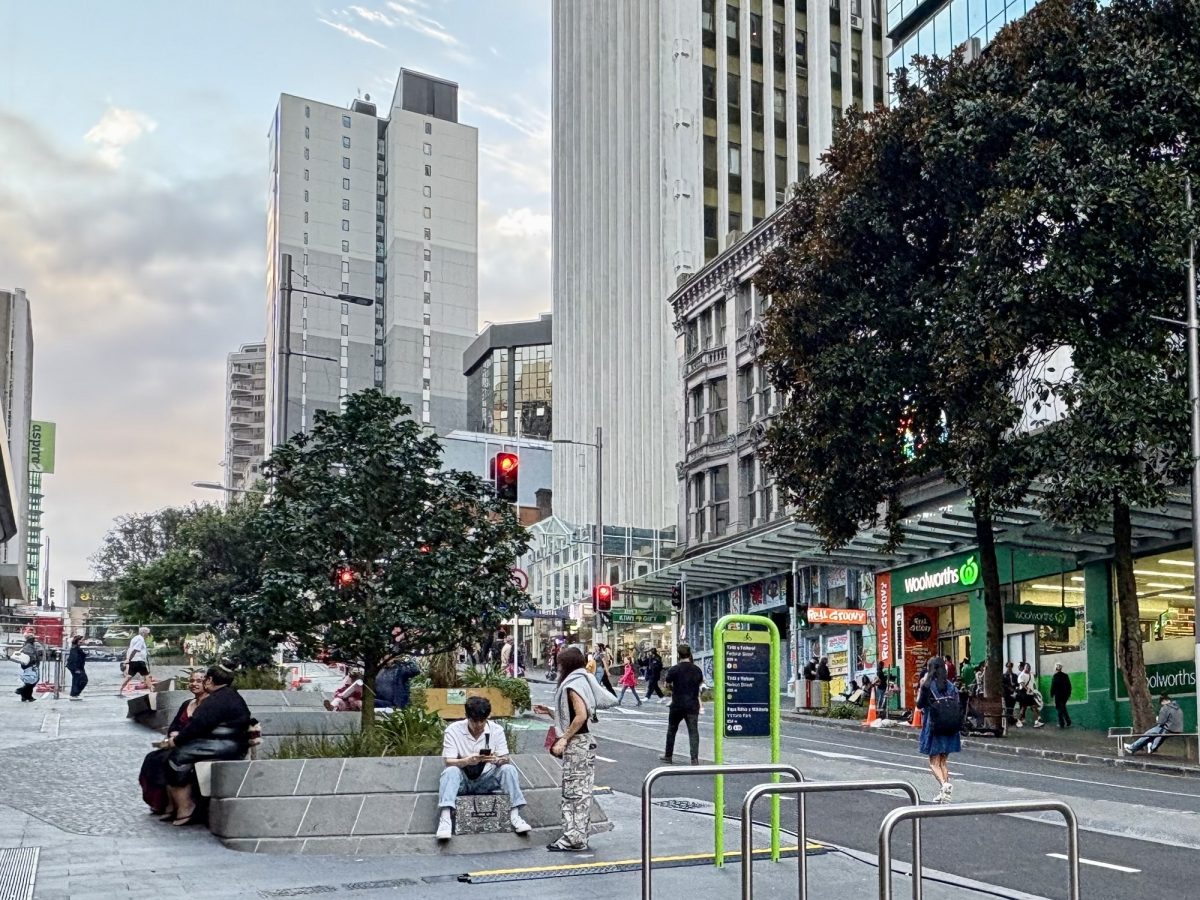
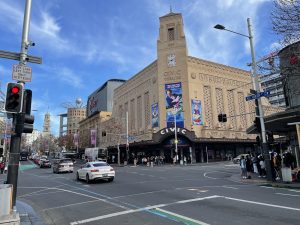
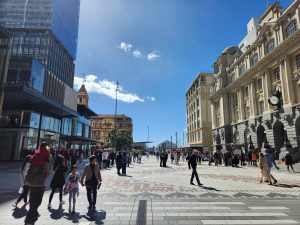
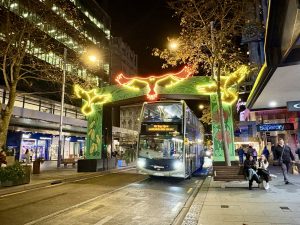
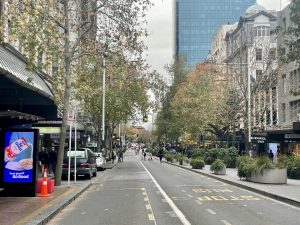
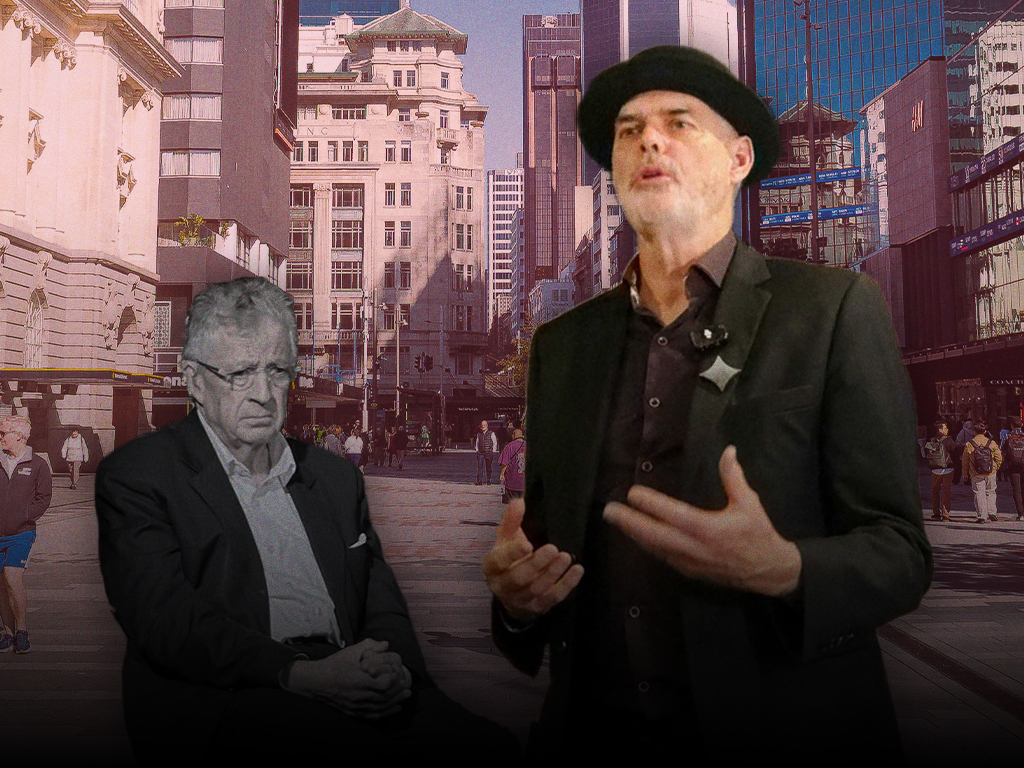
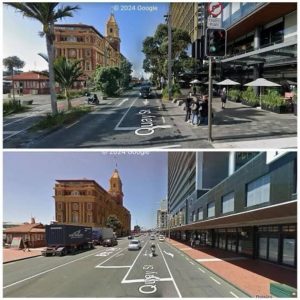
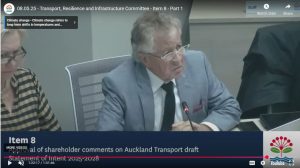
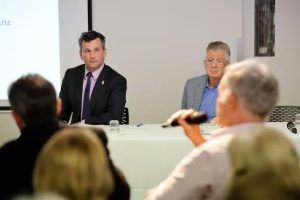
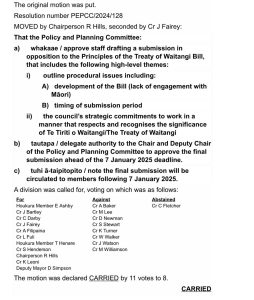
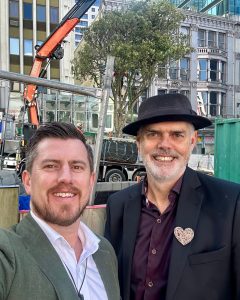
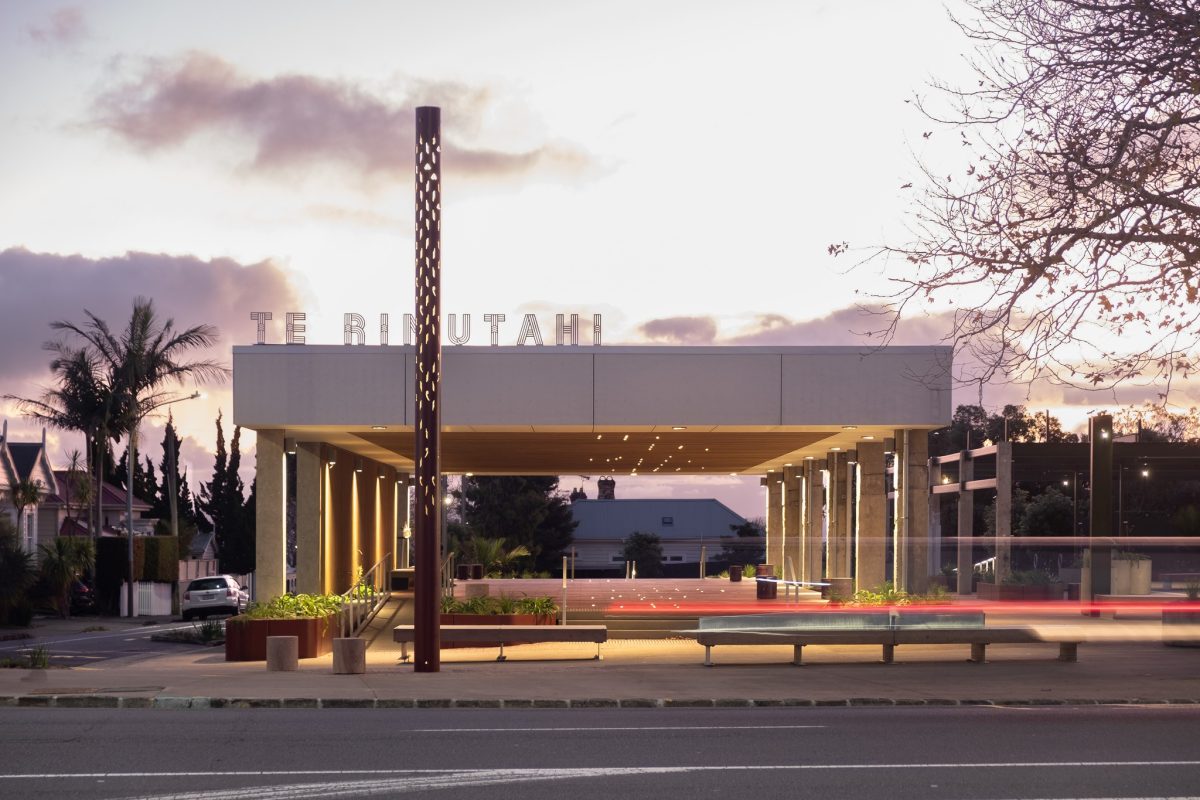
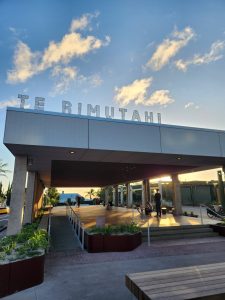
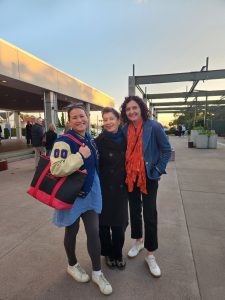
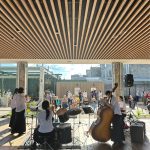
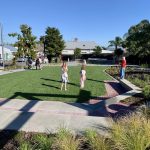
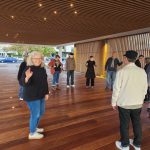




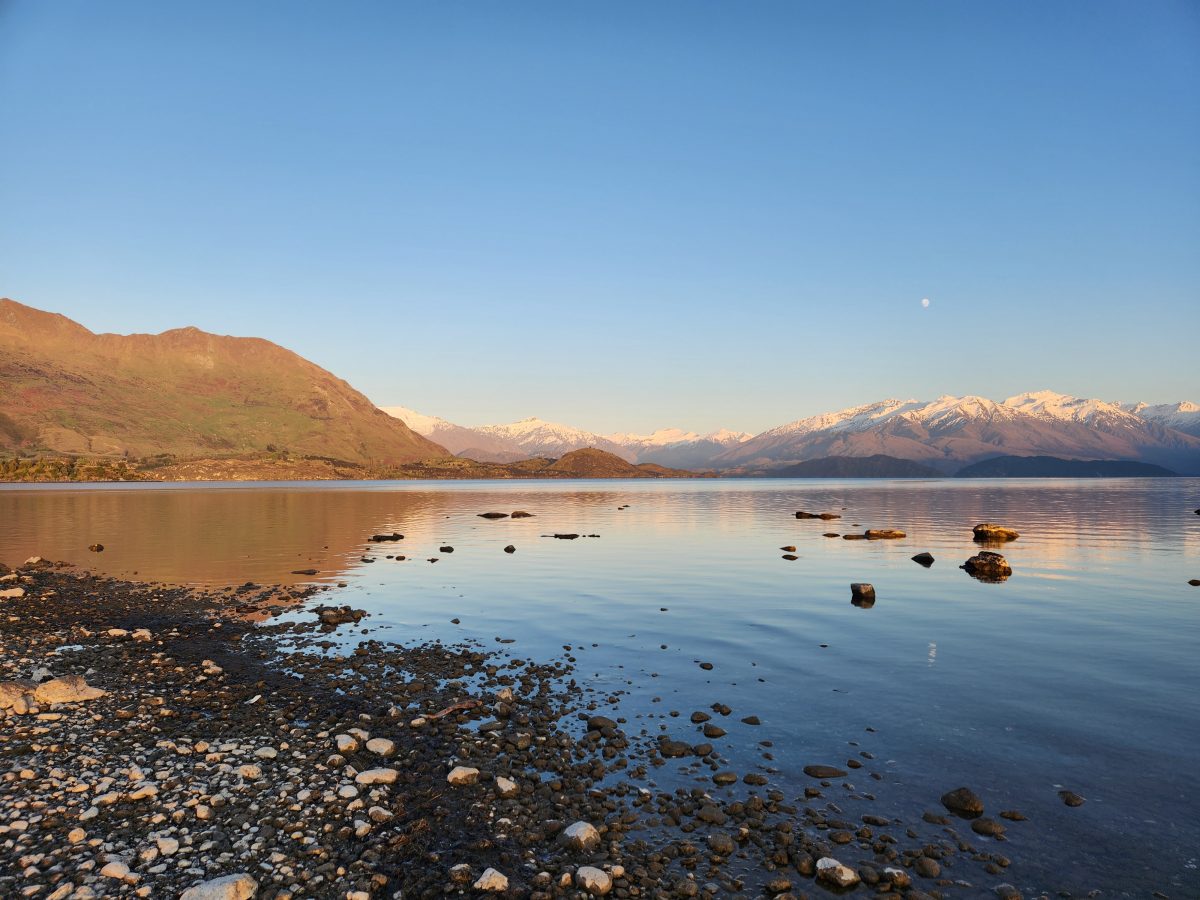
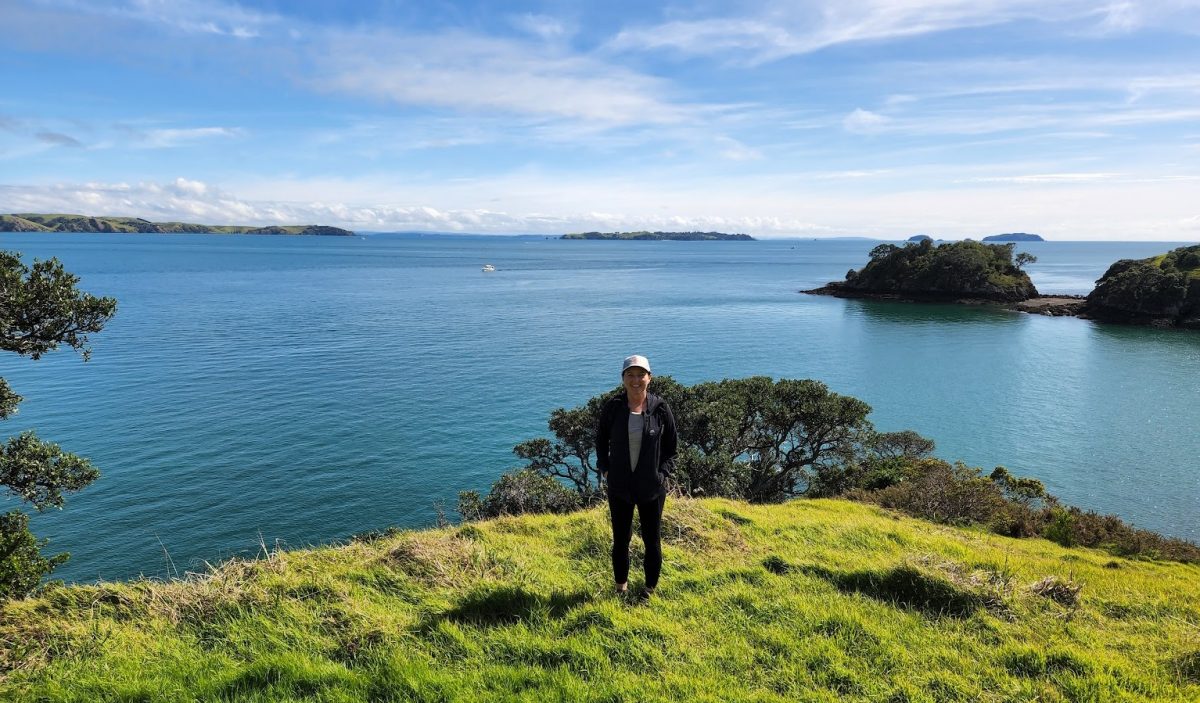




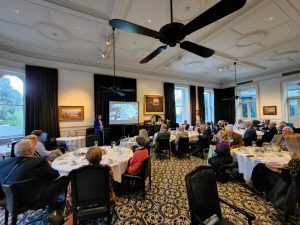


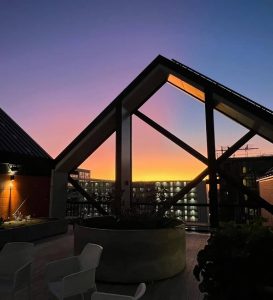


A reflection on the Mayor of Auckland to end 2023 posted on facebook and LinkedIn (please head there for any comments)
At the Helen Clark Foundation Christmas drinks last week I joked with Mayor Wayne Brown that a year ago, at the same event, hardly anyone wanted to talk to the presumed “worst ever” Mayor of Auckland so he didn’t stick around- one year on he is heartily welcomed as the Mayor to defend the city from the new government (or more specifically Simeon Brown)!
Wayne definitely rates himself as a much better Mayor than people give him credit for. It turns out his politics are quite good. It helped a lot that he quickly discovered that the councillors who he thought were his natural allies and backed him because he was ABC (Anybody But Collins) were not the ones who could be relied upon to constructively work to fix anything (the “furious few” who just say no to everything as Simon Wilson calls them). The progressive grouping of councillors have had an extremely tough year but as they’ve gotten used to a very different style of leadership they’ve achieved the wins and taken control of key positions (yay for them!). Hayden Donnell has captured the shift in power in his piece for Metro Has Wayne Brown gone Woke?
I have to credit the Mayor for his ability to change his mind once properly briefed (a trait unfortunately lacking in many politicians). He changed his view on the Te Hā Noa upgrade of Victoria St and didn’t chop Eke Panuku as he originally threatened. He hasn’t caved into Herald headlines over decisions like the Downtown Carpark redevelopment or reducing greenfields sprawl.
He has moved away from taking soundings from the “saboteurs” and discovered a much wider community of “urbanist” support (he didn’t back the Great North Road or the Pt Chev to Westmere upgrades but he didn’t block them either as the saboteurs and Mike Lee unsuccessfully attempted against the wishes of the community).
Of course I don’t support all his decisions (he was on the wrong side of history with Māori wards when leadership was needed and withdrawing membership from LGNZ was petty point scoring) and especially his plan to privatise the Ports of Auckland but there’s some surprisingly positive things coming in the draft Long Term Plan out for consultation next year like the proposal for a $50/week cap on PT fares. I’ll be cheering on if he really can deliver on “fixing” transport cheaply and quickly especially “low cost opportunities” to deliver the Auckland cycle network as AT has been directed.
None of which is to excuse the Mayor’s problematic behaviour. He has a terrible habit of blurting out inappropriate comments and offensive remarks. Sometimes it can be funny and I don’t think he intends to cause harm (mostly) but unfortunately his un-PC style has resulted in a culture from the top that has unleashed the worst from some councillors and seen excellent council staff leave. There are really decent and smart people in the Mayor’s office who must be hoping for a fresh approach in 2024.