Board member monthly report – September 2013
This is my last report of the first term of the Waitemata Local Board. I was elected to the Board in October 2010 and have served the last three years as Deputy Chair with portfolio responsibilities for Transport – West and Community Development. I am also chair of the Grants Committee, a member of the Central Joint Funding Committee and the Board’s representative on the Grey Lynn Business Association.
This month my report covers my reflections on the first term of the Board as well as my activities from 1 August – 9 September 2013. I have provided a monthly report each month since February 2011. My previous reports are available here.
 First term of the Waitemata Local Board
It has been a privilege to serve on the first Waitemata Local Board. After the uncertainty that existed at the first super city elections in 2010 about what the new Auckland Council would mean for our local communities I think local boards have been the success story of the local government restructuring.
The first term has been characterised by extensive community engagement, a genuine willingness to understand the community’s needs and a high level of energy and commitment. We have been fortunate that Shale Chambers has so capably led the Board and has not missed any opportunity to put the concept of “subsidiarity” (local decisions being made locally) into practice. I think as a board we have tried hard to make the structure work effectively for local democracy and decision making.
The last three years have been immensely rewarding (and fun!) and it has been very satisfying to see so many local projects and initiatives getting progressed that just would not have been possible under the old Auckland City Council. The Board’s annual achievements reports available on the Council website highlight just how much has happened over the term.
The role on the board has certainly been bigger than anyone expected (and is definitely distinct from the previous community boards) but the rewards have been great for those able and willing to put the time into their board work. It is clearly not possible to work full time in other employment and be an effective board member.
There have been an impressive number of fantastic learning opportunities provided by Council with international speakers and local experts which have greatly assisted in my understanding of my role as “placemakers” (I’ve reported each month on the highlights). I’ve also been grateful for the opportunity to attend the annual LGNZ conferences, the TRAFINZ conference 2012, the IPENZ transportation group conference 2013 and the walking & cycling conference 2012 as well as a number of forums over the last couple of years.
It has also been an a opportunity to meet a wonderfully diverse range of people, to get involved with our many community groups (particularly through our community grant funding) and to take part in the many events on offer in the Waitemata area.
 In terms of the Council’s overall performance I agree with many of the observations in the recently released report by AUT Super City? State of Auckland report. The report notes the energy, vibrancy, optimism and regional renaissance that have occurred since Len Brown and his Councillors were elected in October 2010. There are still many challenges ahead for Auckland Council including health and employment, and issues in the deprived communities of South Auckland
In our Board area there is still much to do. I think the priorities of the next Waitemata Local Board need to include:
-
Getting the relationship right with CCOs in particular Auckland Transport so that local priorities are clearly part of the transport work programme
-
Continuing to develop community capacity and make the most of our community facilities
-
Understanding the needs and strengths of our young people and inner city residents. I think the 2013 census results will give us a much better picture of our communities and require the Board to reassess its priorities.
-
“Walking the talk” – taking forward the sustainability initiatives that have been started and putting them into practice at the office as well as in the community. Such as waste minimisation and energy reduction.
-
Council making a genuine commitment and providing a space for community-led development and planning to flourish
I also think our Local Board Plan is just as relevant three years on and provides a focus on the community priorities to make our streets safer, provide transport choice, improve service levels, protect our heritage and ensure the city is well planned for future growth.
Report of my activities and the issues from 1 Aug – 9 Sept 2013
We may have hit the election season but Board work has continued at pace throughout August and into September.
Portfolio Reports – Community Development
 Ellen Melville Hall redevelopment
Steps were taken this month to progress the redevelopment of Pioneer Women’s and Ellen Melville Hall as a community hub. A consultant has been appointed to make recommendations on how best to achieve a vision for the facility that meets the needs of our inner city residents.
Significant funding for the redevelopment was secured by the Board through the annual plan process. This is a major project for the Board and a great opportunity to make the most of our only central city community facility.
Inner City resident’s survey
The Waitemata Local Board in partnership with the Council’s research unit funded an inner city resident’s survey. The survey was in response to the recommendations from the Noise Action Plan.
Mobius Research interviewed 886 people to provide an overview of the experience and views of our city centre residents. The survey results are reported on our agenda this month.
The survey results highlighted for me the need to focus on safety, noise and the street environment in particular cleanliness.
Community Funding
The Grants Committee met for the first funding round of the 2013/14 financial year. We now have $100,000 to distribute annually up from $80,000. The recommendations of the committee are on the Board agenda.
I also attended a workshop to discuss the applications to the Community Group Assistance Fund and the Accommodation Support Fund. The Central Joint Funding Committee is meeting on 20 September to allocate the funding.
Other community portfolio business
Working with Tricia Reade I am following up on a number of issues including the complaints from residents arising from skateborders in St Patrick’s Square (we have a presentation on our agenda from CBD residents association on ideas for dealing with this issue).
All relevant community development meetings and events are listed below.
Portfolio report – Transport
How Auckland Transport prioritises it work programme
For the first time Auckland Transport has presented on its programme prioritisation at local board cluster workshops during August. The workshops were requested by the Governing Body’s Accountability and Performance Committee last year and are intended to better inform the 2014/15 planning process that starts in September.
Auckland Transport CEO David Warburton explained the steps to create a programme of works. The workshop was very useful and will now be held annually however I continue to be concerned as to how Auckland Transport responds to community concerns and priorities. As noted at the workshop Auckland Transport consider the community to be “Special interest requirements” and do not view
Local Board plans to be part of the strategic framework for prioritisation purposes.
A followup workshop was help with Auckland Transport and board members on the work programme for 2013-14, 2014-15 and 2015-16 for the Waitemata Local Board. This is an iterative programme that is not yet finalised. We noted a number of gaps at the workshop in particular with regards to active transport initiatives.
 Maintenance programme
At our monthly transport catch up we met the Maintenance team and discussed new contracts; upcoming programme, explanation of the terms such as kerb and channel, reseal, rehab etc., how they interact with other department and UFB issues.
This was a really useful update to better understand what responsibilities Auckland Transport has in the road reserve. This is particularly relevant as a number of issues have been raised about whom is responsible for the maintenance of squares and plazas in the city centre. Generally Auckland Transport is responsible for all the road reserve including squares, shared spaces – AT’s contractor Downers (or sub-contractor Civic) undertakes the sweeping and cleaning (street washing), repairs and renewals. Auckland Council continues to be responsible for all grass areas, trees and shrubs. Council contractors are also responsible for the rubbish collection and recycling.
This means for example that for Aotea Square and St Patricks Square both AT and Council contractors have responsibilities depending on whether it is a hard surface or green surface. This arrangement creates a great deal of confusion for members of the public so it is good to hear Jane Aiken (Manager – Parks) is working to clarify respective roles.
Christopher Dempsey and I (the Transport Portfolio members who attended the catch up) also asked the maintenance team to prioritise:
-
Replacing the missing anti- skating lugs at St Patricks Square,
-
Franklin Road surfacing (but noted that the likely $7-8m budget for the full renewal will need to be included in the annual plan next year)
-
Litter prevention at the “designated smoking area” on Hardinge Street located on the public footpath
The inclusion of cycling facilities when road surfaces are renewed (for example cycle lanes) – it was good to hear that this is already underway working with AT’s Community transport team
Auckland Transport committed to providing a quarterly report of upcoming work including footpath renewals. We noted that the Great North Road footpath from Bond Street to the Surrey Cres shops is currently being renewed but the Board did not receive any prior notice.
Parking – Residential parking in St Marys Bay
 The St Marys Association has raised in a letter drop concerns about possible changes to the residents parking scheme that has been successfully trialled for the last year (and recently extended for another year). They do not want to see any moves to encourage commuter parking on residential streets and have not been reassured by the responses received from Auckland Transport..
At our monthly catch up Auckland Transport confirmed that a parking strategy is going to the Auckland Transport Board in September which will include residential parking principles. They then intend to consult on a residential parking policy.
My understanding is that the policy is still very much under development and that there are a number of issues the policy needs to cover such as:
-
The appropriate level of on-street parking capacity for each specific zone or suburb: The St Marys Bay trial has been such a success the average capacity is now at 50%. The consultation needs to give residents an opportunity to respond as to what they think is appropriate in their community. The Association has made it clear that 50% is about right for St Marys Bay. In areas closer to the city centre or with more mixed use (such as Parnell) there is likely to be greater tolerance for higher levels of on street parking (in the city centre the aim is to have capacity at about 75-80% which always guarantee car parking). In areas with narrow streets and heritage homes a lower level of capacity may be more appropriate.
-
How the scheme prioritises users: The residential policy should seek to prioritise residents but there needs to be consultation on who else the on-street parking can be made available for. For example Freemans Bay and Ponsonby residents may be more receptive to local workers and business owners using the available on street capacity because there are a higher proportion of home based businesses.
-
The appropriate tools to manage the additional capacity through pricing: My understanding is that the parking team are investigating a range of options. A coupon scheme has been given as one example by AT which was strongly rejected by the Association. Through any scheme it is possible to prioritise residents and discourage commuters – it is just a matter of getting the pricing tools right.
I have also been reassured that AT is not working on a policy that seeks to apply a one size fits all scheme to distinct suburbs. There needs to be flexibility about how a residential scheme is applied. For example in Parnell there is a greater need for late night restrictions because of the visitors coming to the bars and restaurants. Pricing may also need to vary depending on the desirable level of on street parking.
My understanding is that all these issues are going to be covered in the AT policy and it will be consulted on. It is through the policy development that we need to ensure that St Marys Bay ends up with an appropriate scheme based on the successful trial. I also want to ensure the policy is not delayed as there is a need for effective residential parking schemes in the other central suburbs particularly Freemans Bay.
Parking – Eden Terrace
A new parking zone has been installed in the Eden Terrace area and reports so far are that it is going smoothly with no complaints received by the Uptown Business Association.
The good news is that the zone has resulted in more customer parking for the local businesses and because on street parking is now $8 a day, Tournament and Wilson have dropped their day rate from $11 to $7. This really shows the market responds to appropriate pricing of on street parking.
Auckland Transport intends to report on the results following a 3 month survey.
 Cycling business plan 2013 – 2016
The Board has been given the opportunity to comment on an Auckland Transport’s draft Cycling Business Plan 2013- 2016 that is being developed as “a commitment to make cycling a positive choice”.
This plan is critical to delivering on the Board’s transport priorities so at a workshop on the draft plan we have signalled that we expect Auckland Transport to put forward a robust business case for increased investment in cycling.
I would also like to see the plan include robust targets that are aligned with the Auckland Plan.
I am coordinating the Board’s feedback that will be finalised in early September.
Access Signage for pedestrians and cyclists
Living Streets Aotearoa has been advocating for changes to No Exit signage around our streets. No Exit street signs are there to indicate to vehicle drivers there is no exit but don’t reveal if there is in fact access way for walking and/or cycling. This is common around our inner city suburbs – streets with No Exit signs that have through routes include Arthur Streets exit to Ponsonby Rd, Westmoreland Street, Samoa House Lane, Tasman Ave and Cheshire Street to Gilbratar Ave.
There is an international movement to have the No Exit signs enhanced with pedestrian and cycling access way information. In New Zealand it is proposed that a walking person and/or cycling person symbol on a transparent sticker is attached to the No Exit sign to indicate a through route.
Andy Smith Living Streets president asked me to request Auckland Transport to consider how these important active travel connections can be made visible. Auckland Transport came back to me with this positive response:
Auckland Transport supports the concept of a permeable network for all users and is pleased to inform the Local Board Member that good progress has been made in improving ‘on the street’ information for pedestrian and cyclists in relation to the existence of access ways from cul-de-sacs. The draft Auckland Transport Code of Practice has a requirement that all new ‘No Exit‘ street signage must include an indication that there is an access way from the street if one exists. Whether the image is a separate sign below the street sign or is to be included on the actual street sign is yet to be decided.
A programme for retro-fitting signage on existing cul-de-sacs is being explored through road maintenance programmes.
We would like to thank the member and the President of Living Streets Aotearoa for promoting this concept to improve the amenity for pedestrian and cyclists on Auckland’s streets.
It is great that Auckland Transport is on to this project and has recognised the benefits to Auckland.
Further updates from Auckland Transport are reported on our agenda.
Other board activities
Unitary Plan
In August we presented our Response to the Unitary Plan at an extraordinary meeting. This document is available online. The report brings together many months of work led by our Chair (as a member of the political working group on the Unitary Plan) and consideration of the significant input received from the community. I worked on the Board’s response with Shale, Tricia and Christopher.
I attended the all of Council workshop on the Unitary Plan on 2 August and have sat in on the Auckland Plan committee deliberations held over 3 days at the end of August. At the time of writing it is too early to say if all the outstanding issues we have raised have been adequately covered and whether the draft plan is ready for notification.
 Draft Ponsonby Road master plan consultation
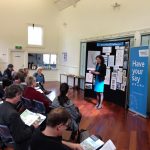
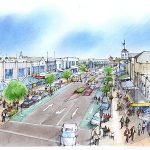
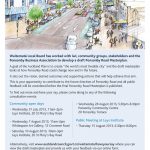
Consultation on the draft Ponsonby Road master plan has been underway throughout August. Tricia Reade and I have attended all the pop in sessions (photo from the engagement event held at Whitespace Gallery thanks to Deborah White). Most debate has been about the best use of 254 Ponsonby Road, the preferred layout of the road reserve (to incorporate cycle lanes) and whether Three Lamps should be made 2 ways. I have been impressed by the level of interest and the considered responses so far.
At the public meeting on the master plan held at the Leys Institute Library Hall on 15 August the Freeman’s Bay girl guides gave their feedback on the draft. Their priorities: 1. A playground. 2. Bikelanes (and hire bikes) 3. More trees. It really could be this simple. We just need to listen to all the feedback and plan with a 30 year vision that develops Ponsonby Road for future generations.
Copies of the plan are available at the Ponsonby Community Centre and online at aucklandcouncil.govt.nz (current consultations page)
The deadline for feedback has been extended to Monday 16 September.
Tapping into the Access Market a “Good for business” seminar
Waitematā Local Board, in association with AECOM, held a further Good for Business seminar in August on the economic benefits of engaging with and understanding the needs of the world’s fastest-growing consumer group – access customers.
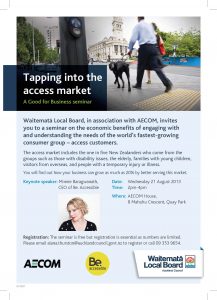 Presented by Minnie Baragwanath from Be. Accessible, Minnie explained that the access market includes the one in five New Zealanders who come from the groups such as those with disability issues, the elderly, and families with young children, visitors from overseas, and people with a temporary injury or illness. She showed how business can grow as much as 20% by better serving this market.
By tapping into this market, Be. Accessible has seen organisations attract new business, raise their profile in the marketplace, and boost staff motivation and engagement. It’s a myth that access customers don’t spend because of economic circumstances, according to Be. Accessible CEO, Minnie Baragwanath.
“Retiring baby boomers, for example, represent a golden opportunity for New Zealand business owners. With simple yet effective improvements to their products and services, businesses can be accessible to everyone, and tap into the growing access market.”
This seminar concluded a successful series of “Good for Business” seminars for this term that I’ve organised with AECOM.
Greenways – Parnell Tunnel
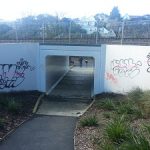
 As part of the Waitematā Local Board’s Greenway Plan, we are pushing for the opening of the closed Parnell rail tunnel (the original rail tunnel immediately adjacent to the present day tunnel) so that a Greenway could be created between Newmarket and Parnell as well as the Domain, Beach Rd, and the Grafton Gully cycleway.
This would mean residents from Newmarket being able to walk or cycle for part of the way into town on an off-road path without having to negotiate busy Broadway and Parnell Rd. An engineer’s report commissioned by the Board has recently confirmed the suitability of the tunnel for a pedestrian path and cycleway, subject to several constraints that need to be managed. The report confirms the old tunnel is in really good condition – better than the new tunnel.
The next step is for the Board to secure agreement from Kiwirail to use the Tunnel and funding for the link and the connections to and from the tunnel entrance (a Greenways implementation plan is planned for the Board’s December meeting) .
Berm moving
Spring is here and the grass berms are growing fast. Many residents are unaware that Council is no longer mowing the berms.
As reported on Auckland Transport’s website in the 2013/2014 Annual Plan, Auckland Council decided to standardise urban berm mowing services throughout the region, it is estimated this will save about $3m per year. The alternative, providing berm mowing services region-wide, would have cost ratepayers an extra $12-15m a year.
Auckland Transport has been responsible for mowing the berms in the central area since the development of the new council, local boards and CCOs in 2011. This recent decision means that the only berms that Auckland Transport has been instructed to mow from 1 July are those adjacent to council-owned properties.
Generally the responsibility of mowing grass berms adjacent to all other properties now rests with the owners or occupiers. The exceptions and situations when Auckland Transport will undertake the mowing are detailed on AT’s website.
I have asked Auckland Transport to urgently look at how best to communicate the new arrangements before our neighbourhoods start looking really uncared for and board members start receiving complaints.
State highway 16 widening
 Auckand Transport and NZTA are seeking the Board’s land owner consent to remove 6 large pohutakawa trees at the intersection of Great North Road and St Lukes Road (opposite MOTAT) to provide for an additional lane for traffic approaching the west bound SH16 onramp.
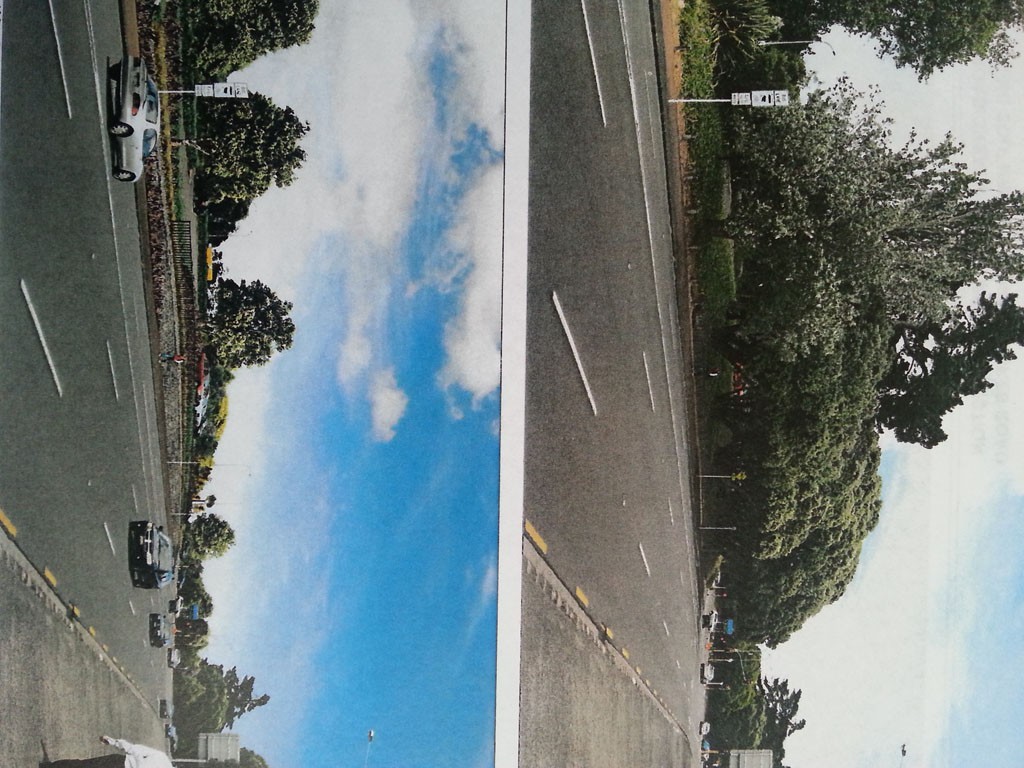
At an all of Board workshop attended by officials from NZTA, Auckland Transport, Council parks and consultants to the project we discussed the reasons for widening the road and the proposed mitigation (the photo shows the trees currently and the same area in 5 years time).
My personal view is that the case for the widening has not been made. The modelling by NZTA and AT suggests the intersection will reach capacity by 2026 with delays of 7 minutes at the peak. However I am not satisfied that they are using the new EEM (economic modelling manual) from NZTA that states default traffic growth assumptions are no longer to be used and real evidence for their predictions must be produced.
“Discontinuation of a default traffic growth rate (travel demand predictions) – The current ‘default’ travel growth rates (1-3%) generally do not accurately reflect the current situation in New Zealand and we are discontinuing these. Funding applications will therefore be required to provide evidence that any assumption of the future growth is realistic.”
It is most likely that the 2026 numbers used to justify destroying the trees are based on an assumption that the traffic is going to grow. There are options available to NZTA and AT to provide the lanes required within the current road width which need to be pursued. The other option is to wait to see if the predictions are correct.
I am also not satisfied with the cycling facilities that have been proposed for the intersection. There are some improvements with an off road shared path across St Lukes bridge however the cycle lanes are not continuous nor safely connected to the existing network.
Local Board Workshops and meetings
During the period 1 August – 9 September I attended:
-
Meeting to discuss a Localised carbon emission plan for Waitemata on 1 August
-
Meeting with Olympic Pool Directors to discuss future plans and funding for Newmarket swimming pool
-
All day Auckland Plan Committee Workshop for Local Board members and Councillors at the Rendezvous Hotel
-
Waitemata Local Board weekly workshop on 6 August
-
Meeting to discuss the Board’s Unitary Plan response on 6 August
-
Interactive play spaces project next steps meeting on 7 August
-
Attended the Transport Committee meeting on 7 August to hear the public forum presentation on the Congestion Free Network by Generation Zero, Campaign for Better Transport and Transport Blog
-
Neighbourhood Planning Task Group Meeting convened by Roger Blakely on 7 August
-
Extraordinary Waitemata Local Board meeting: Unitary Plan feedback on 8 August
-
Waitemata Board briefing on CRL and Downtown Shopping Centre development proposals by Council officers Clive Fuhr, Manager Acquisitions and Disposals and Tim Watts from the Built Environment Unit on 8 August
-
GLBA committee meeting on 13 August
-
Meeting to discuss the draft Operational guidelines between the Board and Auckland Transport on 13 August
-
On site meeting with Tim Coffey and St Patricks Sq. residents to discuss issues arising from skateboarders using the Square
-
Waitemata Local Board business meeting at Graham Street on 13 August
-
The polishing of the greenways plan meeting (delegated to myself and the Chair) on 14 August
-
Central cluster Auckland Transport workshop on prioritisation criteria and programme of work on 15 August
-
Waitemata Local Board weekly workshop on 15 August
-
Community leases portfolio update on 15 August
-
All of Boards Ways of Working: Proposed Options workshop on 19 August
-
Special Housing Accord update on 19 August to explain the processes around special housing areas and discuss the candidate locations for the first tranche of SHAs to be established concurrent with the notification of the Unitary Plan.
-
Waitemata Local Board weekly workshop on 20 August
-
Annie Inwood to discuss Board support for the Grey Lynn Business Association as part of the Local Economic Development Action Plan
-
Briefing on Heritage Tree Tags Concept: Western Park on 20 August
-
Community Development monthly catch up with portfolio holders
-
Good for Business seminar – Tapping into the access market on 21 August
-
Local Board Chairs and Community Portfolio Holders briefing on the Thriving Communities Action Plan on 22 August
-
Transport portfolio monthly catch up with Auckland Transport on 22 August
-
Extraordinary Waitematā Local Board meeting on 25 July regarding the board’s Unitary Plan feedback
-
Auckland Place makings meeting hosted by Hobsonville Point Management company on 26 August
-
Waitemata Local Board weekly workshop on 27 August
-
Meeting to discuss the brief for engaging a consultant for the redevelopment of Pioneer Women’s Hall on 27 August
-
Brainstorming session: Local board actions to support a Localised Carbon Reduction Plan on 28 August
-
Catch up with Ashley Church, Newmarket Business Association 29 August
-
Central Joint Funding Committee meeting on 30 August
-
Auckland Plan Committee draft Unitary Plan deliberations on 28, 29, 30 August
-
Grants Committee meeting 2 September
-
Grey Lynn Business Association committee meeting on 3 September
-
Waitemata Local Board weekly workshop on 3 September
Events and functions
During the period 1 August – 9 September I attended:
-
Cycle Actions Associates Breakfast on 1 August
-
LATE at the Auckland Museum (at the invitation of the Museum) on 2 August
-
Generation Zero – What’s the Holdup speaking tour event at the Auckland University Business School on 5 August
-
Mary Jo (MJ) Kaplan 2013 Ian Axford Fellow social enterprise talk at AUT organised by Billy Matheson, Principal Advisor – Social Entrepreneurship Auckland Council on 6 August
-
Public ‘Drop-in’ Engagement Session – draft Ponsonby Road Master plan on 7 August at White space
-
West Lynn Red Carpet Night on 8 August
-
Public ‘Drop-in’ Engagement Session – draft Ponsonby Road Master plan on Saturday 10 August at Leys Institute Library
-
Big Little City Restaurant Month – street eats at Shed 10 on 10 August
-
Ponsonby Master plan public meeting at the Leys Institute Library Hall on 15 August
-
Opened the Peace Foundation’s 2013 Cool Schools Symposium on 16 August at Western Springs Garden Community Hall.
-
Community development team lunch at Orakei Marae Community Garden on 16 August
-
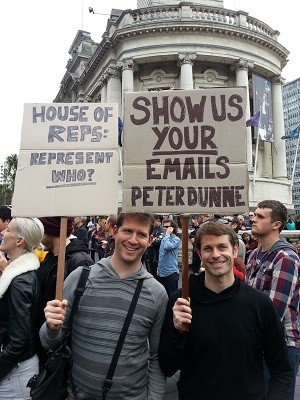
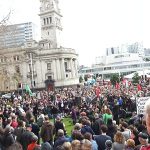
Kill the Bill – Town Hall meeting to stop the GCSB Bill 0n 19 August
-
Famous for free: GLBA seminar with Louise Pagonis on 22 August
-
Management Consulting Club – Galactic competition. Panel member with community development officers to critique presentations from students on Saturday 24 August
-
SugarTree development (600 apartments on Nelson Street) ground-breaking on 26 August
-
Grey Power – meet the mayoral candidates meeting at the Flicking Centre on 27 August
-
Citizenship ceremony official party on the evening of 27 August
-
Public ‘Drop-in’ Engagement Session – draft Ponsonby Road Master plan on 28 August at the Ponsonby Community Centre
-
State of Auckland report launch and Radio NZ panel discussion hosted by AUT on 29 August
-
22nd Wallace Art Awards at Pah House at the invitation of the Wallace Arts Trust on 2 September
-
Smoke free Auckland celebration hosted by the Cancer Society on 4 September
-
Cycle Action Associates breakfast on 5 September at the Auckland Art Gallery
-
LATE at the museum on 5 September at the invitation of Auckland museum
-
Fruit tree planting Grey Lynn park with local residents on Saturday 7 September
-
Kelmarna Gardens Trust strategy session on 7 September
-
Lord of the Flies – Auckland Theatre Company production on 7 September at the invitation of ATC
-
Myers Park Neighbourhood BBQ on 8 September
-
Sea change launch at Auckland Museum on 9 September
-
Lunch at the Crossroads clubhouse on 9 September

 A Grey Lynn 2030 project