Monthly Board Report August 2011

Covering activities from 1 July – 31 July 2011

Portfolios Transport (West including Regional portfolio) with Jesse Chalmers

Community (including Regional portfolio) with Tricia Reade

Libraries with Shale Chambers

Chair, Grants Committee

Positions: Grey Lynn Business Association, Newmarket Business Association (alternate)

Portfolio reports for the month

Transport

The Transport portfolio meets monthly with representatives from Auckland Transport. The July meeting was attended by myself and Jesse Chalmers (Transport Portfolio – West) and Christopher Dempsey (Transport Portfolio – East).  Consultation by Auckland Transport that the Transport Portfolio responded to during July and updates to matters on our Issues Register are reported on each month by Auckland Transport at our Board meeting (the full reports are available at www.aucklandcouncil.govt.nz/waitemataunder agendas).

Issues consulted on included parking restrictions, road improvements and the location of bus stops required for the roll out of new bus services and routes starting on 14 August.  Community Transport team representatives provided an update to the Transport Portfolio on walking and cycling projects planned within the Board area on 6 July.  We also met with Karen Hay, Road Safety Manager and  Randhir Kama, Road Corridor Operations Manager to discuss safety issues on Ponsonby Road. I attended the Transport Committee meeting on 5 July for presentations on the Central City bus reorganisation, Ports of Auckland transport requirements and the Rail stations upgrade programme.

Community Engagement

The main focus in July for the community portfolio was consultation on the draft local board plan following the Special Consultation Procedure (SCP). The Board held an event on 14 July to present the plan with an invitation to attend going out to all our community networks and key stakeholders. A hard copy of the plan was also mailed out to our database of community groups and organisations. I also presented the plan to the July Grey Lynn 2030 meeting.

Although the SCP has involved media coverage of the local board plans and centrally coordinated publicity by Auckland Council on behalf of the local board we have been disappointed at the failure to deliver the Summary of the draft plan to all households in the Waitemata area as intended.

Other board activities

Local Board briefings

Attended:

  • Earthquake Prone Buildings Central Briefing on 12 July
  • “Bringing it all together” – briefing by Roger Blakely and Ree Anderson  on the draft  Auckland Plan and the Local Board Plans, facilitated by Rod Oram, opened by the Mayor with international guest Duncan Maclennan. Local Board Workshops Attended:
  • Workshop on 5 July with presentations from Kiwirail and on the Alcohol programme from members of the Community & Cultural Policy team
  • Workshop on 26 July on the unitary plan process

Meetings Attended:

  • Grey Lynn Business Association meeting on 13 July
  • Newmarket Business Association Board meeting on 27 July
  • Meeting with officers to discuss leasing options of the Masonic lodge in Herne Bay
  • Meeting with the NBA and officers to discuss the proposal to widen the footpaths in Nuffield Street
  • Grey Lynn Business Association strategy session on Saturday 23 July
  • Inner city connectedness project networking meeting at Parnell Trust
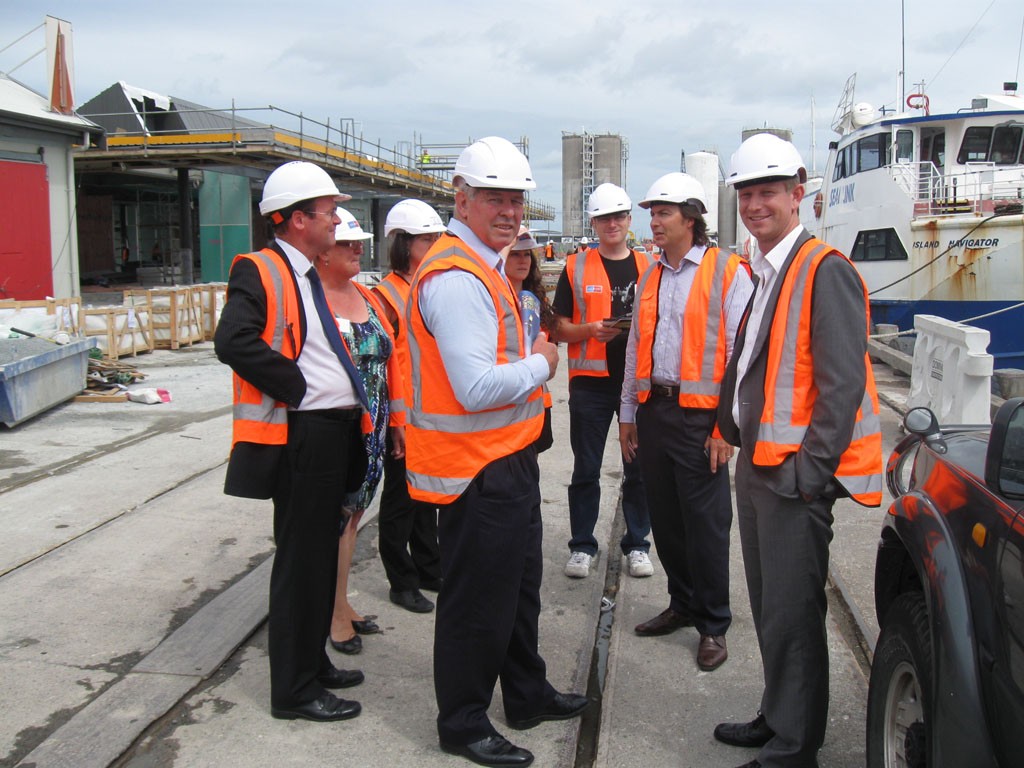
  • Q-Theatre site visit for board members
  • Meeting with members of the Parks team and Jesse Chalmers to discuss the Western Springs bush off West View Road

I also attended a visit to Orakei Marae for members of the Board hosted by Ngati Whatua o Orakei Maori Trust Board members.

Events I attended the following events during July:

  • Auckland Theatre Company’s production of “On the upside down of the World” (at the invitation of ATC)
  • Grey Lynn Business Association July networking drinks
  • Intersect networking event
  • Grey Lynn Business Association’s public meeting to discuss their Adopt a team (Manu Samoa) events
  • Green Drinks organised by NZAEE at Low impact, makers of the Hungry bin for composting

I was on the affirmative team led by Ludo Campbell Reid debating “Are we making drivers dummies?” for the IPENZ Transportation Group Debate for Young Professionals chaired by Jon Bridges.

High score for draft Waitemata Local Board Plan

The draft Waitemata Local Board Plan has now been out for a week for consultation and so far the response has been overwhelmingly positive.

Yesterday at a presentation on the priorities, initiatives and projects we are proposing for the next 3 years one attendee gave us a score of 92% (thank you Mr Houtman from OurHood and passionate tram advocate!).

The draft plan is full of innovative and creative ideas put forward by the community that will make the central areas of Auckland the best place to live, work and play. Across all the priorities is a strong sustainability and environmental focus.

We now need to make sure that this initial enthusiasm translates into submissions so we end up with a robust final plan with broad support. And of course we also need to know what locals don’t like in the draft plan. Already a number of areas for improvement have been raised; for example more focus on the needs of older people, clarification about the Board’s role in supporting business and better recognition of Pacifika culture.

Submissions can be made online here

The plan is available on the Auckland Council website or email pippa.coom@aucklandcouncil.govt.nz if you would like me to send you a hard copy.  

Auckland Council Media Release
1 July 2011

Blueprint to shape future of local communities

Better heritage protection, slower speeds on some residential streets, a Parnell to Meola Reef coastal walkway, and a network of cycle ways are among the community priorities reflected in a new local blueprint for Waitemata.

The initiatives form part of a draft local board plan prepared by Waitemata Local Board, which sets out the aspirations and priorities of the communities in Auckland’s city centre and inner suburbs and will guide decisions the local board makes on what happens in the area over the next three years and beyond.

A summary of the draft plan, with a submission form, is being posted to every home in Waitemata in the week beginning 4 July.

Waitemata Local Board Chair Shale Chambers says the ground-breaking plan is a blueprint that will shape the future of the local community.

“From enhancing Pt Erin Pool and developing a coastal walkway to prioritising healthy transport options and moves to better protect our heritage buildings, this plan reflects the priorities of the people of Waitemata as we work towards developing and fostering vibrant, connected and sustainable communities.”

Local board plans, which are being prepared by each of Auckland’s 21 local boards, will feed into other key Auckland Council plans, such as the Auckland Plan and Long Term Plan 2012-22.

“I encourage the people of Waitemata to look at the draft plan and let your local board know before August 8 whether it’s on the right track.  We will listen and decide what changes will be made to the plan before a final version is adopted in October,” Mr Chambers says.

Submissions can be made online at www.aucklandcouncil.govt.nz/haveyoursay, or by returning a completed form to a public library, council service centre or by post using the freepost envelope provided.

Copies of your draft local board plan are available at:       

  •         public libraries, council service centres and local board offices
  •         online at www.aucklandcouncil.govt.nz/haveyoursay
  •         Auckland Council customer centre – call toll free (09) 301 0101

Submissions close at 4pm on Monday 8 August. At a later date local boards will hold hearings to consider submissions.

Monthly Board Report July 2011

Covering activities from 1 June – 30 June 2011

Portfolio reports for the month

Transport

The Transport portfolio meets monthly with representatives from Auckland Transport. The June meeting was attended by myself and Jesse Chalmers (Transport Portfolio – West) and Christopher Dempsey (Transport Portfolio – East).  We received updates on the prioritisation of the minor safety programme and the proposed Opex projects for investigation in 2011/12. We were also updated on the K’rd bus shelter project by Opus. Updates to matters on our Issues Register are reported on each month by Auckland Transport at our Board meeting (the full reports are available at www.aucklandcouncil.govt.nz/waitemataunder agendas)

Auckland Transport also briefed the Board (Transport Portfolio) on the minor works planned as part of the Mt Eden Rd corridors for the Rugby World Cup and on the outcome of the Central Flagship project consultation that will see new bus routes and services commence from 14 August (attended by myself and Chair, Shale Chambers together with members of the Albert- Eden Local Board) Relevant to the transport portfolio, I also attended during June:

  • Transport Committee on 7 June  for the Central City Rail Link presentation
  • Walk around Newmarket streets with the Newmarket Business Association to view concerns raised by local business owners (together with Greg Moyle and Rob Thomas)
  • Quarterly Regional Walking and Cycling Forum organised by Auckland Transport
  • Sustainable Transport Advocates meeting
  • “Greenways” presentation by Stephen Smythe

I met local residents regarding transport issues on Ponsonby Road (together with Tricia Reade), Maxwell Street and Bayard Street (together with Jesse Chalmers)

Community Engagement

I assisted the Chair in finalising the draft Waitemata Local Board Plan following the resolution from the Board at our June meeting that confirmed agreement on the text of the plan for consultation using the Special Consultation Procedure (SCP). I also participated in discussions to determine our strategy for the SCP I attended the second Regional Communities Summit organised by Auckland Communities Development Alliance (ACDA) on 1 July with Board member Tricia Reade. The Mayor and Deputy Mayor were both guest speakers.

I organised a Save the Grey Lynn Post office on 8 June on behalf of Grey Lynn 2030 and the Grey Lynn Business Association. More than 50 residents attended to raise their concerns regarding the downgrading of services in Grey Lynn. A follow up meeting was held with NZ Post on 28 June.

Libraries

The first Auckland Libraries and Information Quarterly Report (January – April 2011) was received at the Board’s June meeting (see June agenda). It was noted at the meeting that the library service is working extremely well and that no issues of concern have been raised by residents with the Board.

Other board activities

I was acting Chair for the week beginning 27 June. During this week I worked with Council officers to finalise the communications with regards to our draft Local Board Plan and details of our Board’s achievements since 1 November 2010 which will be included in the Auckland Council’s annual report.

Local Board briefings

Attended:

  • Auckland Council Waste Management and Minimisation Plan briefing session to Local Boards on 10 June
  • Youth Engagement briefing hosted by Community Developments & Partnerships with members of the Youth Panel on 29 June at Manukau

Local Board Workshops

Attended:

  • Naming of the Gateway plaza workshop with John Gundesen from Waterfront Auckland on 1 June
  • 8 June workshop on Myers Park and the Waste Minimisation plan

Meetings

Attended:

  • Orakei Local Board meeting on 1 June
  • Minister of Immigration, Hon Dr Jonathan Coleman presentation to the Economic Forum on 2 June
  • Monthly catch up with Auckland Central  MP Nikki Kaye to discuss local issues
  • Meeting with Louise Mason (Arts, Culture and Recreation) and Ian Maxwell (Parks) to talk about the reprioritisation of existing budgets in the Local Board Agreement.
  • St Mary’s Bay Weed Clearance – meeting with Auckland Council officers, St Mary’s Bay residents, Victoria Tunnel Alliance and Board members (myself and Jesse Chambers as SLIPS champion for the project) to discuss actions and funding required to clear the St Mary’s Bay cliffs of weeds with the support of local residents
  • Grey Lynn Business Association meeting on 15 June
  • St Mary’s Bay Residents Association AGM on 28 June to give an update on the weed clearance project

Professional Development

  • All day course on Financial Governance organised by LGNZ
  • Lunchtime learning – “Greening the City by innovative water management” with Hans Schreier

Events

Following our May resolution to become a Fairtrade Local Board we are now serving Fairtrade team and coffee in our meetings. I attended Good magazine’s Fairtrade Cocktail Soiree in honour of Harriet Lamb, Executive Director of the UK’s Fairtrade Foundation who was visiting NZ  and the panel discussion “How to change the world one banana at a time” with Harriet Lamb as a guest speaker.

On behalf of Auckland Council I spoke at the launch of Conscious Consumer a project supported by the Council that awards badges to participating cafes that have demonstrated a commitment to socially and environmentally conscious business practices including Fairtrade and waste minimisation.

I also attended the following events during June:

  • Book launch “Growth Misconduct” with guest speaker Roger Blakely at Pioneer Woman’s Hall
  • Private Screening of ‘A Rotten Shame’ – the Homeowners and Buyers Association fundraiser
  • Grey Lynn Business Association June networking drinks
  • The Tiramarama VIP Function and Concert supported by Auckland Council as part of the Matariki Festival

Monthly Board Report June 2011

Covering activities from 1 May – 31 May 2011

Portfolio reports for the month

Transport

The Transport portfolio meets monthly with representatives from Auckland Transport. The May meeting was attended by myself and Jesse Chalmers (Transport Portfolio – West). Updates to a number of issues were reported on by Auckland Transport at our May Board meeting (the full report is available at www.aucklandcouncil.govt.nz/waitemataunder agendas) Relevant to the transport portfolio, I attended during May:

  • Transport Committee on 3 May for presentations by David Warburton and NZTA.
  • City Bike Day at Aotea Square organised by the Community Transport Team of Auckland Transport

The Transport Portfolio West (with the Chair and Member Reade) also met with Auckland Transport to discuss the feedback received as a result of consultation on the proposed signalised pedestrian crossing on Ponsonby Road.

Community Engagement

Our engagement on the Waitemata Local Board plan concluded at the end of April. A number of Board workshops were held during May to discuss the feedback received and to confirm the content of the plan.  I assisted the Chair in finalising the draft Local Board Plan by 31 May. Engagement on the Auckland Plan continued throughout May.

I attended:

  • Central Fono on 9 May at the Western Springs Garden Community Hall
  • Plan Jam – workshop on Auckland plan organised by Ecomatters
  • Ethnic Peoples forum on Saturday 14 May

I arranged for a visit to the Wilton Street Community Garden for Cr Walker, Local Board members and Auckland Council officers to meet the gardeners and learn about the community compost facility at the garden.

Libraries

I attended a briefing for the Libraries portfolio on 9 May and meeting with key management activities

Local Board briefings

Attended:

  • Session 4 of the Council’s natural environment and heritage policy and operations briefings (Fresh water quality/catchment management and estuarine/foreshore/marine environment)
  • Solid waste Site Tour
  • Ports of Auckland Briefing

Local Board Workshops

Attended:

  • Board workshop on 12 May ( Local Board Plan )
  • Workshop with the Strategy and Finance Committee to present and discuss the Waitemata Local Board’s position on the Local Board Agreement 19 May
  • NZTA workshop re Alternate Waitemata Harbour Crossing held with Kaipatiki and Devonport/Takapuna Local Boards
  • Board workshop on 24 May ( briefings on bylaw review and Pt Erin Community Needs Assessment )

I also prepared and presented the Board’s presentation for the Auckland Plan workshop with Councillors and the Mayor (see Chair’s report)

Meetings Attended:

  • LGNZ Joint zone one and two meeting held in Cambridge on 13 May (attended as alternate for the Chair)
  • Grey Lynn Business Association Committee meeting on 18 May

I was also present at the Strategy and Finance Committee (governing body) meeting on 25 May

Events

As a result of my Notice of Motion – Fair Trade, the Board unanimously passed a resolution at our May meeting supporting Auckland becoming a Fair Trade City and made a commitment to be a Fairtrade Local Board. As part of Fairtrade Fortnight. I also attended the SBN and the Ponsonby Art Hotel Fairtrade Breakfasts and the launch of Make Auckland Fairtrade. I also attended during May

  • Launch of EMA’s smart business programme on 4 May
  • Breakers parade in Aotea Square
  • Festival for the Planet held at the Auckland Town Hall on Saturday 21 May
  • Green Living Show and Green Drinks

I joined elected representatives for the Citizenship ceremony presided over by the Mayor at the Town Hall on 30 May.

Submission for a sustainable transport policy

I’m completely baffled at the illogical and unreasonable amount of money going towards roads in New Zealand. In Auckland there has been a clear vote for an integrated transport system that provides a range of options. In particular if we want a healthy, sustainable, prosperous future there has to be substantial investment in Public Transport and walking/cycling.

Unfortunately even though the goal of the Government Policy Statement on Transport 2012-22 is to enhance economic activity and growth the proposed investment of $13 bn on motorways is only going to increase  cars, pollution and congestion. There needs to be a complete re-allocation of transport funds and the government needs to be told why. With the help of Auckland Transport Blog, the Greens and Cycle Action‘s submissions I’ve been able to make a quick submission myself just before the deadline today.

Submission on the draft Government Policy Statement on Land Transport 2012-2022.

The proposed GPS 2012 does not address the transport needs of New Zealand, and ignores historic and ongoing transport trends in its strong and indeed further increased focus on state highway construction funding.

After two fuel price peak periods in only 5 years (showing the increasingly volatile nature of the the petrol markets) and after 5 years of no state highway traffic growth (2010 traffic volumes being equal to those of 2005, despite population growth), I consider that the direction of the GPS is unreasonable, and indeed, illogical.

The GPS proposes to essentially approve and ‘reward’ the past budget-overruns in the state highway activity class ($50-150 million each year during the last three years) by providing further money for this activity class, and proposes to proceed with new Roads of National Significance (RONS) – while proposing strong cuts to new and improved local road and public transport infrastructure.

It also seeks further savings in smaller activity classes. These are strangely enough argued as “driving efficiencies”, while the largest activity class is exempt from any cutbacks, despite having numerous low-BCR projects, and a much greater potential for cutbacks in a time of budgetary constraints.

This proposed funding allocation is also a classical case of “putting all eggs in one basket”, and furthermore, increases New Zealand’s dependency on imported fuel, which has a damaging effect for our economy, and our trade balance.  I would therefore suggest the following funding allocations:

Allocation of funds to Transport Modes

1) Dramatically reduce funding allocated to new state highways.

The Government Policy Statement suggests that over the next 10 years we should invest $13.7 billion (based on an average of the low and high range of expected expenditure) in building new state highways. This is over a third (39%) of the total land transport fund for this period. I strongly disagree with this. I am concerned that many of the current Roads of National Significance being built in New Zealand have very poor economic justification (e.g., Puhoi to Wellsford, Wellington Northern Corridor) and will have devastating environmental and social impacts. I believe that most of the possible new Roads of National Significance listed in the Government Policy Statement are likely to have even poorer economic cases and deliver a lower return on investment. Building more state highways will do nothing to resolve problems such as rising oil prices, climate change or congestion. The government should drastically reduce the amount of funding going into new state highways over the next 10 years to just 10% (maximum) of the National Land Transport Fund.

2) Increase funding allocated to walking/ cycling.

Currently walking/cycling is allocated less than 1% of the total National Land Transport Fund. However, walking/cycling infrastructure is often very cost-effective and has multiple benefits including reducing congestion, improving our health, reducing air pollution, and making us more resilient to rising oil prices. I believe funding for these modes should be increased immediately to 3% of the National Land Transport Fund, rising to at least 6% by 2022. Only by taking these measures will it be possible to realise a reasonable number of the numerous walking and cycling projects that local Councils and NZTA regional offices all over New Zealand would like to finally proceed with.

I support the consideration of the New Zealand Cycle Trail during local and state highway road improvements, as proposed in draft in the GPS.

In addition I’d like to see government funding for the operation of Public Bikes in the major cities around New Zealand that already have traditional bus and/or train services to their centres. Public Bikes hire schemes are excellent public transport because they are not dependent on a schedule and can be ridden to many different end points. As such they provide an excellent complement to the fixed schedule and routes that characterize buses and trains. The benefit cost ratios for even modest Public Bike systems (ie 250 bikes and 40 rental stations and average use) are excellent – $2.35 for every $1 invested by government.

3) New rail projects should be eligible for funding from the National Land Transport Fund.

This would mean that new capital expenditure on rail projects would have an assured and secure source of funding as new cap ex on roading projects does. It would also enable councils to provide their residents with improved public transport and help reduce our dependency on cheap oil. I do not accept the argument that rail projects should be excluded from the National Land Transport Fund because most of our transport funding comes from the fuel tax paid by motorists. It is clear that rail projects which reduce congestion do benefit motorists in various ways (through reduced congestion leading to faster travel times, cleaner air, safer streets, reduced risk of catastrophic climate change etc).

4) Increase funding allocated to public transport services

The Government Policy Statement allows for an increase of only $90 million in subsidies for public transport services over the next 10 years. PT services will receive only 10% of the national land transport fund. This suggests that the government is content to allow public transport patronage to increase only slightly over this time. This will lead to increasing gridlock in our major cities such as Wellington, Christchurch and Auckland. Auckland, in particular, will experience such dramatic population growth over the next 10 years it is difficult to see how it could accommodate such a small increase in public transport use and remain a functional city. The government should increase funding available to public transport services dramatically, aiming to increase it to 16% of the National Land Transport Fund by 2022.

5) Increase funding allocated to new public transport infrastructure

Currently just over 1% of the current National Land Transport Fund (or $370 million) is allocated to building new public transport infrastructure. This is clearly inadequate to achieve, for example, the improvements to the Auckland passenger rail system that have been identified as a priority by the Auckland Council and Aucklanders in numerous surveys. It will also not pay for the improvements to public transport wanted by other major councils in Wellington and Christchurch. I suggest that the Minister should increase funding for new public transport infrastructure to at least 25% of the National Land Transport Fund by 2022.

6) Decrease funding allocation to state highway maintenance

Currently state highway maintenance and renewal will take a significant proportion of the National Land Transport Fund (16%). It is important to ensure that our state highway network is maintained to an adequate level to keep NZ drivers safe. However, I believe that if the Minister does not pursue his proposed policy of investing significant sums into building new state highways and, instead, redirects these funds towards improving our rail, bus, walking and cycling systems then traffic on our state highways will be dramatically reduced. Shifting more freight by rail and coastal shipping will also reduce impacts on the state highway network. This will mean less money is needed for maintenance and the proportion of the national land transport fund allocated to state highway maintenance and renewal can be reduced to 10% or less.

Design of the Government Policy Statement

I also wish to state that I disagree with the current way in which the Government Policy Statement process works. I believe that the process gives too much power to the Minister of Transport to interfere in our transport funding decisions for political reasons. I am also concerned that allowing the Minister to set percentage ranges of the Government Policy Statement which must be spent on certain transport modes does not lead to us investing in the right projects or getting the best return on investment.

To give just one example, the very small percentage of the National Land Transport Fund allocated to walking and cycling infrastructure means that many cycling projects with very strong economic cases (or benefit cost ratios) could be delayed for many years as the New Zealand Transport Agency will have exhausted all the funds available within their “percentage range” for cycling/walking projects. At the same time many new state highways with very poor economic justification will be approved simply because the Minister has allocated a high percentage of funding to them.

This is not the way to get the best return from our investment in transport. Instead of having such a system, I would prefer it if all transport projects (regardless of mode) were evaluated by the New Zealand Transport Agency using the same criteria to determine which projects should have priority and be built first. This would mean all transport modes had a level playing field in terms of accessing funds.

The system used to determine the priority of transport projects should not rely on the traditional economic evaluation model which is flawed and over-estimates the time saving benefits of motorway projects. Instead projects should be evaluated for priority using a transparent formula that adequately measures environmental and social (as well as economical) costs and benefits of transport projects. In particular, such a prioritization approach should take into account key factors excluded from traditional transport evaluation models such as impacts on land use from transport projects, predicted changes in oil prices, impact of transport choices on climate change and the health benefits of active modes.

Conclusion

Overall, in my opinion the GPS engagement document is a disappointment and seems highly unlikely that transport investment will achieve its goals of enhancing economic growth and productivity if funding is allocated as proposed in this document. In the past few years there have been some significant changes to transport trends – with higher fuel prices contributing to far lower increases in traffic volumes, or even some years (like 2008) when state highway traffic volumes decreased by almost 3% compared to the year before.

If transport investment is to assist economic growth and productivity it needs to be well targeted, to areas where there are the greatest bottlenecks holding back the economy and also to areas where demand is increasing most rapidly. The GPS will guide the funding of transport projects in the next 10 years, not the last 10 years – so must look forwards and anticipate where additional capacity is required between now and 2022, or to set aside sufficient funds to keep existing infrastructure in a good state of repair so that it can be used to its maximum potential.

As noted above some significant changes to the GPS are considered necessary in order for it to achieve its stated goals.

Overall, there appears to be a significant gap between the worthy goals of the GPS (to enhance economic growth and productivity) and the funding preferences to achieve that goal – in particular the emphasis placed on constructing new state highways at a time when traffic on state highways is static or declining. To ensure it is a credible document, the GPS should explain this connection far more clearly.

The First Fairtrade Local Board

With Rachel Brown & Alex Williams at the Fairtrade Breakfast

11 May

Auckland Council Media Release

Local Board first to make Fairtrade Swap

Auckland moved a step closer to becoming a Fairtrade City yesterday with the Waitemata Local Board voting to become a Fairtrade workplace.

Deputy Chair, Pippa Coom, made the announcement as part of the board’s support for ‘Fairtrade Fortnight’, taking place from 7 – 22 May.  The commitment of the board means Fairtrade-certified tea and coffee will be served in all meetings and made available at the board’s offices.

Mayor Len Brown attended his first Waitemata Local Board meeting last night. Members encouraged him to take up the challenge of leading Auckland to achieving Fairtrade City status.

“As a board we wish to ‘Show off our Swap’ – the theme for this year’s Fairtrade Fortnight – by taking the first step of serving Fairtrade products at our local board offices,” says Ms Coom.

“There are already many cafes and businesses within our local board area that have already made the swap, and many residents who appreciate having the option to shop ethically.

“Fairtrade Auckland is doing a great job promoting fair trade and has already collected over 2000 signatures supporting Auckland becoming a Fairtrade City. The petition will be presented to the Mayor when they reach 10,000,” she says.

Fairtrade benefits communities in developing countries, including the Pacific Islands, by providing decent working conditions, local sustainability, security and stability with fair terms of trade and prices.

Pippa Coom says the board agreed unanimously to be the first local board to make this step and it believes that by adopting Fairtrade City status, Auckland’s international reputation will be enhanced.

Beating the Bounds of the Waitemata

Andy Smith from Walk Auckland originally suggested Beating the Bounds as a Transition Towns event involving Grey Lynn 2030 and Mt Eden Village People.  He enthusiastically agreed to the Waitemata Local Board adopting the idea as a way of establishing a sense of place.  Andy will be leading us on Saturday 9 April from Meola Reef Reserve.

Media Release from Auckland Council 6 April 2011

Waitemata to beat the boundary

The Waitemata Local Board, with support from Walk Auckland, is to revive an ancient Anglo- Saxon custom called ‘Beating the Bounds’ by walking the 12km boundary of the board area this Saturday, announced Deputy Chair Pippa Coom.

The ceremony, traditionally led by the parish priest who headed a crowd of boys beating the parish boundary markers with green boughs, is seen by the Waitemata Local Board as a modern take on an age-old custom.

“By ‘Beating the Bounds’ of Waitemata we hope to improve residents’ awareness of the local board area, but more importantly we aim to strengthen our community by giving us a sense of place,” says Pippa Coom.

“We have also invited local board members from the neighbouring areas of Albert-Eden and Orakei to ensure walkers do not encroach on the adjacent ‘parish’ as we journey along the shared boundaries.”

‘Beating the Bounds’ begins at 9am, Saturday 9 April, from Meola Reef Reserve at the western-most point of the board area and will continue around the boundary in an anti-clockwise direction. There will be four stops on route and the walk is expected to take approximately four hours.

Members of the public are invited to join local board members at any point along the route.

ENDS

The route: http://goo.gl/maps/rqho

More details of the walk on Facebook

More information about the origins of beating the bounds

http://en.wikipedia.org/wiki/Beating_the_bounds

Monthly Board Report April 2011

Covering activities from 1 March – 31 March 2011

Portfolio reports for the month

Transport

The Register of Issues established with Auckland Transport has quickly grown to over 60 items logged by the Transport portfolio covering everything from strategic projects to minor safety improvements (for both the West and East of the local board area). These issues are progressed by Auckland Transport on an on-going basis and discussed at a monthly meeting. Auckland Transport has been asked to progress as a matter of priority the safety concerns for students walking and cycling to school raised by Richmond Road School and Western Springs College. In addition we have asked Auckland Transport to reconsider the prioritisation of a 40km speed zone in front of Newmarket primary school. The transport portfolio (West) has responded to Auckland Transport’s consultation on:

  • Removal of  car parking on one side of Livingstone Street
  • Bike parking on Ponsonby Road

Residential parking issues created from commuters parking all day in Auckland’s central suburbs are going to be dealt with through a newly established Working group involving the Board convened by Auckland Transport. The Transport Portfolio strongly supports the work Auckland Transport is doing as part of the Central Flagship project to improve central and CBD bus services (consultation on the proposed services started on 28 March). Relevant to the transport portfolio, I attended during March the Transport Committee meeting in support of Cycle Action’s presentation on Cycling for a Super City, a lecture on Fixing Auckland’s transport – lessons from the EU with guest speaker Michael Cramer and Auckland Transport’s Regional Walking and Cycling forum.

Community Engagement

The Community Portfolio, with the strong support of staff, had a busy month preparing for our community engagement on our local board plan starting with the launch of the process at a lunchtime event on 24 March attended by approximately 50 community leaders.

Other activities

Meetings Attendance at:

  • Grey Lynn Business Association March meeting
  • Auckland Unleashed – Mayoral Summit. Attended for full day and participated in the infrastructure workshop

Local Board Briefings Attended:

  • Iwi liaison briefing
  • Central cluster briefings by ATEED and Waterfront Auckland
  • First of 4 sessions on the Council’s natural environment and heritage policy and operations

Board workshops Attended:

  • Workshop on the Auckland Plan (local board cluster meeting)
  • David Engwicht – placemaking workshop
  • March board workshop focusing on CCO Statements of Intention

Events

On behalf of Frocks on Bikes I was one of the organisers of Try My Bike hosted by Auckland Transport at the Lake House on 2 March encouraging women to cycle. I organised the West Lynn Street Party and Twilight market for the Grey Lynn Business Association and Grey Lynn 2030 in support of Neighbours Day Aotearoa

I joined the official party for the Citizenship ceremony on 21 March for over 400 new citizens at the Auckland Town Hall. I attended the launch of Pasifika Festival by the Mayor on Sunday 6 March, the Pasifika community concert on 10 March and accompanied the Mayor, Local Board members and Councillors around the stages of the Pasifika Festival at Western Springs. I also attended the Memorial Service for Christchurch organised by Auckland Council at the Auckland Museum, the Walk to Work Day on 16 March organised by Walk Auckland and Auckland Transport and the Grey Lynn Business Association March networking evening.

Communications

Communications have been focused on our community engagement process

Out and about

  • Victoria Tunnel Tour organised by the Victoria tunnel Alliance for St Mary’s Bay residents and the community open day on 26 March
  • Civic Trust annual garden party
  • Launch of MacroAuckland report by the Mayor
  • Long Lunch on High Street at the invitation of Alex Swney, CEO, Heart of the City
  • Richmond Road School Gala
  • Newmarket Business Association’s free catwalk show on Osborne street
  • Ponsonby Market Day on 19 March

I also attended the SBN Sustainability is mainstream conference

Opening up public spaces

Public spaces were on the agenda of the March meeting of the Waitemata Local Board.

Chair, Shale Chambers was unanimously supported on his motion to ensure developers who have gained bonus floor space in return for public space are required to provide adequate signage.  Too often the public is unaware they have access to buildings and open space areas as right of ways and for enjoyment. For example I was surprised to learn that the space next to a bar in the Viaduct is available for the public to sit and enjoy their own food and beverages even though it currently appears to part of the bar area.

More controversially we considered the Skycity proposal to develop Federal Street as a pedestrian orientated shared space in return for the extension of the existing Skycity conference facilities across the airspace over Federal Street.   Auckland needs to be able to adequately host large conferences and Federal Street is in desperate need of a makeover (mainly because it was badly designed in the first place to interact with street on a human scale).

What we objected to (in a 5 – 2 vote) was the request from Skycity to consider the proposal as one package (ie Skycity demanding the airspace in return for spending $10million on the street). We were right to feel that we were being asked to make a decision on incomplete information as it emerged after the meeting that Skycity are already spending $50million on improvements including three new restaurant frontages on Federal Street. It will be interesting to see if there is support for a roof over the street once the restaurants open and people start enjoying the area in a whole new way.

The next day the Planning and Urban Design Forum chaired by Cameron Brewer recommended that the plans be explored further by Auckland Council, the Waitemata Local Board, Auckland Transport and Sky City designers.

Board acts to reclaim public spaces Media release 9 March 2011

Super City asserts public access rights NZ Herald 12 March 2011

Skycity launches plan for overbridge Auckland City Harbour News 11 March 2011

Lifting the lid on hidden spaces NZ Herald 15 March 2011

SkyCity’s expansion plans endure rough ride NZ Herald 14 March 2011

Christchurch fundraiser afternoon tea

Supported by Grey Lynn businesses and the Grey Lynn Business Association (organised by Soala Wilson of the Works Hair Salon – I’m just very happy to be able to go and help publicise the event)

Sunday 6 March
5-7pm

Enjoy an afternoon tea for a worthy cause alongside entertainment by jazz musician, Isaac Crandell-Tanner on the saxophone and poetry by John Adams.

A buffet selection of cakes, savouries, sandwiches, tea & coffee.

All proceeds go to the 2011 Red Cross Christchurch Earthquake Appeal.

Bookings by phone: 09 360 8470
Door sales on the day (if seats available)
$50 per person (cash or cheque only made out to Red Cross)
Urban Jungle Café
571 Great North Road
Grey Lynn
Auckland 1021
(cnr Surrey Cres & Selbourne St)
Plenty of off-street parking and well served by public transport.  Wheelchair accessible.

Protecting our Waterfront heritage

At our first meeting of the year we supported the Art Deco Society to protect the character and heritage buildings of the Wynward Quarter.

Fittingly, the next day we had our briefing from Waterfront Auckland (the newly branded Waterfront Development Agency) with the opportunity to walk around the current development happening  in the Wynyard Quarter. I was very impressed with the well thought through plans for Jellicoe Street and plaza with an appreciation of the history of the area intertwinned with the design. I particularly liked the inviting people spaces and street scape.

It really brought home the total disconnect of the old Auckland City Council and Viaduct Harbour Holdings in making plans to demolish half of the remaining heritage building in the design for the rest of the Quarter. A total rethink is needed by VHH Ltd.

Media Release: Board acts decisively to protect heritage (dated 9 February 2011):

Heritage issues throughout the central city formed the basis of last night’s meeting of the Waitemata Local Board at the Grey Lynn Community Centre.

The meeting, attended by a large number of local residents, focused on a number of significant heritage issues at the forefront of residents’ minds across the central city.

The meeting included resolutions on the reinstatement project for Three Lamps, and an acquisition proposal for Hulme Court, but the major urban transformation project under development in the Wynyard Quarter was the major focus of proceedings.

“The recent demolition of Turua Street and Coolangatta House are timely reminders of the need to protect our heritage and character buildings before the wrecking ball looms large,” says Waitemata Board Chair Shale Chambers.

“Wynyard Quarter is an area with its own character which derives from its industrial and boating building past.  It was reclaimed from the sea from 1905 and, while the buildings may not be as iconic as many of the scheduled buildings in the CBD, they are an important aspect of the life of Auckland.”

“It may not be our [the Waitemata Local Board’s] delegated authority to protect these buildings, but it is certainly our mandate.”

The board voted unanimously to support the Art Deco Society in its endeavours to preserve the Wynyard Quarter character buildings.

Other important heritage issues were also progressed at the meeting.  The reinstatement of the ‘three lamps’ to Three Lamps has finally reached a resolution after being first proposed nearly seven years ago.

It has been agreed that the location of the ‘three lamps’ will be outside the former Ponsonby Club Hotel (now the Gluepot Apartments). It is expected that work on the installation of the lamps will begin following discussions with local residents and businesses.

The Board have also asked that the Chief Executive of Auckland Council give serious consideration to bringing the category 1 status heritage building Hulme Court, currently for sale on the corner of Parnell and St Georges Bay Rd, into the public domain.

The next meeting of the Waitemata Local Board will be held at their Graham Street offices on Tuesday 8 March, at 6pm.

Ends

Read more about here

Council gags Board over secret destruction deal, NZ Herald, 9 February 2011

Mayor out to save heritage pair doomed in secret deal NZ Herald, 14 February 2011

Waitemata portfolio allocation weighted toward transport issues

This media release came out from Auckland Council following our first business meeting. As a member of the Transport portfolio team I’m really pleased at our shared commitment to focus on transport issues as a priority so we can really get Auckland moving.

Auckland Council – Local Board Media Release: Waitemata portfolio allocation weighted toward transport issues

17 December 2010

Last night’s first business meeting of the newly appointed Waitemata Local Board saw the announcement of portfolio allocations, giving a clear indication of the board’s intended focus on transport issues.

“Major projects like the CBD rail link, rail to the airport, or a world class cruise passenger terminal are either located within Waitemata, or originate or terminate within it,” says Chair Shale Chambers.

“The appointment of four board members to oversee the transport portfolio, doubling that allocated to all other portfolios, emphasises the value we place on transport issues facing our communities.”

“A number of transport issues were discussed at our first meeting.  We have endorsed the conclusions of the CBD Rail Link Business Case and support the Mayor’s target for the earliest possible completion date. We also supported the re-establishment of a Public Bike Rental Scheme in time for the Rugby World Cup in 2011,” he says.

The portfolio structure adopted by the board is intended to mirror the legal responsibilities or consultation obligations allocated to local boards. It has been broken into nine major portfolios and the roles are allocated as follows:

Art Services – Tricia Reade & Greg Moyle

Community – Pippa Coom & Tricia Reade

Libraries – Shale Chambers & Pippa Coom

Recreational Services – Shale Chambers & Greg Moyle

Parks – Jesse Chalmers & Rob Thomas

Events – Shale Chambers & Rob Thomas

Environmental Management – Christopher Dempsey & Jesse Chalmers

Transport –    Christopher Dempsey & Rob Thomas (Central/East)

Pippa Coom & Jesse Chalmers (West)

Heritage, Urban Design & Planning – Christopher Dempsey & Tricia Reade

There are also two committees; the Finance committee chaired by Grey Moyle and the Grants committee, chaired by Pippa Coom.

“Structuring responsibilities by portfolio rather than through a committee structure will provide the board with greater flexibility to progress issues through effective community engagement,” says Mr Chambers.

The Waitemata Local Board represents the historic communities and important business districts of the inner city located from Parnell, Newmarket and Grafton to the CBD and the Viaduct to Freemans Bay, Ponsonby, St Mary’s Bay, Grey Lynn, Herne Bay and Westmere.

“To ensure the local board can capture the views of all our communities, it is also our intention to rotate local board meetings between Parnell, the local board office in Graham Street in the CBD and Grey Lynn,” he says.